This is a Planning Hub explainer. It pairs with our guide to how many weeks in a year, which is where the 52 or 53 week count comes from.
Right now
What week number is it right now?
The fastest way to find the current week number is to read it off a calendar that shows week numbers, or to use a spreadsheet: in Excel or Google Sheets, =ISOWEEKNUM(TODAY()) returns the current ISO week number. Most phone and desktop calendar apps can also switch week numbers on in their display settings. If you just need this week’s number, that is the whole answer. If you want to understand what the number means and why two calendars sometimes disagree, the rest of this page covers it.
How it works
How ISO 8601 numbers the weeks
ISO 8601 is the international standard for dates, and it fixes two things about weeks. First, a week starts on Monday and ends on Sunday. Second, week 1 of any year is the week that contains that year’s first Thursday. An equivalent and easier test: week 1 is the week that contains the 4th of January, since the 4th is always in the first week under this rule.
Because the standard anchors on Thursday rather than the 1st of January, a few days at the very start of a year can belong to week 52 or 53 of the year before, and a few days at the end of December can belong to week 1 of the next year. The numbering follows whole Monday-to-Sunday weeks, not calendar months, so it slides slightly against the date.
Week 1
Why week 1 is not always New Year’s week
There are two common numbering conventions, and the difference is exactly what trips people up:
- ISO 8601 (most of the world, and business): weeks start Monday; week 1 holds the first Thursday. Early January can sit in the previous year’s final week.
- North American convention: weeks often start Sunday; week 1 is simply the week containing the 1st of January. This is what many US wall calendars and the spreadsheet function
WEEKNUMuse by default.
The practical upshot: the same Tuesday in early January can be labelled week 1 by a US calendar and week 52 or 53 by an ISO calendar. Neither is wrong; they are answering with different rules. If you share a schedule across teams or countries, agree on which system you mean before you quote a week number, because “week 2” is not always the same seven days.
2026 and 2027
Week numbers for 2026 and 2027
Two nearby years show the rule in action, and they behave differently because of the weekday each one opens on.
- 2026 starts on a Thursday, so under ISO rules it is a 53-week year. ISO week 1 of 2026 runs from Monday 29 December 2025 to Sunday 4 January 2026, and week 53 runs from Monday 28 December 2026 to Sunday 3 January 2027. See the years with 53 weeks for why.
- 2027 starts on a Friday, so it is an ordinary 52-week year. ISO week 1 of 2027 begins on Monday 4 January 2027, which means the 1st, 2nd, and 3rd of January 2027 still belong to 2026’s week 53.
If you are wondering whether 2027 also adds a leap day on top of all this, it does not; our note on whether 2027 is a leap year has the short answer.
On your tools
Reading week numbers on a calendar or spreadsheet
Most tools can show week numbers once you know where to look:
- Spreadsheets:
=ISOWEEKNUM(date)gives the ISO number in Excel and Google Sheets. The older=WEEKNUM(date)uses the US convention unless you set its second argument, so pick the one that matches the system you want. - Desktop calendars: Outlook, Apple Calendar, and Google Calendar all have a display setting to show week numbers down the side of the month view.
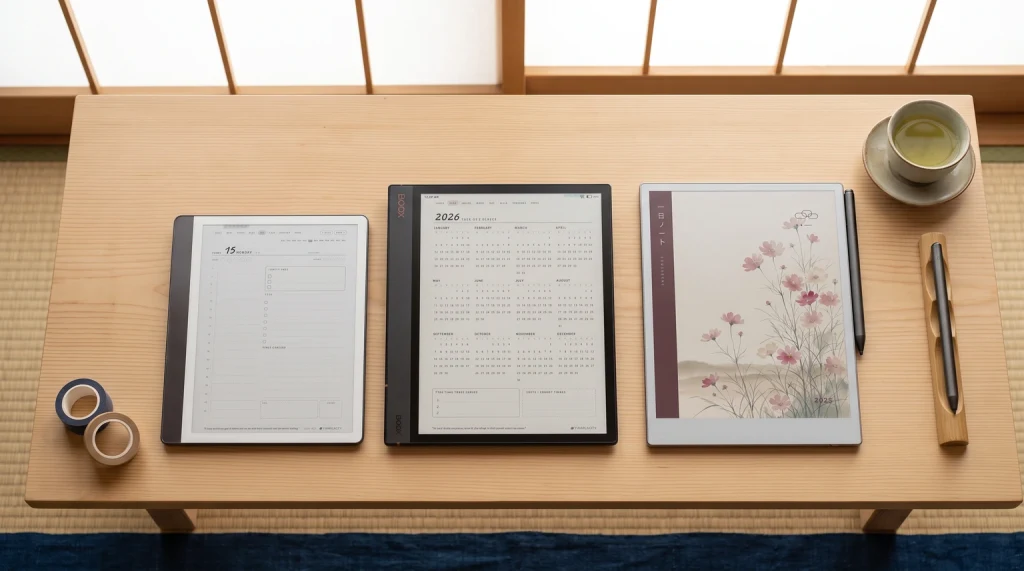
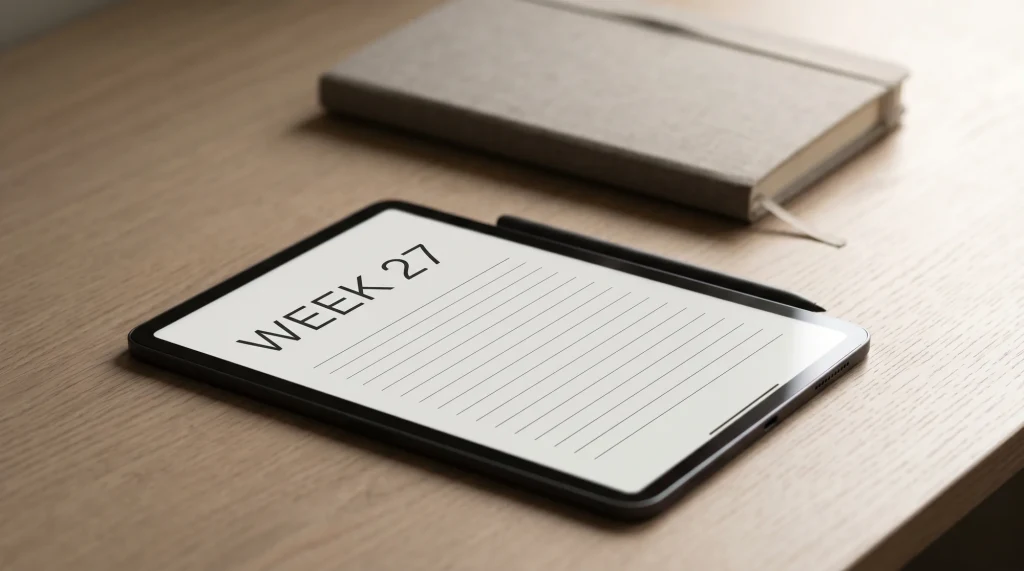
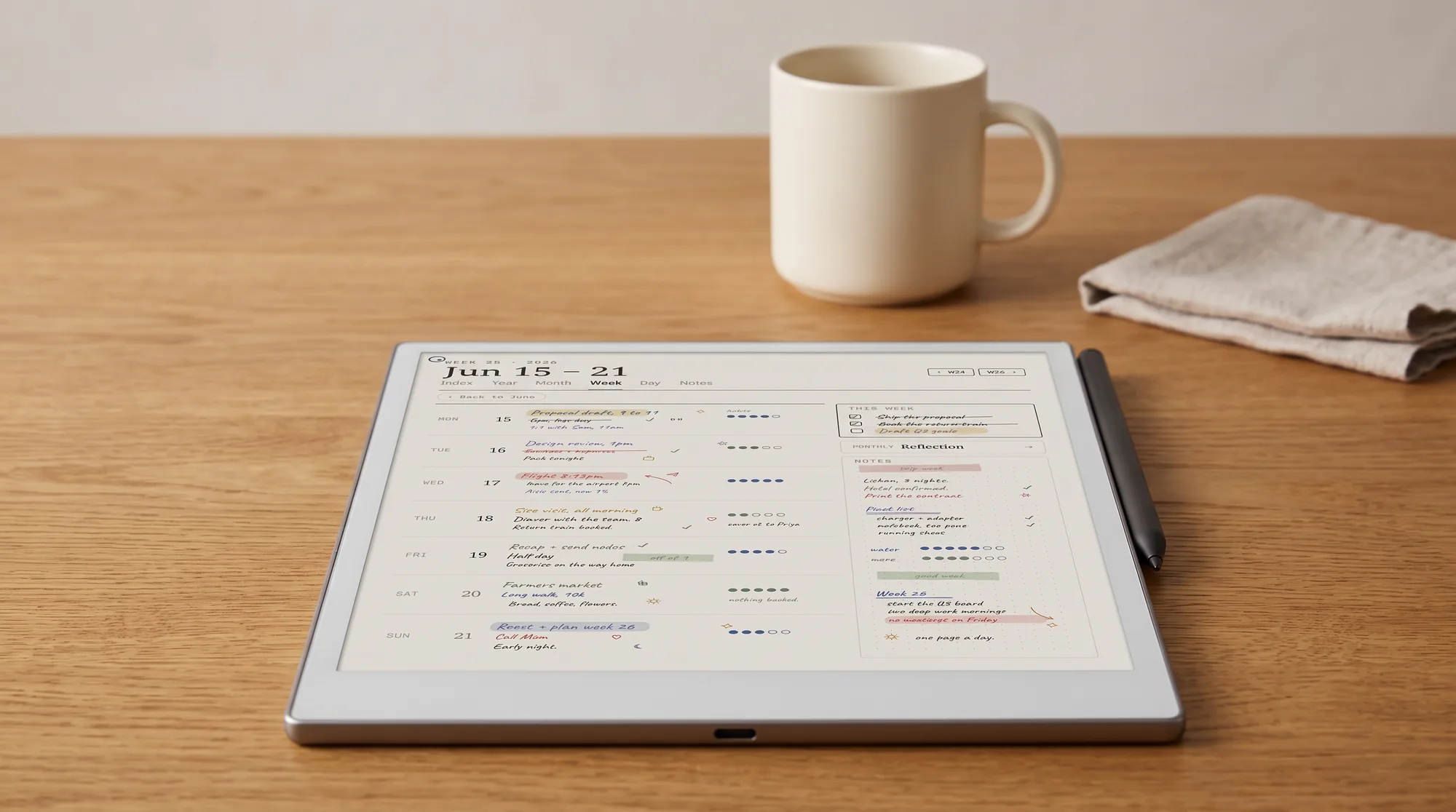
- Paper and e-ink planners: many weekly layouts print the week number in the corner of each spread, which is the quickest way to keep a running sense of where you are in the year.
Once week numbers are switched on, they turn “sometime in March” into “week 11,” which is a sharper unit to plan and report against. On paper the same idea is a weekly spread, and it is the reason one of the two Japanese page-a-day books costs more than the other: see Original against Cousin. If your calendar and a colleague’s ever disagree by a week at New Year, now you know why. Tell us in the comments which system your team runs on, and we will keep the yearly week-number notes here up to date.
FAQ
Common questions, answered briefly
How do week numbers work?
How do I find the current week number?
=ISOWEEKNUM(TODAY()) returns today’s ISO week number in Excel and Google Sheets. Most calendar apps also have a setting to display week numbers in the month view.Why is the 1st of January sometimes not in week 1?
How many week numbers does 2026 have?
People also ask