The grid
What a synthesis matrix is, and what it is not
A synthesis matrix is a grid that organizes a literature review by theme instead of by source. Each row is one paper. Each column is one theme, question, or variable you care about. Each cell is a short note on what that paper says about that theme, in your own words. Some writing centers call it a literature review matrix; the name changes, the shape does not.
The point of the shape is what it makes visible. A stack of PDFs, or a folder of source-by-source summaries, can only answer one question: what did this paper say? The matrix answers the harder question a review actually has to answer: what does the field say about this theme, where does it agree, and where does it fight? Guides from the UNC Writing Center and Purdue OWL both push the same move: stop organizing by source, start organizing by idea.
It helps to be clear about what the grid is not. It is not a reading log; a log records that you read something, a matrix records what it claimed. It is not a citation manager; Zotero holds your references, the matrix holds your thinking. And it is not busywork stapled onto the review; done honestly, the matrix is the review, one draft before the prose.
Setup
Set up the grid: sources down, themes across
Start with one citation column and three or four theme columns, no more. The themes come from your research question, not from the papers; if you are studying remote-work productivity, your opening columns might be measurement method, headline finding, population, and stated limitations. Columns have to earn their place. A grid that opens with nine themes is a grid nobody fills past the fifth paper.
Then set a cell discipline and keep it. A cell is a paraphrase plus a page number, two sentences at most. Not a pasted quote, because pasting postpones the thinking; not a bare tick mark, because a tick cannot be written from later. If a source is part of a bigger program of study, say coursework with deadlines attached, it is worth planning the reading itself the way our digital student planner guide lays out, so matrix time is scheduled rather than stolen.
The method
Fill it in without re-reading every paper
The failure mode of every synthesis matrix is the half-filled row. You read a paper in March, filled two cells, moved on, and by June the paper needs reading again. The method below exists to prevent exactly that.
Skim before you commit a row.
Abstract, introduction, conclusion. If the paper does not touch at least two of your columns, it goes in a maybe list, not the matrix. Rows are expensive; skims are cheap.
Fill the whole row in one sitting.
One pass per paper, every column answered. If a source says nothing about a theme, write that in the cell. An empty cell reads as unfinished work; a cell that says not addressed is a finding.
Paraphrase, and pin a page number.
Your words force compression; the page number keeps the paraphrase honest and makes the eventual citation painless. Save direct quotes for the rare sentence whose wording is itself the evidence.
Add a column only when the papers force it.
The second time a finding has nowhere to live, it has earned a new theme column. The first time, park it in a notes cell. Columns added on a hunch stay empty.
Reread the matrix, not the papers.
A ten-minute skim of the grid once a week keeps the whole field in working memory. That skim is what the matrix buys you; the PDFs stay closed.
Writing
From matrix to paragraphs: write across the rows
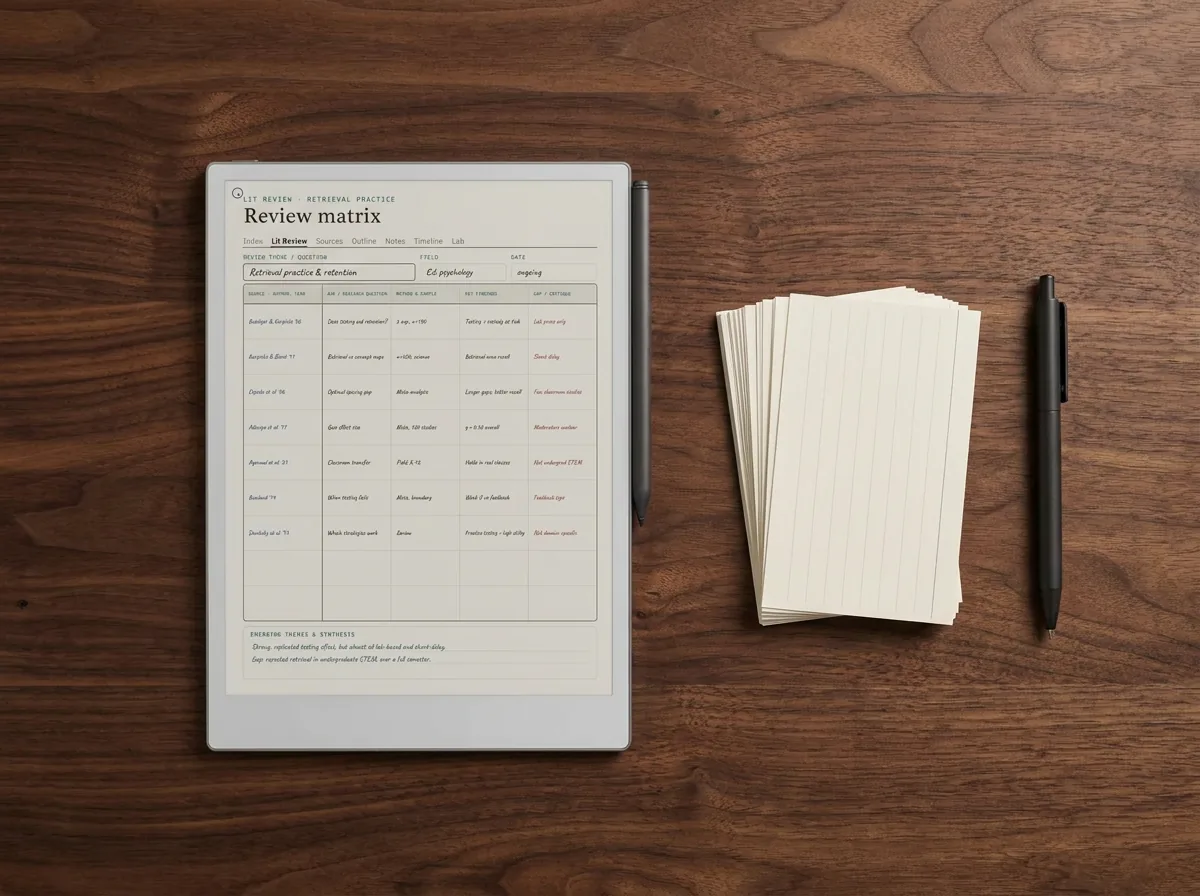
Here is where the grid pays for itself. Reading down a row gives you a book report: one source, dutifully summarized. Reading across a column gives you the field: eight sources on one theme, agreeing, splitting, and leaving gaps. A summary walks source by source; a synthesis walks theme by theme, and the matrix is what makes the second walk possible.
In practice each column becomes a section of the review. The pattern most cells agree on becomes the opening claim of that section. The cells that disagree become the interesting middle paragraphs, the ones where you get to explain why two careful studies pulled in opposite directions. And the cells that sit empty across the whole column become the gap your own study fills, stated with a straight face because you can point at the silence. The Scribbr guide to synthesizing sources works the same column-first logic if you want a second treatment of it.
A summary walks source by source; a synthesis walks theme by theme, and the matrix is what makes the second walk possible.
Where it lives
Digital or paper: where the matrix should live
A spreadsheet is the default home, and for big reviews it earns it: forty sources sort, filter, and search in ways paper never will. Its weakness is distance. The reading happens in a PDF viewer, the grid lives in another window, and notes drift toward copy-paste instead of paraphrase. A table in a document is friendlier for small reviews but degrades past ten sources, when the rows stop fitting on a screen.
The third option is the one this site cares about: handwritten, on an e-ink tablet. If you already annotate PDFs on a reMarkable, a Kindle Scribe, or a Boox, the matrix can live one swipe from the paper you are marking up, and writing cells by hand forces the compression that makes them useful. The honest caveat is that ink does not sort or search, so many researchers run a hybrid: rough matrix by hand while reading, clean grid typed up when a section of the review is ready to draft. The grid is one page of a wider system, and our breakdown of the best note-taking apps for real work covers the rest of it.
If you would rather not build the grid from scratch, our Literature Review Kit is a hyperlinked synthesis matrix with per-source note cards, made for e-ink tablets, and it is part of a wider research template set. It handles the structure so you can spend the reading time on the reading. It also pairs with the broader note and planner layouts in the reMarkable bundle for the annotation half of the workflow.
However you run it, the test of a synthesis matrix is the same: when someone asks what the literature says, you answer from the grid, not from a frantic re-skim. If your matrix has a column trick we did not cover, or you have made the handwritten version work at scale, tell us in the comments; we fold the best field notes back into the reMarkable hub guides as they come in.
FAQ
Common questions, answered briefly
What is a synthesis matrix in a literature review?
How many themes should a synthesis matrix have?
Is a synthesis matrix the same as an annotated bibliography?
Should the matrix live in Excel, Word, or on paper?
If your question is not covered above, ask it in the comments and we will add the answer here.
People also ask