The job
What a research proposal has to do
Before the outline and the steps, it is worth being blunt about the assignment. Knowing how to write a research proposal is mostly knowing who reads one: a supervisor, a committee, or a funding panel, all of them skimming, all of them asking the same three questions. What exactly will you study? Why does it need studying? And how, concretely, will you get it done? A proposal is not judged on how much you plan to do; it is judged on whether the reader believes you can do it.
That belief is built with specifics. A narrow question with a matching method beats a sweeping one with a vague method every time, which is why the strongest proposals often feel almost modest on the first page. The USC research guide makes the same point from the reviewer’s side: the document exists to prove the study is worth doing and doable, in that order.
The outline
The standard research proposal outline
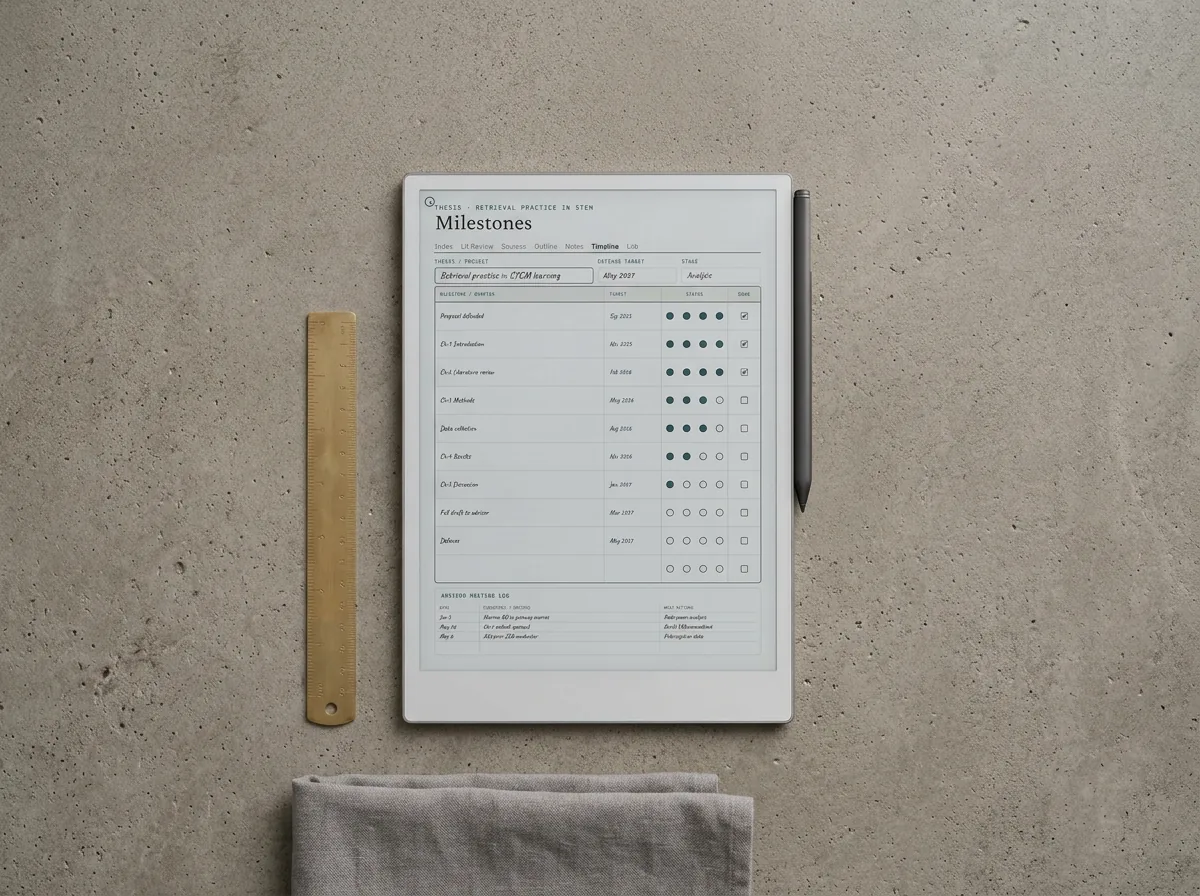
Nearly every research proposal outline runs the same spine, whatever the discipline calls each part: a title and abstract up front, then the problem statement or aims, a focused literature review, the methods or research design, a timeline, and the references, with a budget section added when money is being requested. Course proposals often run 1,500 to 3,000 words; grant and dissertation proposals follow whatever the call or the department specifies, and that specification wins every argument.
Resist the urge to be original with the structure. Originality belongs in the question; the skeleton is fixed because it lets a tired reviewer find the methods section in the same place they found it in the last nineteen proposals. If the call for applications names its own headings, copy them exactly, in their order, and answer under each one.
The method
How to write a research proposal, section by section
Write the sections in working order, which is not the order they appear on the page. The sequence below is the one that avoids rewriting everything twice.
State the problem before the field.
One paragraph, plain language: the gap, why it matters, and the question you will ask of it. If this paragraph cannot be written yet, no other section is ready to be written either.
Build the literature review as an argument, not a list.
The review exists to prove the gap is real. Organize it by theme, walk the reader to the hole in the field, and stop. A synthesis matrix is the fastest honest way to get there.
Match every question to a method.
For each research question, name the data that answers it, how you will collect that data, and how you will analyze it. A question with no matching method is a promise the proposal cannot keep.
Draw a timeline you would bet on.
Real durations, review cycles included, with slack where recruitment or ethics approval can slip. Reviewers have supervised enough projects to price an optimistic Gantt chart instantly.
Write the abstract last.
It is a compression of finished sections, not a warm-up. Draft it after methods and timeline exist, and keep it to the what, why, and how.
Edit for the skim reader.
Make the first sentence of every paragraph carry the argument on its own. A reviewer who reads only those sentences should still reach your conclusion.
The traps
The mistakes that get proposals sent back
Most returned proposals fail in one of four familiar ways. The scope is too big for the time and the money, which reads as inexperience rather than ambition. The literature review is a list of summaries instead of an argument, so the gap never becomes visible. The methods do not match the questions, usually because the questions changed and the methods section did not. Or the timeline is decorative, with every task taking exactly one tidy month. The fix for all four is the same reviewer-first habit: reread each section asking what a skeptical stranger would believe, not what you meant. The Scribbr walkthrough is a useful second pass if you want an outside checklist to mark your draft against.
A proposal is not judged on how much you plan to do; it is judged on whether the reader believes you can do it.
The desk
Where to draft and track the proposal
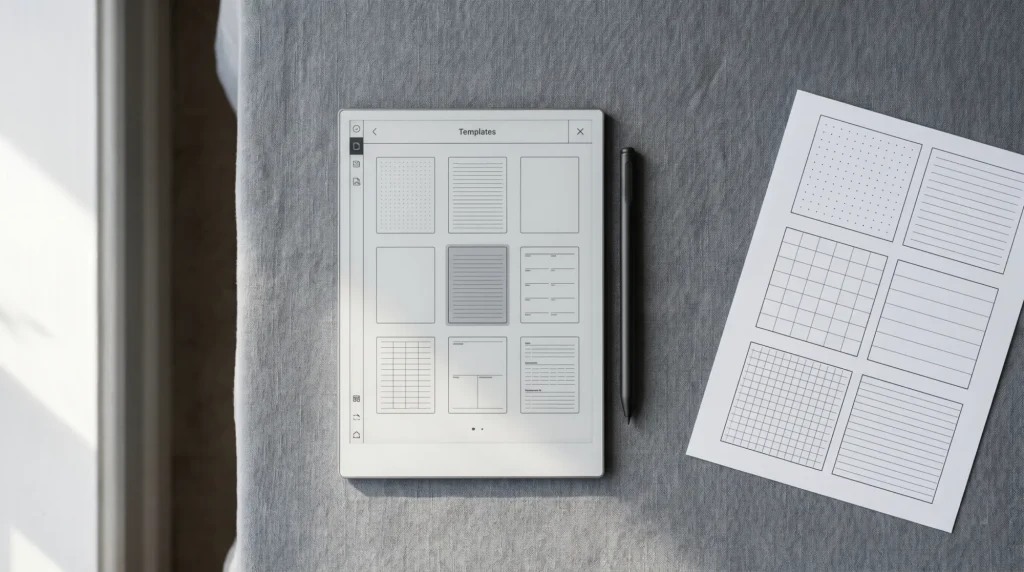
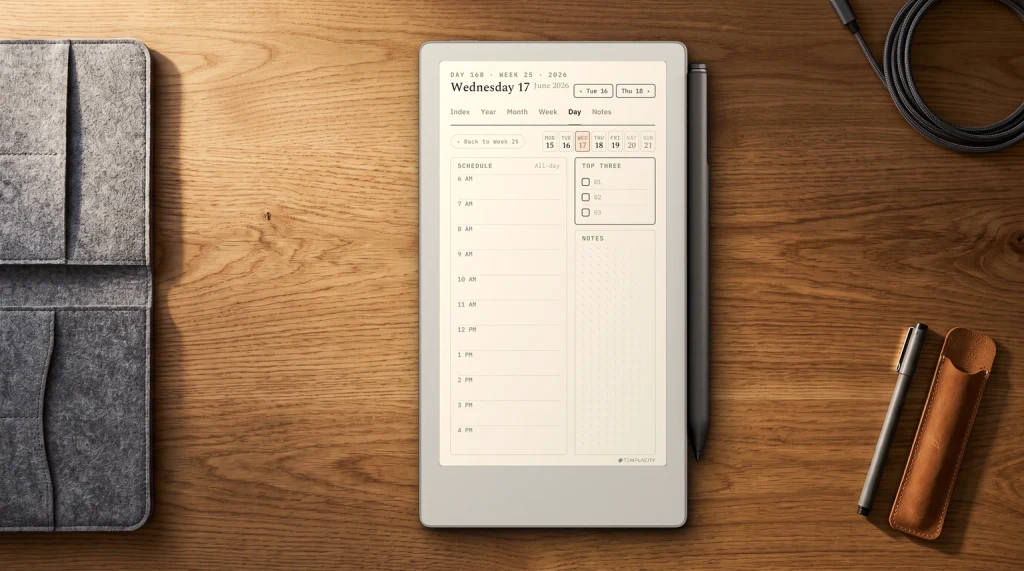
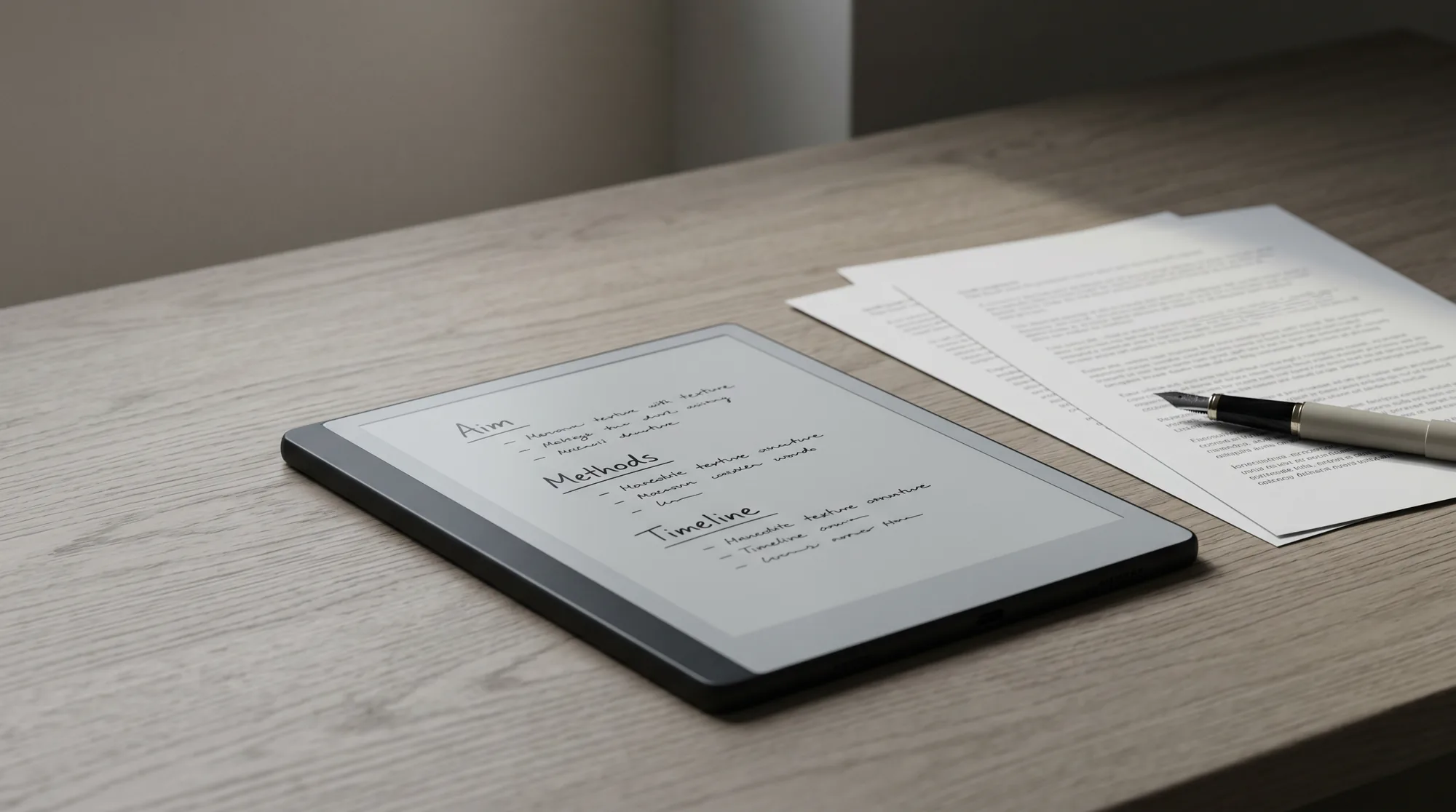
The final document lives in a word processor because that is what submission portals want. The thinking, though, rarely starts there. Outlining by hand keeps the what, why, and how honest before formatting hides them, and if your reading already happens on a reMarkable, a Kindle Scribe, or a Boox, drafting the outline and the timeline on the same screen as the annotated PDFs saves the app-switching tax. The wider toolchain question, where notes, references, and drafts should each live, is one we cover in our guide to the best note-taking apps for real work, and if the proposal is part of coursework, our digital student planner guide covers keeping the deadlines around it from drifting.
If you want the scaffolds ready-made, our Research System puts proposal and outline templates, a literature review matrix, and a thesis timeline in one hyperlinked PDF built for e-ink tablets, so the structure is done before the deadline. For the general note pages and planning layouts the drafting leans on, the reMarkable bundle is the wider set it sits inside.
A proposal is a genre, and genres are learnable. Get the three questions answered in order, keep the skeleton standard, and spend your originality on the research itself. If you have been through a committee round and picked up a convention we should add here, tell us in the comments; we fold the best field notes back into the reMarkable hub guides as they come in.
FAQ
Common questions, answered briefly
How long should a research proposal be?
What are the main parts of a research proposal?
What is the difference between a proposal and a prospectus?
Can I reuse proposal text in the thesis itself?
If your question is not covered above, ask it in the comments and we will add the answer here.
People also ask