The basics
What a gratitude worksheet is actually for
A gratitude worksheet is a page that walks you through noticing and writing down what is good in your life. There are two kinds, and they do different jobs. The first is a menu: a sheet that describes several exercises so you can pick one. The second is a fill-in page: boxes and lines for today’s answers, which you fill in and keep.
The best-known gratitude worksheet online is the first kind. The Therapist Aid gratitude exercises sheet is written for therapists to hand to clients, and it summarises five activities on one page: a gratitude journal, giving thanks, a mindfulness walk, a gratitude letter and grateful contemplation. It is a clear menu. It has no space to write anything.
Both halves matter. The research on gratitude is mostly research on writing: the practices that show an effect ask you to put words on a page, not only to think kind thoughts. So this post is the menu, with how long each exercise takes and how often to do it, and our free printable is the page you fill in.
The exercises
Five gratitude exercises worth putting on a worksheet
These five gratitude exercises are the ones Berkeley’s Greater Good Science Center documents as practices, with time and frequency written down. The table is the short version; each one is explained below it.
| Exercise | Time | How often | Best for |
|---|---|---|---|
| Three good things | 10 min | Daily, one week | Starting out |
| Gratitude journal | 15 min | 3 times a week | Keeping going |
| Gratitude letter | 10 min plus a visit | Every few weeks | One person |
| Savoring walk | 20 min | Daily, one week | Busy minds |
| Subtraction | 5 min | When lists go flat | Stale entries |
Three good things. As Greater Good in Action describes it, you write down three things that went well each day for at least a week, and explain why each one went well. Budget ten minutes. The page notes that people who learned it in the original study reported more happiness up to six months later, and that writing it down helps more than doing it in your head. This is the exercise to start with.
A gratitude journal entry. The gratitude journal practice asks for up to five things you are grateful for, about fifteen minutes at least three times a week for at least two weeks. Its tips are the useful part: be specific, go for depth over breadth, and write about people more than things.
A gratitude letter. You write to someone who did something for you that you never properly thanked them for, describing what they did and how it changed things for you. The gratitude letter practice budgets about ten minutes to write and at least thirty to deliver it, ideally in person. In the study it cites, this gave the biggest happiness boost of the five exercises tested one month later, though it had faded by six months, which is why some researchers suggest repeating it every six weeks or so.
A savoring walk. The savoring walk is twenty minutes outside, alone, every day for a week, noticing as many pleasant sights, sounds and smells as you can and pausing on each one. It is the Therapist Aid “mindfulness walk” under another name. On a worksheet, it becomes one line when you get home: the thing you noticed that you would normally walk past.
Subtraction. Instead of adding up good things, you picture your life without one of them. The research-based tips Greater Good collected from Robert Emmons recommend it as a way to stimulate gratitude, along with depth over breadth and focusing on people. Use it on the nights your list reads the same as last week’s.
Worked example
How to fill in a gratitude worksheet well
The difference between a worksheet that helps and one that becomes a chore is almost always the wording of the lines. “Family, health, coffee” is true every night, which is exactly why it stops meaning anything by the second week. Here is the same evening written two ways. These are examples we wrote to show the difference, not someone’s real entries.
| Box on the page | Flat | Specific |
|---|---|---|
| Good thing 1 | My partner | Sam took the early school run without being asked, so the day started with an extra hour of sleep. |
| Why it happened | They are nice | He saw how late the night before ran and decided on his own. |
| Good thing 2 | Work | The report that felt impossible went through in one round of comments. |
| Good thing 3 | Nice weather | Ten minutes of sun on the bench outside the office at lunch. |
| A kindness | Helped someone | Showed the new starter where the good printer is. |
Each specific line names a person, a time or a detail you could picture, and the “why” box points at a cause rather than a quality. That is what the three good things instructions ask for when they tell you to write what happened, how it felt and what caused it. The flat column takes ten seconds and the specific column takes three minutes, and only one of them is worth reading back.
The flat column takes ten seconds and the specific column takes three minutes, and only one of them is worth reading back.Worked example
Three habits keep a gratitude worksheet useful past the first week:
- Fill it at the same time. Before bed is the usual slot, because the day is done and the page can sit on the nightstand.
- Write people first. If one of your three lines names someone, the page does more work.
- Reread on Sunday. Five minutes with the week’s pages is where the good days come back, and it shows you which lines went flat.
Free printable
Our free gratitude worksheet PDF: what is on it
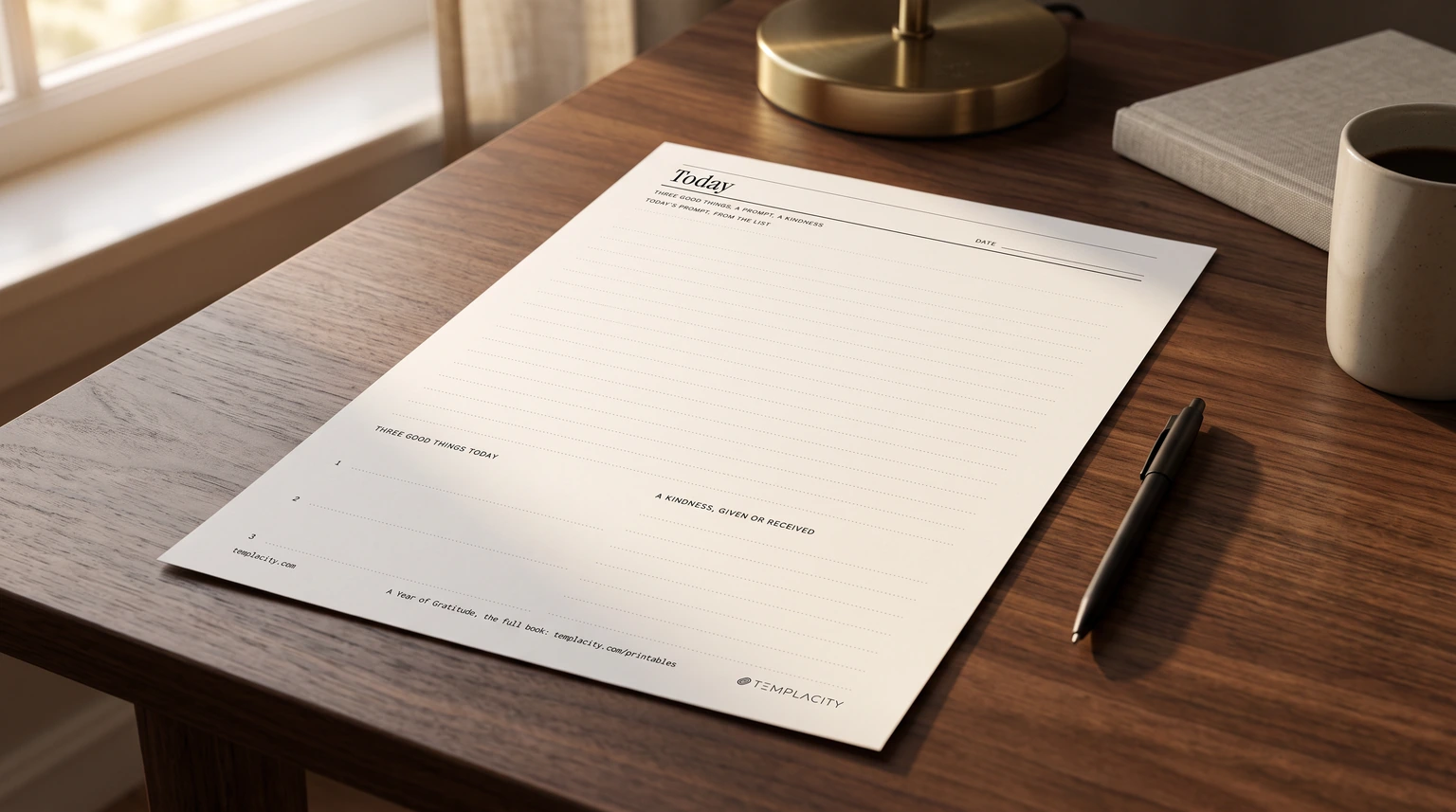
Our free gratitude worksheet PDF is fifteen pages, and you can print one page or all of them. It comes in US Letter, A4 and A5, as a direct download with no email gate. What is inside:
- The day page. Today’s prompt, three good things and one kindness given or received. This is the three good things exercise as a page, and the one to print in a stack.
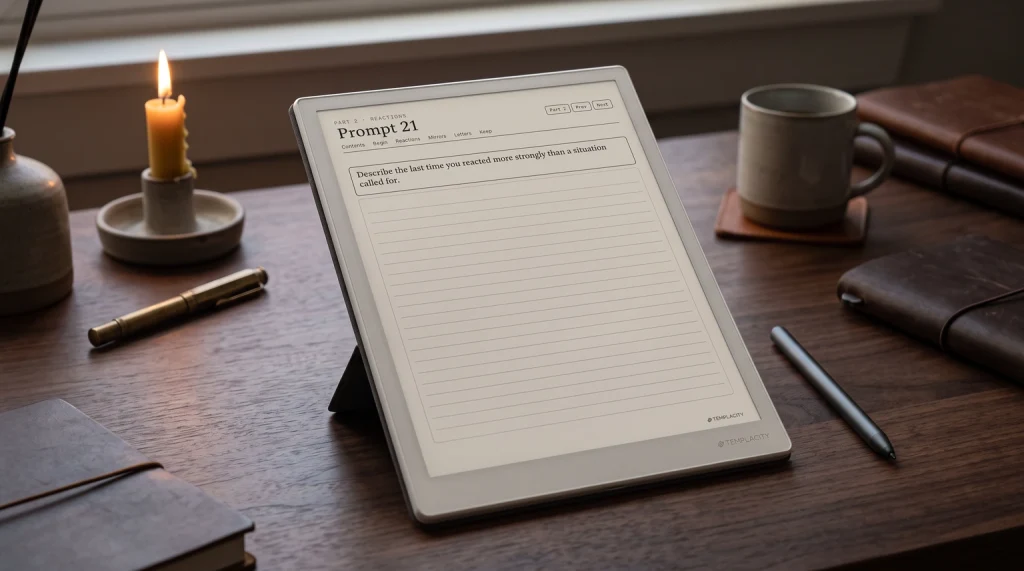
- Twelve prompt pages. One question at the top of a lined page, from “Who made your life easier this week, and how?” to “Write about a difficult time you came through. What helped?”
- Thirty starter prompts. A single page of questions to pick from, in any order.
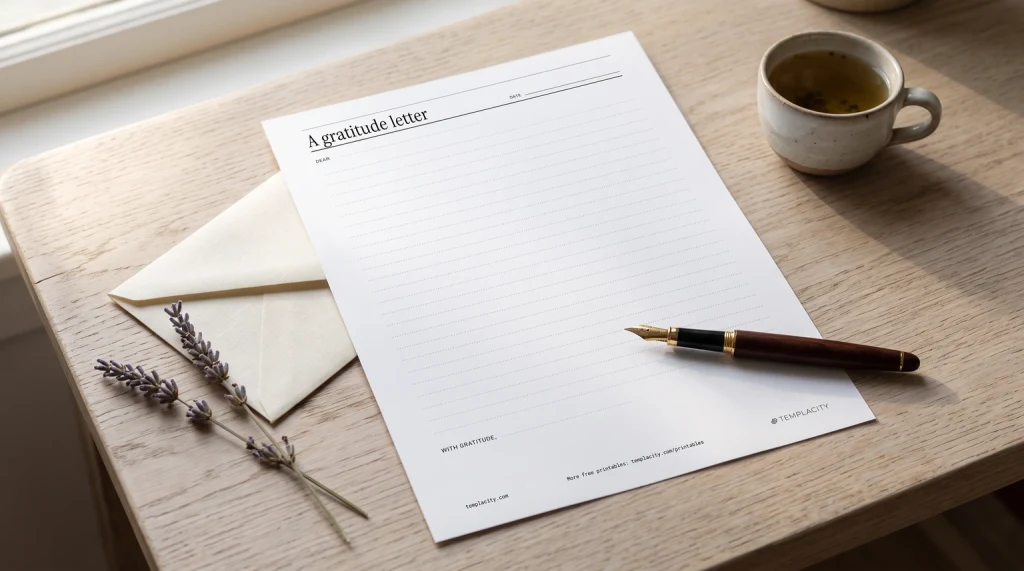
- A thank-you letter page. A “to” line and a “written on” date, with the page for the gratitude letter exercise.
The PDF also works on a tablet. Import it into Goodnotes, Notability or an e-ink tablet and write on the day page with a stylus; duplicate the page each night instead of printing. If you want plainer lined pages for the savoring walk and the subtraction exercise, our printable journal pages are the same idea without the gratitude headings.
Who it is for
Gratitude worksheets for adults, teens and therapy homework
For adults on their own. Most gratitude activities for adults fail on consistency, not on the exercise. Pick one, put the page where you will see it at night, and give it the full week the practice asks for before judging it. If the list keeps coming out the same, switch the evening’s page to a prompt or to subtraction rather than writing more lines.
For teens. Questions work better than empty boxes. Nemours KidsHealth publishes a gratitude worksheet for teens built around six short questions, such as naming someone you are grateful to have and why. Our twelve prompt pages are written for adults but most of them work for older teens as they are.
As therapy homework. If a therapist has given you a gratitude worksheet, follow their plan; a printable is a tool for the exercise they chose, not a replacement for it. Therapist Aid’s own guidance for its sheet makes the same point we would: the exercises are easy to learn, and the hard part is consistency. A fill-in page you can see on the nightstand helps with exactly that part.
Next step
When a worksheet turns into a journal
A worksheet is for trying the habit. Once you have filled a week or two of pages and want to keep going, loose sheets get lost and you cannot read back a month at a glance. That is the point where a bound gratitude journal makes more sense, and our gratitude journal guide covers how to keep one going past the first month. For nights when three good things will not come, our gratitude journal prompts are fifty questions in five groups, and our gratitude list has 100 things to be grateful for if you need somewhere to start looking.
If you would rather follow a structure for a full year, A Year of Gratitude is our undated gratitude journal ($29): 365 prompts in twelve chapters, three good things and a kindness each day, and thank-you letter pages, with iPad, e-ink and printable editions in one download. The free worksheet is the right place to find out whether the habit suits you first.
Which of the five exercises stuck for you, and which did you drop after two days? Tell us in the comments. We read them, and the most useful answers shape the next version of the free pages.
FAQ
Common questions, answered briefly
What is a gratitude worksheet?
What are the best gratitude exercises to start with?
How often should you do a gratitude worksheet?
Is there a free gratitude worksheet PDF?
Can I use a gratitude worksheet on an iPad?
If yours isn’t above, drop the question in the comments and we’ll add it.
People also ask