Why lists go stale
Why gratitude journal prompts beat a blank list
Gratitude journal prompts exist because the blank version wears out. Most people start a gratitude journal by writing three things they are thankful for each night, and within a few weeks the three things are the same three things: family, health, coffee. The entry takes ten seconds and stops meaning anything. A prompt fixes that by asking a narrower question, one that makes you look at a specific part of the day instead of reaching for the usual answers.
That is why the prompts below are grouped by situation rather than numbered one to fifty. On a night with no energy you want a one-line question. On a hard night you want a prompt that does not ask you to pretend the day was good. Pick the group that fits the evening, then pick one prompt, and answer it properly.
The method
How to use gratitude prompts so they keep working
The research on gratitude journaling is more specific than most prompt lists admit. Berkeley’s Greater Good Science Center, which has collected this work for years, summarizes a handful of habits that make the practice work better, drawn from researchers including Robert Emmons and Sonja Lyubomirsky. They come down to five things.
- Depth over breadth. Writing about one thing in detail does more than listing many things briefly.
- People over things. Gratitude aimed at a person has a stronger effect than gratitude aimed at an object.
- Subtraction. Imagining your life without something good tends to stir more gratitude than simply counting it.
- Surprises. Unexpected good things register more strongly than the ones you see every day.
- Not too often. In one study the Center describes, people who wrote once a week for six weeks reported a lift in happiness and people who wrote three times a week did not.
That last point needs a fair caveat. The Center’s own practice guide suggests writing at least three times a week for two weeks, and the original Emmons and McCullough study it cites used both weekly and daily versions. The honest reading is that the exact count matters less than the freshness of each entry: two or three thoughtful entries a week beat a nightly list you write on autopilot.
Short nights
Gratitude prompts for a busy night, one line each
These are for the evenings when a full entry is beyond you. Each one can be answered in a sentence, and each is narrow enough that the answer will not be the same as last week’s.
- What was the best five minutes of today?
- What went more smoothly than you expected?
- What did you eat today that you would happily eat again?
- What small thing worked exactly as it should?
- Who made today slightly easier, even without knowing it?
- What did you see outside that you noticed for once?
- What are you glad you did not have to do today?
- What sound from today would you keep?
- Which tool or object saved you time?
- What is one thing you are looking forward to tomorrow?
People
Gratitude journal prompts about the people around you
People are where gratitude has the most weight, so give these prompts more room than one line. Name the person and describe what they actually did; a vague thank you to “my friends” is the entry that goes stale fastest.
- Who taught you something you still use, and what was it?
- Describe a time someone stood up for you. What did they risk?
- Who do you rely on without ever saying so?
- Which stranger has been kind to you this year, and how?
- Who made you laugh recently, and what did they say?
- Write about someone who saw something in you before you did.
- Who is easy to be around, and why?
- What habit did you pick up from someone you love?
- Who would you call first with good news? Write what you would tell them.
- Write three sentences to someone you never properly thanked. You do not have to send them.
Name the person and describe what they actually did; a vague thank you is the entry that goes stale fastest.People
Hard weeks
Gratitude prompts for a hard week
Gratitude is not a duty to feel fine. On a bad week these prompts do not ask you to find a silver lining; they ask you to find something that held, however small. If the week is genuinely too heavy, skip the journal and talk to someone instead. The page will still be there. When you want to look at the hard feelings directly rather than around them, our shadow work prompts start gently.
- What got you through today, even partly?
- Who checked on you, or who could you let check on you?
- What is one thing that did not go wrong?
- What part of your routine still held this week?
- What comfort is within reach right now: a blanket, a song, a window?
- What have you survived before that once felt this hard?
- What did your body do for you today without being asked?
- What would you tell a friend in your position?
- What is easier now than it was a year ago?
- What is one kind thing you did for yourself today?
Subtraction
Prompts that work by subtraction and surprise
These two kinds of prompt are the ones the research singles out, and the ones most lists leave out. Subtraction asks you to picture a good thing gone. Surprise asks you to notice what you did not expect. Both break the habit of writing down the same familiar answers.
- Picture the last month without one person in it. What would be missing?
- Which everyday convenience would you miss most if it vanished tomorrow?
- How did you meet someone important to you? Imagine the version where you never did.
- What ability do you use every day that you once could not do?
- What would this week have looked like without your home?
- What surprised you today, in a good way?
- What turned out better than you feared?
- When did someone exceed what you asked of them?
- What did you find, learn or overhear that you did not expect?
- What chance meeting or accident led somewhere good?
Looking back
Gratitude journal prompts for the end of the week and month
Once a week, or once a month, a longer look back gives the short entries somewhere to go. These are the prompts for a slow Sunday or the last day of the month, when you have time to write a page.
- What was the best day this week, and what made it so?
- Which entry from this month do you most want to remember?
- What did you learn this month that you are glad to know?
- What problem went away, quietly, without you noticing?
- Who showed up for you this month?
- What did you finish, even something small?
- What place made you feel at home this month?
- What are you grateful for now that you would not have listed a year ago?
- Which of this month’s worries did not come true?
- What do you want more of next month?
Paper or screen
Where to keep a gratitude journal: paper, iPad or e-ink
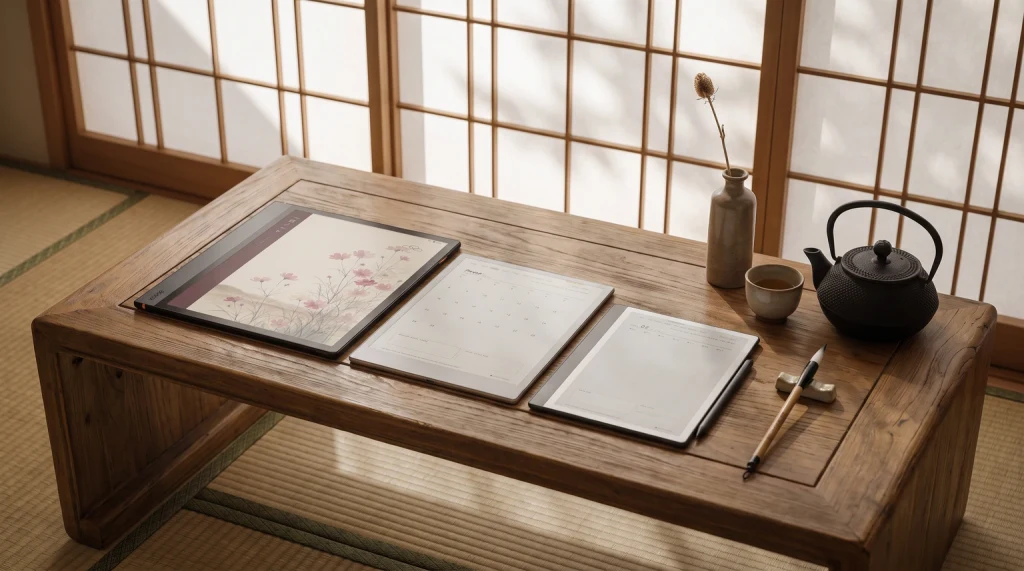
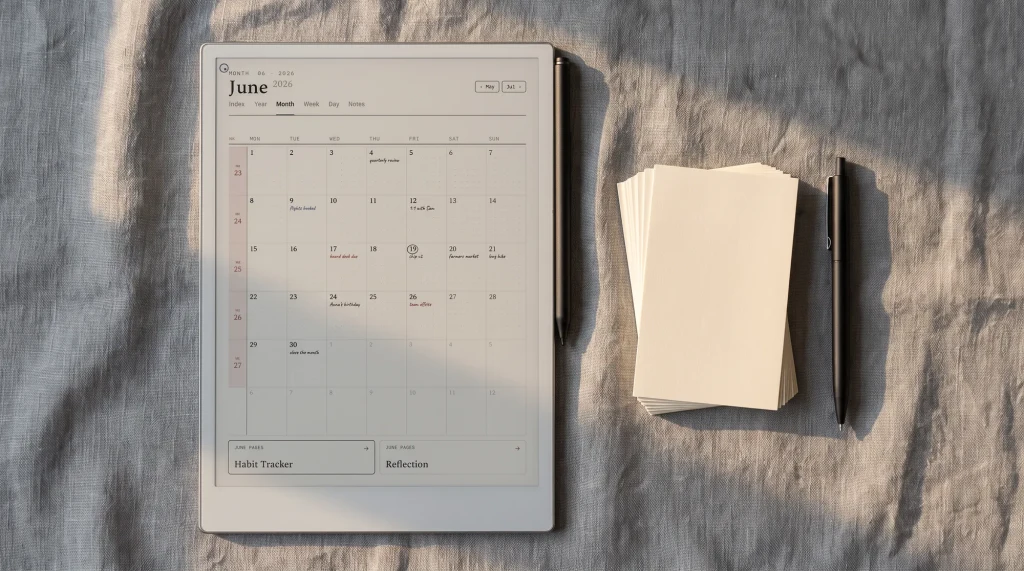
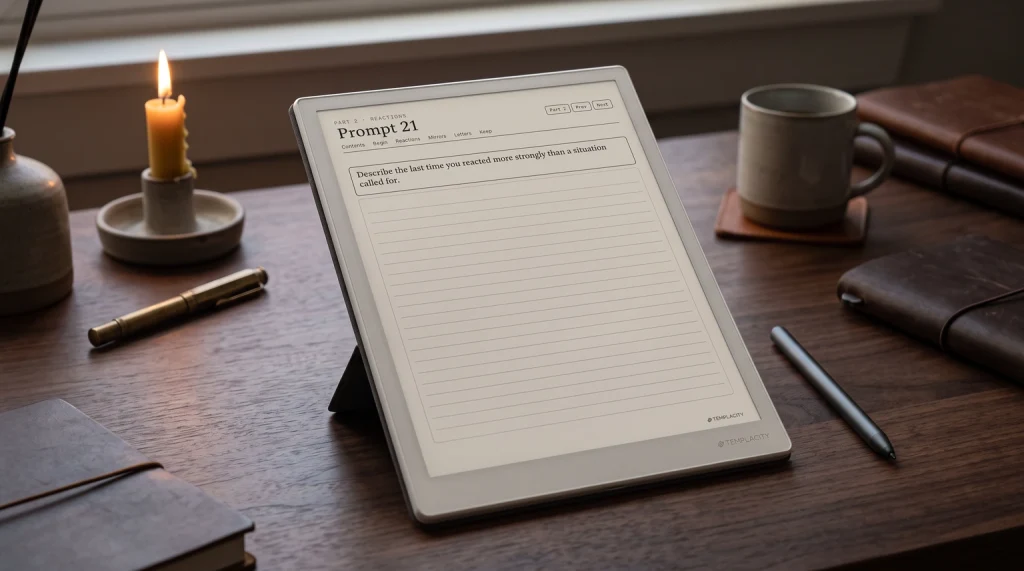
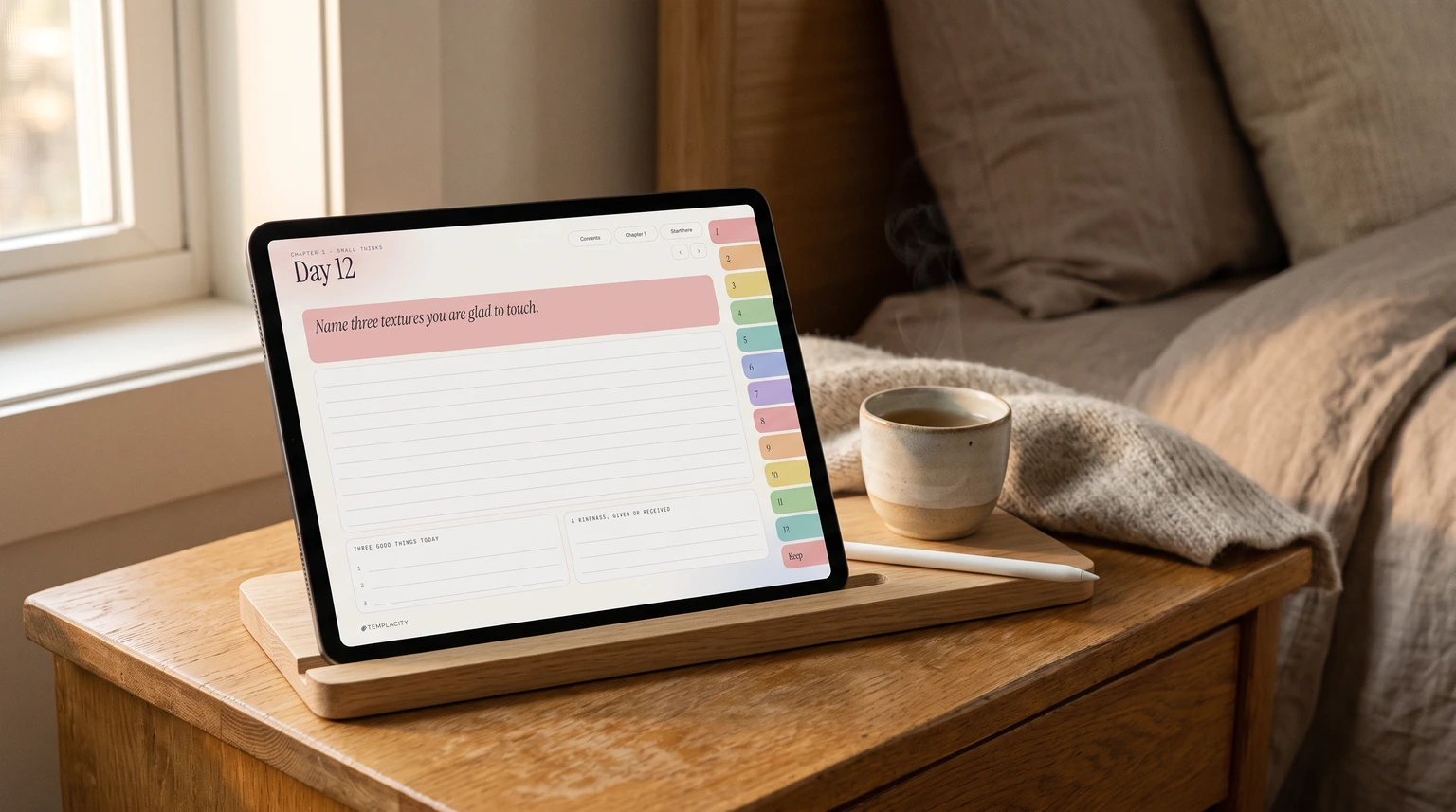
Any notebook works, and a cheap one you keep by the bed beats an expensive one in a drawer. If you would rather write by hand on a tablet, a journal PDF does the same job on a screen: import it once into Goodnotes or Notability on an iPad, or onto an e-ink tablet such as a reMarkable, Kindle Scribe or Boox, and write straight on the page. Our guides to a digital journal template and a Goodnotes journal template cover what the file should hold and how to load it.
If you would rather start on paper tonight, our free printable gratitude pages are a 15-page PDF: thirty starter prompts, a daily page for three good things, a prompt and one kindness, twelve single-prompt writing pages and a thank-you letter page. They print on US Letter, with A4 and A5 versions, and import into Goodnotes or onto an e-ink tablet like any PDF.
Full disclosure: we make two. A Year of Gratitude is the full version of those free pages: 365 prompts in twelve chapters and three good things a day, undated so you can start in any month. The Journal has a page for every day of the year, and each day page carries a three small joys box beside the written entry, which is a gratitude habit built into the layout. Pair it with one prompt from this list on the nights you have more to say. Both come cut for e-ink tablets and for Goodnotes and Notability on iPad, and A Year of Gratitude also prints. If you prefer a journal you design yourself, the bullet journal method leaves the layout to you.
Gratitude journals are personal, and the prompts that work for one person fall flat for another. If a question has kept your journal fresh past the first month, share it in the comments. The best prompts we know came from readers who had already worn out the obvious ones.
FAQ
Common questions, answered briefly
What should I write in a gratitude journal?
How often should you write in a gratitude journal?
How many things should I list each time?
What do I do when my gratitude list keeps repeating?
Can I keep a gratitude journal on an iPad or e-ink tablet?
If yours isn’t above, drop the question in the comments and we’ll add it.
People also ask