The rule
How a 50/30/20 budget template splits your pay
Forty categories, forty limits, and one expensive week in March that breaks every one of them. Most budgets end there, and the 50/30/20 budget template exists because the fix is fewer decisions, not more discipline. You make three: how much is needs, how much is wants, how much is kept.
The rule is usually traced to All Your Worth, the 2005 book by Elizabeth Warren and Amelia Warren Tyagi, which divides money into Must-Haves, Wants and Savings. As most people use it now, 50/30/20 means half of your take-home pay for needs, 30% for wants and 20% for savings. Take-home means what actually lands in your account after tax, from every paycheck and any other income. Money that leaves your pay before it lands never reaches the sheet, so it is not part of the split.
Worked example
One month at $4,000 take-home
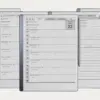
The sheet opens on an example month, and it is worth reading before you type over it. Take-home pay is a $3,400 paycheck plus $600 of other income, $4,000 in all. At 50/30/20 the targets are $2,000 for needs, $1,200 for wants and $800 for savings. Then the month happens: housing $1,250, groceries $430, transport, phone, insurance and the bills, a few weekend trips, coffee and takeaway, and $800 moved into an emergency fund, a retirement account and a vacation fund.
| Bucket | Share | Target | Actual | Of pay |
|---|---|---|---|---|
| Needs | 50% | $2,000 | $2,165 ($165 over) | 54% |
| Wants | 30% | $1,200 | $1,035 ($165 to spare) | 26% |
| Savings | 20% | $800 | $800 (on target) | 20% |
| All three | 100% | $4,000 | $4,000 | 100% |
Needs came in $165 over their half, mostly because housing alone is $1,250 of the $2,000. Wants came in $165 under. Savings hit the $800 exactly. The line at the top of the sheet reads it the way you should: “Needs run $165 over their 50%, but Wants have $165 to spare, so the month still balances.”
That is the whole point of reading the three side by side. A 50/30/20 budget spreadsheet that flags Needs in red and stops there sends you hunting for cuts you do not need to make. The month only needs attention when the overrun has nowhere to go: Wants over as well, or savings short, or your lines adding up to more than you take home.
Sorting
What counts as a need, a want or savings
Every line in the template gets one tag, and the tag is the only real judgement you make. These are the rules the sheet itself uses, written on its Start Here tab:
- Needs are what you must pay to live and work: a home, food at home, bills, insurance, getting to work, and the minimum payment on anything you owe.
- Wants are what you choose: eating out, hobbies, trips, subscriptions, and the nicer version of a need.
- Savings is money kept for later: a rainy day fund, retirement, goals, and anything you pay off a balance beyond the minimum.
The debt rule is the one most guides skip. A card balance with a $40 minimum is a need up to $40, because you have to pay it. The extra $150 you send to clear it faster is savings, because it does what saving does: it leaves you better off next month. Split the payment across two lines, one tagged Needs and one tagged Savings, and both buckets stay honest. If you are paying down several debts, our debt payoff tracker guide covers the order to pay them in.
“The nicer version of a need” settles most arguments. Groceries are a need; the delivery fee and the second coffee are wants. A phone plan is a need; the newest handset on a monthly plan is partly a want. You do not have to be strict about it, only consistent, because a 50/30/20 budget template measures the same thing every month and a line that moves bucket each month blurs the reading. Refunds go in as a minus amount on their own line and come off that bucket.
Your split
Changing the split: 60/20/20 and 70/20/10
Fifty per cent for needs is hard in a city where rent alone takes half. That is fine. The split is three typed cells, and two others are common: 60/20/20 when needs run past half, and 70/20/10 for a tight stretch, where needs take most and a tenth is still saved. Run the example month at 60/20/20 and the targets become $2,400, $800 and $800. The same spending now reads differently: Needs sit $235 under, and Wants are $235 over, which is the honest picture if your rent is the reason you changed the split in the first place.
A split that quietly fixes itself hides the one mistake you most need to see.
Two details decide whether a template handles this well. First, the share cells should read 50, 50% and 0.5 as the same thing, because people type all three. Second, the shares have to add to 100, and when they do not, the sheet should say so. Type 50, 30 and 30 and the targets plan $4,400 out of $4,000. A split that quietly fixes itself hides the one mistake you most need to see. Ours shows “Adds to 110%” under the split and puts the problem on the top line, and it never rescales your numbers behind your back.
The formulas
Your three numbers, and the formulas behind them
After tax, from every paycheck.
Adds to 100%.
Type a share as 50, 50% or 0.5: all three read as half. A split that does not add to 100 is reported, never stretched to fit.
If you would rather build your own 50/30/20 budget spreadsheet, these are the formulas our sheet runs, written for a simple layout: take-home pay in B1, the three shares typed in B3 to B5 (Needs, Wants, Savings), and your lines from row 8 down, with the bucket in column B and the amount in column C. First, read each share the forgiving way in a helper cell beside it:
=IF(ISNUMBER(B3),IF(B3>1,B3/100,B3),0)
Goes in C3 and fills down to C5. A number above 1 is read as a whole per cent, so 50, 50% and 0.5 all come out as half; a blank share counts as nothing.
Formula reviewed 17 November 2026
Each target is then =C3*MAX(0,$B$1), and the actual for each bucket is a SUMIFS over your lines, for example =SUMIFS($C$8:$C$500, $B$8:$B$500, "Needs"), with “Wants” and “Savings” in the other two. One more cell does the job a calculator usually skips: it adds the three shares and says the result out loud.
="Adds to "&TEXT(SUM(C3:C5),IF(AND(ROUND(SUM(C3:C5),2)=1,ROUND(SUM(C3:C5),3)<>1),"0.0%","0%"))
Reads “Adds to 100%” on 50, 30 and 20, “Adds to 110%” on 50, 30 and 30, and “Adds to 99.9%” on 33.3 three times: when whole per cents would round a miss up to 100%, it shows one decimal, so it never says 100% on a split that is not. Our sheet says what the miss means beside it, “Plans 10% more than your pay” or “0.1% of your pay has no bucket”. It reports; it never changes the targets.
Formula reviewed 17 November 2026
On the example month those give $2,000, $1,200 and $800, and “Adds to 100%”. If your own build gives anything else on $4,000 at 50/30/20, check how the share cells are being read before anything else. Our Google Sheets budget template guide covers the other checks worth running before you trust any budget sheet.
Excel
The 50/30/20 budget template for Excel
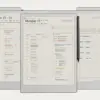
Prefer Excel? The download below is a native Excel file built from the same source as the Google Sheet, not a converted copy: the same Start Here and Budget tabs, the same jars, the same example month, and every formula working in both programs. It needs no account at all, and there are no macros to enable.
One difference is worth knowing. A downloaded Excel file is a copy of its own, so if two of you budget together, pick one person to keep it, or keep it in a folder you both open. If you start in Google Sheets and change your mind, Google’s own File, Download menu exports the sheet in another file type. For more Excel budgets, from personal to household, see our Excel budget template roundup.
A whole year
When one month on one page is not enough
The free sheet is deliberately one month on one tab: type over the amounts each month and it works again, because nothing in it is dated. That suits most people starting out. What it does not do is remember last month, plan paydays or track the bills themselves; our free bill tracker for Google Sheets handles the bills side.
If you want the year in one file, our Budget & Money Planner ($39, Google Sheets and Excel) has twelve month tabs where every spending category is tagged Needs, Wants, Savings or Debt, and each month shows each group’s share of your income, so you can read the whole year against 50/30/20 or your own split. Paychecks, a bill calendar, a debt payoff plan, sinking funds, savings goals and net worth sit beside it. Start with the free sheet; you will know within a couple of months whether you want more.
Copy the sheet, type one real month over the example and read the line at the top. Then tell us in the comments which split you ended up on, and what you tagged the gym: it splits households more reliably than any rule does. More free files live in our free Google Sheets templates and the Google Sheets hub.
FAQ
Common questions, answered briefly
How do I calculate a 50/30/20 budget?
Is the 50/30/20 rule based on gross or take-home pay?
Do debt payments count as needs or savings?
What if my needs are more than 50%?
Does the 50/30/20 budget template work in Excel?
People also ask