The change
Airbnb new house rules: what changes on November 20, 2026
Airbnb announced the change on October 20 and updated its explanation on November 3, after hearing from many hosts, in a Resource Center article called Important changes to house rules. The Airbnb new house rules take effect on November 20, 2026, and the policy itself lives on two Help Center pages: Reasonable house rules, which applies to all reservations booked on or after that date, and the rewritten policy on limiting host-imposed contracts and other requirements, which keeps the old Off-Platform Policy at the bottom for anything booked earlier.
Airbnb’s stated reason is that guests have told it for years that checkout chores and unexpected rules make them hesitant to book. The enforcement is a review, not a switch. Airbnb says it starts initial reviews on November 20, continues them through March 2027 and then reviews listings on an ongoing basis. If your additional rules do not meet the policy, you hear by email and in the app, and you get at least 20 days to update them or appeal.
Under the new policy, every house rule has to pass four tests. It must be disclosed in the house rules section of the listing at the time of booking, and new rules may not be added afterwards by message, by a sign in the home or in person. It must match the rest of the listing. It must comply with Airbnb’s other policies, which rules out separate contracts and requests for personal information such as a government ID outside narrow exceptions. And it must be reasonable, which Airbnb defines mostly by what it rules out: chores a cleaner would normally do, restricting a feature the listing advertises, and fines.
The test is not whether a rule is fair to you. It is whether a guest could read it before booking and whether a cleaner would normally do it.The read
Checkout
What you can still ask guests to do at checkout
Airbnb gives four pairs of examples, and they draw the line more precisely than any summary. Light tidying stays; turnover work goes back to you or your cleaner.
| Area | You can ask | You cannot ask |
|---|---|---|
| Dishes | Put used dishes in the sink | Wash and put away dishes |
| Laundry | Gather used towels | Remove sheets or start a load |
| Trash | Sort trash and recycling into indoor bins | Take garbage off-site |
| Utilities | Turn off the air conditioning when leaving | Avoid using a listed amenity |
Context can earn an exception. Airbnb says it weighs the type of listing and local factors, including local laws, and its own examples are asking guests to use an animal-proof trash container in bear country or to keep showers short under drought-related water restrictions. The appeal examples it prints are just as telling: a co-op with a communal kitchen where everyone washes their own dishes, bins that have to go out on collection day for stays of a month or more, and a building that makes every occupant register at the front desk.
The listing editor changed with the policy. The checkout instructions section is gone, and Lock up at checkout is now one of seven standard house rules, alongside maximum overnight guests, pets, smoking, quiet hours, events and commercial photography. Anything else you want guests to do before they leave goes under Additional rules, set to Before checkout. Airbnb had briefly labelled additional rules “Requests”; it says they will read “Additional rules” in the app over the coming weeks. Our Airbnb cleaning checklist covers the turnover side that now sits with you.
Fines, contracts, ID
Fines, contracts and ID under the new policy
Fines. Airbnb says hosts generally should not impose fines or other penalties, and points to AirCover for damage instead. The exception is a fine someone else charges. If your homeowners association or local government might fine a guest’s behavior, Airbnb’s page on adding local rules has you put it in its own field: Listings, choose the listing, Listing editor, House rules, then the line about fines charged by your local government or HOA. Say what the rule is and who sets it, what guests need to do, the amount of the fine or how it is calculated, and when it may be charged.
Contracts. For reservations from November 20, hosts generally may not ask guests to sign a separate contract or rental agreement. Airbnb allows four exceptions: a contract required by law, by community association rules such as an HOA or building security, or by the host’s insurance provider; one needed for an optional amenity such as a golf cart rental; one for a monthly stay of 28 nights or more; and one for a Luxe listing. An allowed contract is uploaded as a PDF under Listing editor, Settings, Contract, one per listing, and anyone viewing the listing can read it, so strip personal information first. Airbnb does not require guests to sign it, does not help enforce it, and you cannot ask a guest to sign a contract that was not on the listing when they booked.
ID and personal data. With limited exceptions, hosts may not ask for a guest’s phone number, home address or email, ID documents, financial details, background checks or biometric data at any point during the booking or the stay. A host may physically check a guest’s ID at check-in if the additional rules say so, but may not keep a copy unless a law or a documented HOA or building rule requires one, and the listing must say what is collected and why before anyone books. Airbnb verifies every booking guest itself, as our guide to how old you have to be to rent an Airbnb explains. Keyless entry apps that need registration are allowed if you offer another way in on request; Wi-Fi portals that ask for an email are not, unless the listing is a hotel or resort.
Before November 20
How to review your house rules before the reviews start
Open House rules in the Listing editor.
Listings, choose the listing, Listing editor, House rules. Set the seven standard rules first, Lock up at checkout included, so the additional rules only carry what the standard ones cannot.
Rewrite each additional rule against the four examples.
Dishes to the sink, towels in a pile, trash in the indoor bins, air conditioning off. Airbnb flags additional rules that may not comply as you write them, highlighted in the text with a short reason; a flagged rule saved anyway goes to further review.
Move fines and contracts to their own fields.
HOA and local government fines go in the local rules field. A contract goes under Settings, Contract, and only if one of the four exceptions applies; otherwise delete it from the house rules text.
Appeal the rules your home really needs.
Use the Submit an appeal link in Airbnb’s email or the Required action card in the Listing editor, explain the situation in detail and upload evidence such as a local ordinance or HOA rule. Airbnb says you can only submit an appeal once, so check it before you tap Submit.
Ignoring a flag has a visible cost. If Airbnb does not approve an appeal, it emails you a deadline to update or remove the rule, and if you keep it, guests may see a notice on your listing page. The house rules policy adds that a persistent violation can also mean reduced visibility in search.
What you keep
What hosts keep: enforcing house rules
The new policy narrows what a rule may say; it does not weaken a rule that passes. If a guest breaks one of your house rules during the stay, or says before check-in that they intend to, you can cancel the reservation without fees or other consequences and contact Airbnb for next steps. Airbnb’s ground rules for guests still expect them to follow house rules, to leave the place without needing excessive or deep cleaning, and to pay reasonable requests for damage, missing items or unexpected cleaning costs, while hosts may not charge fees for skipped checkout tasks but may rate and review on cleanliness. Our guide to Airbnb security deposits covers what you can and cannot hold against damage.
Guests will also see the rules more. Airbnb says house rules now show more prominently on the listing before booking, in the guest’s Trips tab and in reservation reminders, and a pre-written quick reply lets you send a friendly reminder during the stay. For the wording itself, our Airbnb house rules template is the starting point, and the wider list of this year’s changes sits in our roundup of Airbnb host rule changes.

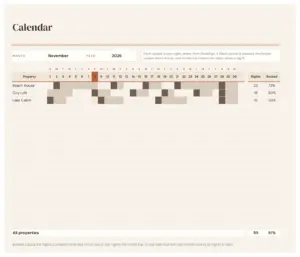
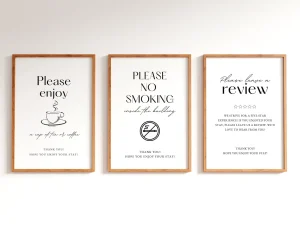
Everything you hand a guest, matched and priced to move together.
FAQ
Common questions, answered briefly
When do Airbnb’s new house rules start?
Can Airbnb hosts still ask guests to do chores at checkout?
Can an Airbnb host charge a fine for breaking house rules?
Can Airbnb hosts still require a rental agreement?
What happens if my house rules break the new policy?
Hosting under the new rules and hit a flag we have not covered? Tell us in the comments which rule Airbnb queried and how the appeal went, and we will add what other hosts learn as the reviews roll through March.
People also ask