What changed
The Airbnb host rule changes that actually affect your 2026

Most of the Airbnb host rule changes making the rounds this year are fine print. Three are not, because they decide how you get paid when a guest cancels, how you are taxed on what you keep, and whether your listing stays visible at all. Everything else is worth a shrug; these three are worth ten minutes. We pulled each one from the source that actually governs it, Airbnb’s own policy pages, the IRS, and the EU regulation, rather than the host forums where half of this gets garbled in the retelling.
The short version: cancellation policies were reshuffled and one of them is new, the US tax-form threshold moved twice and landed higher than the scary number you may have planned around, and hosts in the European Union now have a registration deadline with teeth. Take them one at a time.
Payouts
Cancellation: Strict went invitation-only, and “Limited” is new
The change most likely to surprise you at payout time is the cancellation lineup. The old Strict policy, along with Super Strict 30 and Super Strict 60, is now invitation-only: you cannot simply pick it from the menu anymore. The strictest policy a host can select directly is Firm. Airbnb also added a new middle option called Limited, available on bookings made on or after 1 October 2025, that sits between Moderate and Firm. So the standard shelf is now four policies, not the set you may have chosen from when you first listed.
Here is what each standard policy actually pays you when a guest cancels a short stay, straight from Airbnb’s cancellation-policy page.
| Policy | Guest gets a full refund until | If they cancel after that |
|---|---|---|
| Flexible | 24 hours before check-in | You are paid for each night, plus one more night |
| Moderate | 5 days before check-in | Each night, one more night, plus 50% of the rest |
| Limited | 14 days before check-in | 50% from 7 to 14 days, then 100% to you under 7 days |
| Firm | 30 days before check-in | 50% from 7 to 30 days, then 100% to you under 7 days |
One rule sits on top of all of them: a 24-hour cancellation window. For stays under 28 nights booked at least 7 days before check-in, a guest can cancel within 24 hours of booking for a full refund, taxes included, no matter which policy you run. It is not a loophole; it is the same across the board, so build it into how you think about last-minute bookings rather than treating any single reservation as locked the moment it lands.
Changing your policy is a two-minute job you control: it lives in your listing’s settings, under the policies section, and you can hold a different rule for short stays and long stays. The catch is timing. A policy change applies to new reservations, not to bookings a guest already holds, so if you want a stricter tier in place for a busy season, set it well before the calendar fills rather than after the requests start arriving. That single habit, reviewing the policy before each season instead of once at setup, is what turns this particular one of the Airbnb host rule changes from a surprise into a decision.
This is separate from what happens when you cancel on a guest, which carries its own penalties. We cover that side in host cancellations and their penalties; the table above is only about guest-initiated cancellations and your payout.
Taxes
The 1099-K reset most US hosts missed
For a couple of years the plan was to drop the US 1099-K reporting threshold to a level that would have put almost every host on a form: talk of $2,500, then $600. That is not where it landed. For 2026 the threshold is back up at $20,000 and more than 200 transactions, per the IRS. A payment platform like Airbnb issues the form only once you cross both of those, so a smaller operation may not receive one at all this year.
Do not read that as a break on what you owe. The threshold decides whether a form gets generated, not whether the income is taxable. Every dollar of rental income is reportable whether or not a 1099-K shows up in your inbox, and the number the form reports is gross, before Airbnb’s service fee and your own costs come out. Your taxable profit is lower than that gross figure, but only if you have the records to prove the gap. The full picture, including what you can deduct, is in our Airbnb taxes guide.
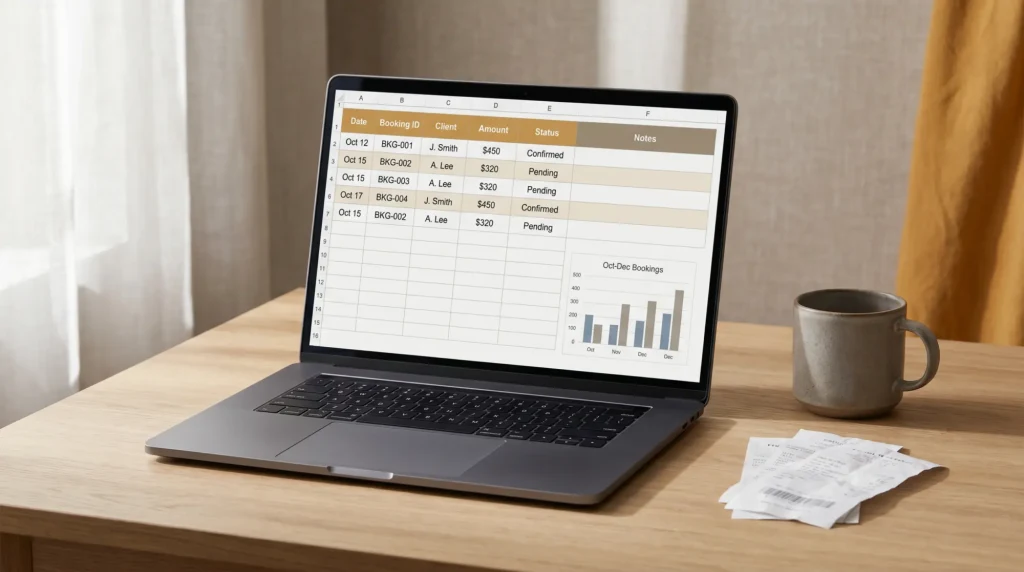
The practical move here is not to celebrate dodging a form; it is to keep the records as if one is coming. Save the payout reports Airbnb generates, log cleaning and supply costs against each stay, and hold onto receipts for the big deductible items. If you cross the threshold next year, or in a state that sets its own lower one, the difference between a stressful April and a routine one is entirely whether that paper trail already exists. None of the Airbnb host rule changes reward good bookkeeping directly, but this one quietly punishes its absence.
The threshold decides whether a form gets generated, not whether the income is taxable.The 1099-K reset
Compliance
EU hosts: register by 20 May 2026 or risk your listing
If you host inside the European Union, this is the change with a hard date on it. Regulation (EU) 2024/1028 on short-term rental data applies from 20 May 2026. Where your national or local authority requires registration, you have to register your property, supply accurate details, and then display the unique registration number you receive on every listing across every platform.
The platforms are pulled into enforcement too. Airbnb and the rest have to let you declare your registration status, run checks on those declarations, and pass activity data to the authorities on a regular schedule, monthly for large platforms and quarterly for smaller ones. In practice that means an unregistered listing in a registration area is exposed rather than quietly overlooked. If you operate in a market that has already tightened, our look at Spain’s short-term-rental crackdown shows what enforcement looks like on the ground once the rules land.
Your layer
What none of these changes touch
Notice what is not on the list. None of the 2026 Airbnb host rule changes touch the part of hosting that actually earns your reviews: the arrival that goes smoothly, the house manual that answers the question before it is asked, the message that goes out at the right moment. Airbnb keeps moving the rules around the edges of your listing. The middle of it, the guest experience, is still yours to run, and it is the part that survives every policy reshuffle.

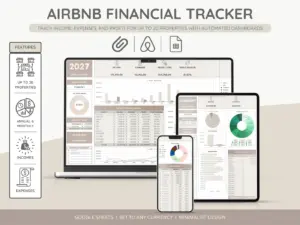

Everything you hand a guest, matched and priced to move together.
If you do only three things with these Airbnb host rule changes this month, make them these. Open your listing settings and confirm your cancellation tier is the one you actually want going into your next busy season, not the one you picked at setup. Start a plain record of payouts and expenses so a 1099-K, this year or next, is a formality rather than a scramble. And if you host anywhere in the EU, check your registration status now rather than at the deadline. Each takes minutes, and each turns a rule change from something that happens to you into something you decided.
For everything else on running a listing, from pricing to guest messaging, the Airbnb hosting hub collects the guides in one place.
FAQ
Common questions, answered briefly
What are the biggest Airbnb host rule changes in 2026?
Did Airbnb get rid of the Strict cancellation policy?
What is the Airbnb 1099-K threshold for 2026?
Do EU Airbnb hosts need to register in 2026?
If your question is not up there, leave it in the comments and we will add it as the rules keep shifting through the year.
People also ask