The problem
Why most to-do lists stall
A to-do list is supposed to take the job of remembering off your mind. CHADD, the US national ADHD organisation, puts the reason plainly in its guide to to-do lists: with ADHD, thoughts often come and go before there is a chance to act on them. Writing them down gives them somewhere to wait.
The trouble is what happens next. The list keeps growing, every item looks equally urgent, and half of them are too vague to start. “Exercise”, “taxes”, “sort the garage”: each one is a project wearing the clothes of a task. Looking at the list becomes the thing you avoid, and a list nobody reads does no remembering at all.
An ADHD to-do list that works is less about the paper or the app and more about four small rules: two lists instead of one, items you can start, a short top three, and a way to match the list to the day you are actually having. The sections below take them one at a time.
Rule one
Keep two lists: the brain dump and today
The first list is a brain dump. It catches everything, the moment it shows up: the dentist call, the birthday present, the idea for the spare room. It has no order and no limit, and it never has to be finished. Its only job is to be the one place a thought goes, so it stops circling.
The second list is today. CHADD suggests keeping exactly this split: a bigger list for every task or project as it comes to mind, and then, once a day or every couple of days, moving items from it onto a short action list. Long-term goals stay off the daily list altogether. CHADD’s example is learning a language: written out every morning, it either fades into the background or turns into a small daily disappointment.
Rule two
Write actions you can start, not ideas
Every item on today’s list should tell you what to physically do. CHADD’s examples are “walk to the library and back” and “do 25 pushups and 25 sit-ups”: read the line and you know the first move. Write “exercise” instead and, in CHADD’s words, “your brain may see that item on the list and skip right over it.”
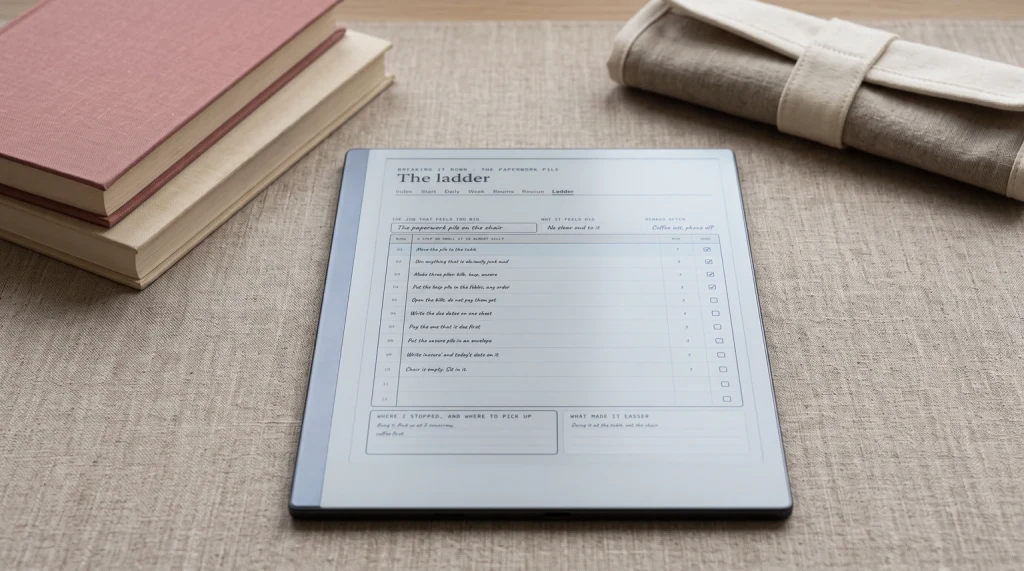
Anything bigger than one sitting gets broken into steps, each with its own line. CHADD turns “clean the kitchen” into four: empty the dishwasher, wipe down the counters, throw out expired food, sweep. Four small ticks feel like progress. One big unticked line feels like failure, every time you look at it.
Four small ticks feel like progress. One big unticked line feels like failure, every time you look at it.
Breaking things down is itself a task, and on a tired evening it can be the task that does not happen. Goblin Tools’ Magic ToDo does that step for you: type in “sort the garage” and it suggests the smaller steps, and its Compiler turns a messy brain dump into a list of actions. The tools use general-purpose AI models, and the site itself warns the results are guesswork, so treat the steps as a draft you edit. The Goblin Tools website is free with no ads or paywalls; the mobile apps are sold at a low price, and a few advanced features sit in a paid Pro subscription.
Rule three
Pick three, then sort the rest by energy
A short list gets done without much effort. A list of twelve needs a minute of sorting first, and CHADD’s suggestion is simple: choose the three most important items and number them 1, 2 and 3. Anything with a hard deadline, like a bill, is always one of the three on the day it is due.
For longer lists, CHADD also mentions the 1-3-5 approach: mark each item big, medium or small by the time and energy it takes, then aim for one big, three medium and five small in a day. It is a useful ceiling as much as a target. Nine things is a full day, and a list that admits that is easier to trust.
The energy column is the part most lists leave out, and it is the part that saves the bad days. ADDA, the adult ADHD association, makes the same point about chores in its guide to a cleaning schedule: “Instead of organizing chores strictly by time or day, categorize them by energy level.” The same works for a whole to-do list. When the morning is flat, you skip to the low-energy column and still finish something, instead of staring at item one.
| Low energy5 to 10 min | Medium15 to 30 min | HighAn hour+ | |
|---|---|---|---|
| Home | Start a wash | Clear the sink | Sort a cupboard |
| Admin | Pay one bill | Answer two emails | File the receipts |
| Calls | Text to confirm | Book the dentist | Call the bank |
The layout
An ADHD to-do list template you can copy
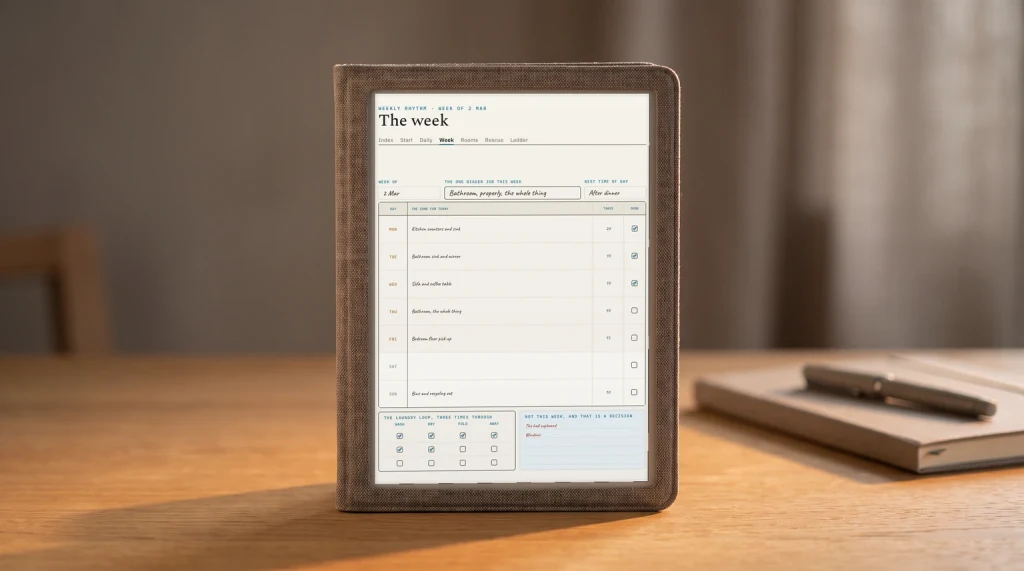
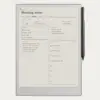
Put the rules together and the page almost designs itself. This layout fits on one sheet of paper, one note in an app or one page of a tablet notebook, and it needs nothing you have to buy.
-
i.
Today’s three
Top of the pageThree numbered lines, no more. Any deadline item goes here first. If only these get done, the day counts.
-
ii.
If there is time
Three short columns headed Low, Medium and High, each holding a few actions from the brain dump. On a flat day you work from Low.
-
iii.
Waiting on
Things that are out of your hands until someone replies. Writing them here keeps them off today’s three without losing them.
-
iv.
Done
Bottom of the pageA space to write down what you finished, including the jobs that were never on the list. A done list shows the day as it really went, which is usually better than it felt.
The brain dump lives somewhere else: the back pages of the notebook, a single running note on your phone. When to fill in the daily page is up to you. CHADD notes some people spend five or ten minutes before bed writing the next day’s list, and others start the morning with it; pick the one you will actually keep.
The leftovers
The items that never get crossed off
Every list has a few lines that get copied forward, day after day. CHADD’s advice is to stop and ask what the problem is. If the task is too big, it needs breaking into smaller steps. If you are dreading it, promise yourself a small reward for getting it done. And if it no longer matters, cross it off without doing it; that counts.
A dreaded task can also borrow someone else’s presence. Body doubling, doing the job while another person is there doing theirs, is one of the most common ways people get a stuck item moving, and a line written as a single action (“phone the council about the bin”) is exactly the size of task a short session can clear.
Where it lives
Paper or an app: where to keep the list
CHADD’s rule here is short: keep the list somewhere you will see and use it, because a list tucked in a drawer is a list you forget to write on. Paper gives you the satisfaction of crossing things off by hand. A phone app is with you most of the day, so a new item can go straight in. CHADD’s suggestion is to experiment, and to count choosing a format as the first thing crossed off.
A practical split many people land on is the brain dump on the phone, because thoughts arrive anywhere, and today’s page on paper or a tablet you write on, because it stays open on the desk. If you would rather it all lived in an app, our guide to the ADHD planner apps compares the main ones, and the ADHD planner guide covers the paper and tablet side, from undated layouts to how much structure a page should carry.
An ADHD to-do list does not need to be clever. It needs to be short enough to read, specific enough to start and honest about the energy you have. If you have a layout or a habit that finally made your list stick, share it with us in the comments; the small details are what help the next person most.
FAQ
Common questions, answered briefly
How do you make a to-do list with ADHD?
What is the 1-3-5 to-do list method?
Is a paper or app to-do list better for ADHD?
Is there a free tool that breaks tasks into steps?
People also ask