Where to start
Reading journal ideas that actually stick
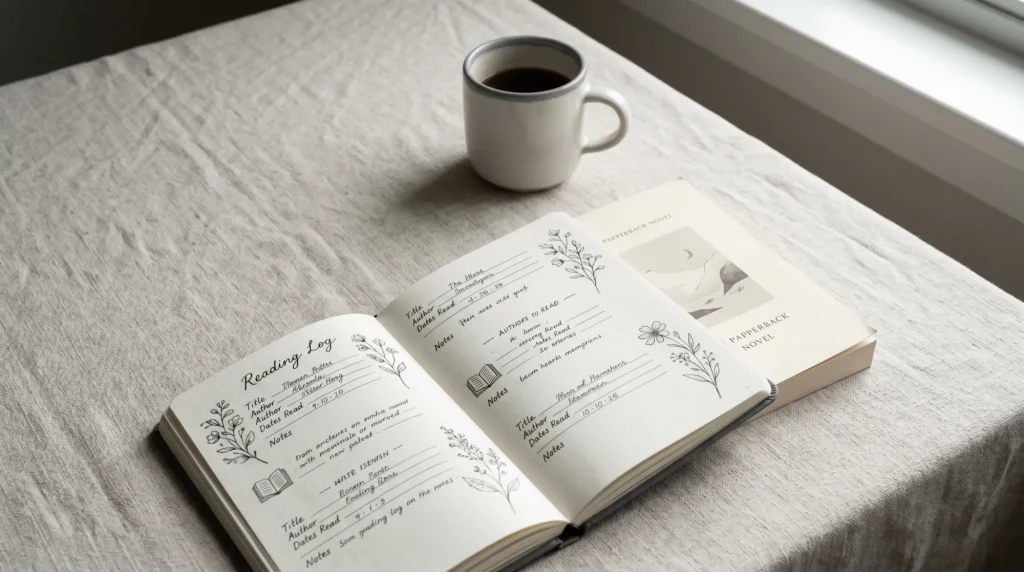
Most reading journal ideas fail for the same reason: they ask too much of you on a normal Tuesday. The ones that stick start small and grow only where you feel the pull. If you are setting one up, begin with a core of four fields per book (title and author, the dates you read it, a rating, and a line or two on what you thought) and treat everything else in this guide as optional toppings. That core alone, kept consistently, is already a reading journal worth having; the spreads and prompts below are there to make it richer once the habit is steady. If you want the full picture of what a journal is and how it differs from a tracker, our reading journal guide is the place to start, and this post is the deeper well of ideas to fill it with.
Prompts
Reading journal prompts worth answering
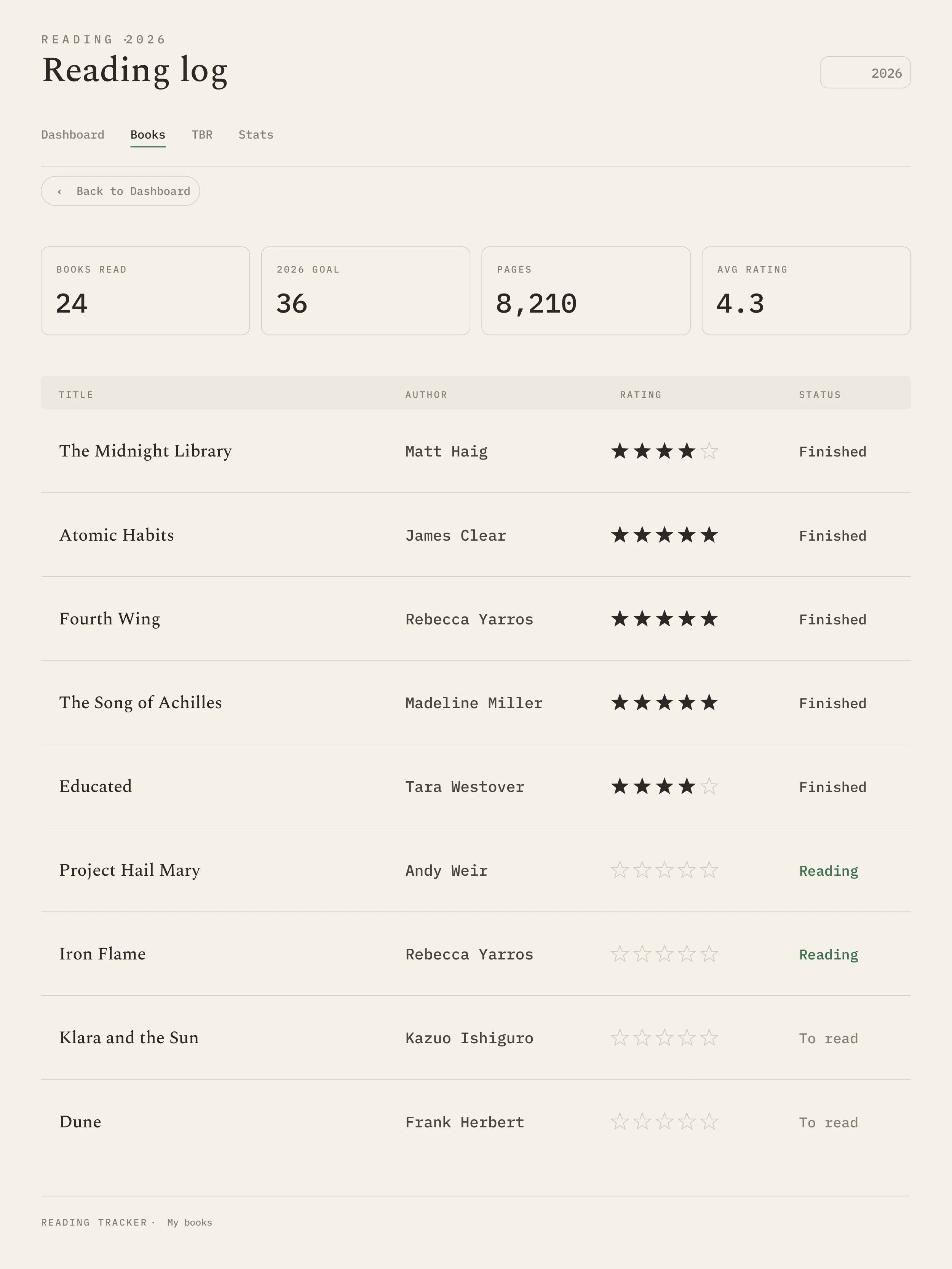

Prompts are what turn a list into a journal. You do not need to answer all of them, just one or two per book, whichever the book actually invites. Keep a short menu at the front of the journal and pick from it as you go.
| Prompt | What it captures |
|---|---|
| What stayed with you a week later? | The real verdict, after the first impression fades. |
| A line or passage worth keeping | One quote, copied out, is the heart of most journals. |
| Who would you hand this to? | Turns a rating into a recommendation you will reuse. |
| What did it remind you of? | Links the book to others and to your own life. |
| What did you expect, and were you right? | Catches the gap between hype and experience. |
| One word for how it made you feel | The fastest prompt, and often the truest. |
The trick with prompts is to keep them open enough to fit any book and short enough to answer in a sentence. A thriller and a memoir will not suit the same question, so a small menu beats a fixed template. If you only ever keep one prompt, make it the quote: a year of copied-out lines is the spread people return to most, long after the ratings have blurred together.
Layouts
Page and layout ideas
How a page is laid out decides how much friction logging carries, so the layout is worth a little thought. The two workhorses are the one-line log and the per-book page. A one-line log gives each book a single row (title, dates, rating) and is the lowest-effort way to never lose track of what you read; it is the journal equivalent of a reading log. A per-book page gives a book a half or full page for notes, a quote, and a prompt, and is where the reflection lives. Most people keep both: a running log at the front for everything, and per-book pages only for the books that earned them.
The goal is not a beautiful journal you abandon in March; it is a plain one you still open in November.On keeping it going
For people who like the page to look as good as it reads, the decorative side is a hobby in itself: hand-drawn rating bars, little book-spine doodles, colour-coded genres, washi tabs to find a book fast. None of it is necessary, and a plain journal is just as valid, but if the look is part of why you would keep one, lean in. Our aesthetic reading tracker guide carries straight over to a hand-kept journal if you want the prettier version.
Themed spreads
Themed spreads and year-long trackers
Beyond the per-book pages, a few standing spreads give a reading journal its shape across a year. A year-in-books page, one row or one spine per finished title, becomes a quiet record you fill in as you go and love to look back on. A TBR (to-be-read) spread holds the books you mean to get to, so the journal doubles as a plan, not just a memory. A stats page (books per month, pages, average rating, formats) scratches the counting itch for people who like numbers, though that is really the job of a reading tracker spreadsheet if you want it to tally itself. Seasonal or challenge spreads (a summer reading list, a genre you want to explore, a yearly number) give the year a gentle goal without turning reading into homework.
The honest caution with themed spreads is to add them one at a time. A journal that opens with twelve elaborate spreads is a journal you will feel behind on by week two. Start with a year-in-books page and a TBR, the two that earn their keep for almost everyone, and add a stats or challenge spread later only if you miss it.
Keeping it going
How to keep the habit, not just start it
Every reading journal idea in this guide is worthless if the journal goes quiet by spring, so the last idea is about the habit itself. Write the entry while the book is still warm, ideally the day you finish, because a week later the detail is gone and logging feels like a chore. Keep the bar low: a rating and one line always beats a blank page you meant to fill properly. And forgive the gaps. Nobody journals every book, and a journal with holes is still a journal; the readers who keep one for years are the ones who let it be imperfect rather than abandoning it the first time they fall behind. Pick a couple of the ideas above, keep the entry short, and let the habit, not the layout, do the work.
If you have a spread or a prompt that has kept your reading journal alive for years, tell us in the comments. The ideas that actually survive a busy year are worth more than any template, and they help the next reader more than a pristine blank page ever could.
FAQ
Common questions, answered briefly
What should I put in a reading journal?
What are good reading journal prompts?
How do I set up a reading journal layout?
What is the difference between a reading journal and a reading tracker?
How do I keep a reading journal going?
If yours isn’t above, drop the question in the comments and we’ll add it.
People also ask