What it can do
What journal prompts for mental health can and cannot do
A blank page is a hard thing to face on a low day. You open the journal, nothing comes, and the empty page becomes one more thing you did not manage. Journal prompts for mental health fix the blank page: a narrow question gets a real answer, and a real answer is where the use is.
Health services describe that use in modest terms. The University of Rochester Medical Center’s health encyclopedia says journaling can help you manage anxiety, reduce stress and cope with depression, by helping you prioritize problems, fears and concerns, by tracking symptoms day to day so you can recognize triggers, and by giving you room for positive self-talk. The US National Institute of Mental Health lists writing down what you are grateful for among its self-care tips. Both treat a journal as one helpful habit among several, alongside sleep, movement and other people.
To give the prompts a shape, we sorted them by the NHS’s five steps to mental wellbeing: connect with other people, be physically active, learn new skills, give to others, and pay attention to the present moment. A journal will not do any of the five for you. It makes them easier to notice, and what you notice is easier to do again.
The method
How to use these prompts without it becoming a chore
Pick one prompt, not a list. Write until the answer is specific: a name, a place, a time of day. Stop there. Two or three entries a week will tell you more over a month than a daily habit that stops in week two. On days when even one prompt is too much, a single word for how you feel counts as an entry.
Check in
Daily check-in prompts for your mental health
Start here on any day. These ten take a minute each, and over a few weeks they show you patterns you would not spot from inside a single day.
- In one word, how do I feel right now?
- Where in my body do I notice that feeling?
- How did I sleep, and how did it shape today?
- What took the most energy today?
- What gave me a little energy back?
- What am I avoiding, and what is the smallest step towards it?
- What did I need today that I did not get?
- What went better than I expected?
- What would make tomorrow ten percent easier?
- What is one kind thing I can say to myself tonight?
Connect and give
Prompts about the people around you
Two of the NHS’s five steps are about other people: connecting with them and giving to them, whether that is a small act of kindness or volunteering. These prompts turn both into something you can plan.
- Who did I feel most like myself with this week?
- Who have I been meaning to message, and what would I say?
- When did someone last make my day easier, and did I tell them?
- Which relationship takes more than it gives right now?
- Who could I ask for help with one specific thing?
- What is a small kindness I could do for someone tomorrow?
- When did helping someone last make me feel better too?
- Who do I miss, and what is stopping me from getting in touch?
- What would I want a friend to do if they felt the way I do today?
- Where could I spend an hour each month giving my time?
Move and learn
Prompts for movement, rest and learning
The NHS’s second and third steps are being physically active and learning new skills; NIMH’s self-care list adds regular exercise and making sleep a priority. These prompts help you find the version of each that fits your week.
- What kind of movement leaves me feeling clearer afterwards?
- When in my week is there room for a twenty-minute walk?
- What gets in the way of going to bed on time, and what is one fix?
- What did my body need today that I ignored?
- What have I always wanted to learn, and what is the first lesson?
- What did I learn this week, however small?
- What is one skill that would make my days easier?
- When did I last lose track of time doing something, and what was it?
- What do I do on screens late at night, and what could replace it?
- What would a restful weekend look like, hour by hour?
A journal will not do any of the five for you. It makes them easier to notice, and what you notice is easier to do again.Journal prompts for mental health
Notice
Prompts for paying attention to the present moment
The fifth step is what the NHS calls mindfulness: paying attention to your thoughts and feelings, your body and the world around you. Writing is a slow way to do it, which is the point.
- What can I see, hear and smell right now? Write one of each.
- What was the best five minutes of today?
- Which thought keeps coming back today? Write it down exactly.
- Is that thought a fact, or a prediction?
- What would I notice on my usual walk if I went slower?
- What three things am I grateful for today, and why each one?
- What small thing did I enjoy without thinking about it?
- What feeling did I push away today? Let it have one sentence.
- What would today look like described by someone who loves me?
- What is going well that I have stopped noticing?
Hard days
Mental health journal prompts for a hard day
On a heavy day, keep it short. These ask for very little, and every one of them is allowed a one-line answer. If the anxious part is loudest, our journal prompts for anxiety go further, with prompts for a spike and for checking an anxious thought.
- What is the hardest part of today, in one sentence?
- What is one thing I can do in the next hour to look after myself?
- What has helped on a day like this before?
- Who could I tell how I am feeling?
- What can wait until tomorrow?
- What would I say to a friend who felt like this?
- What is one thing that is still okay?
- What do I need: rest, food, company, quiet or help?
- What did I get through today, even if it felt small?
- What is one thing to look forward to this week?
Getting help
When a journal is not enough
NIMH is clear about where self-care stops. It advises seeking professional help if you are experiencing severe or distressing symptoms that have lasted two weeks or more, such as difficulty sleeping, changes in appetite, struggling to get out of bed because of your mood, difficulty concentrating or losing interest in things you usually enjoy. A journal can sit alongside that help and make it easier to describe how you have been, but it should not replace it. Talk to your doctor.
If you are in crisis or thinking about harming yourself, do not wait for an appointment. In the US you can call, text or chat with the 988 Suicide and Crisis Lifeline, which is free, confidential and open around the clock. Elsewhere, your local emergency number or a crisis line in your country will help.
Where to write
Where to keep a mental health journal
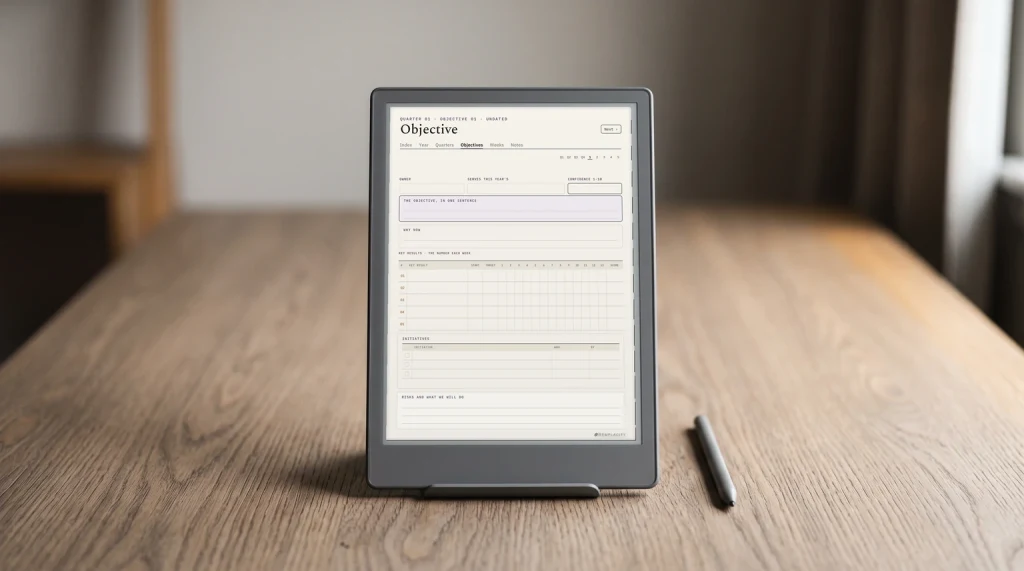
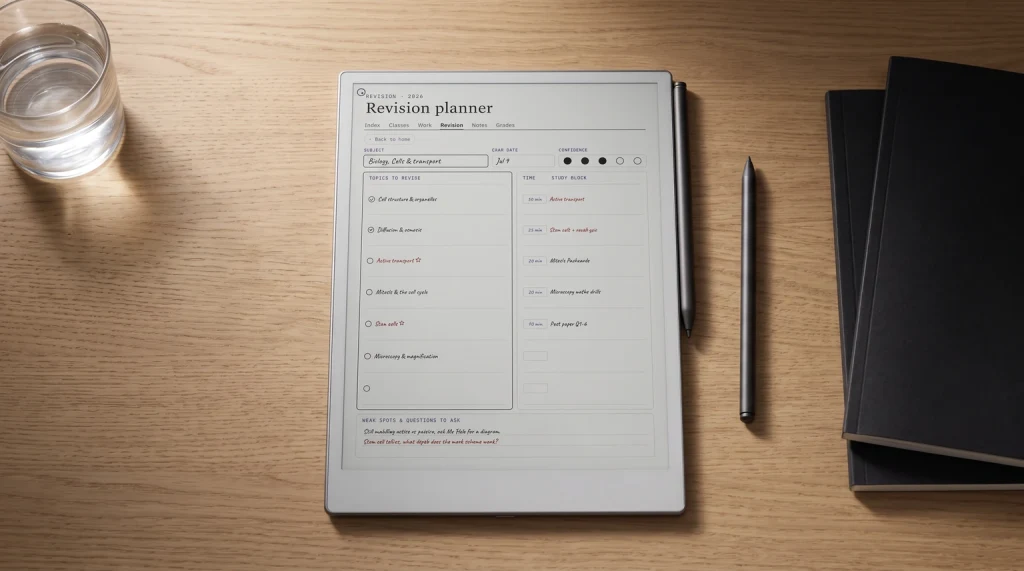
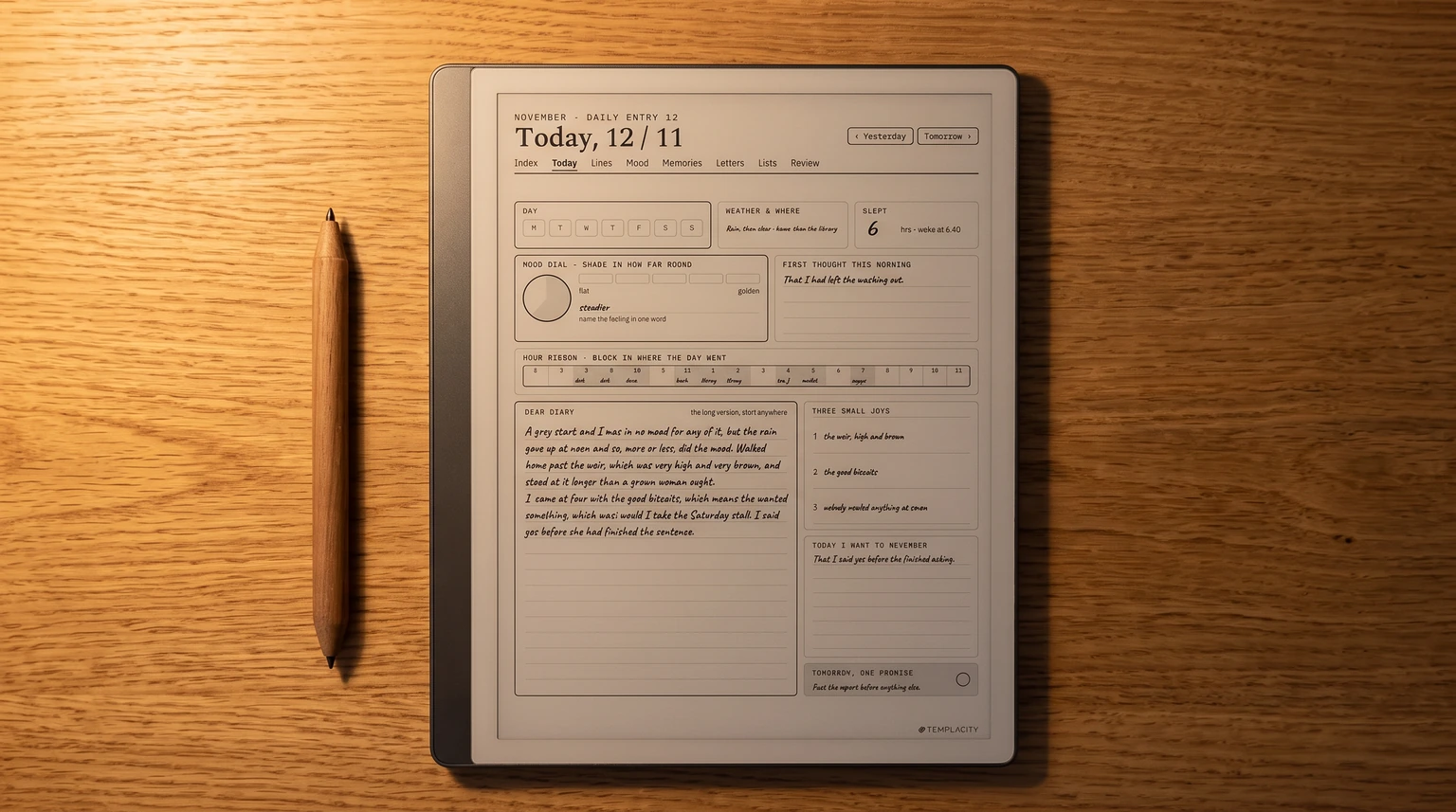
Any notebook works. What helps most is a journal that still works on the nights a full entry is beyond you. Our The Journal ($49) is built around that: a page for every day of the year, one line a day for short nights, a mood month with a square a day, and a month review, in 464 hyperlinked pages with 2026 and 2027 both included, for reMarkable, Kindle Scribe and Boox. If anxiety is the main thing you are tracking, The Anxiety Journal ($24) holds a steadying plan, 90 two-minute check-ins, a worry log, thought checks and 100 prompts, for iPad, e-ink or print.
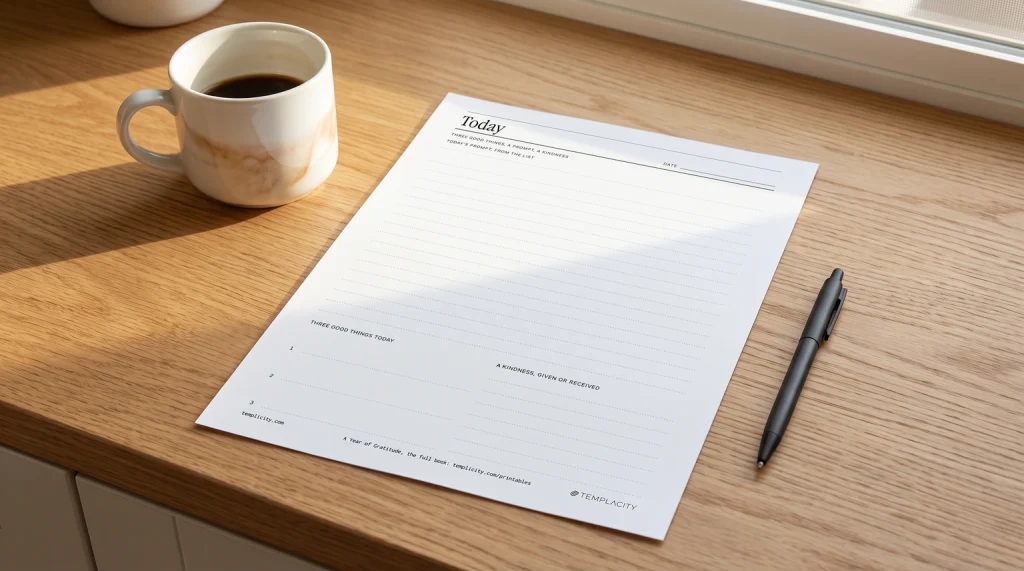
To try the habit on paper first, our free printable journal pages include thirty starter prompts and a daily check-in. For more prompts in the same spirit, see our gratitude journal prompts and shadow work prompts, and our guide to a digital journal template covers setting one up on a tablet. More on planning and journaling lives on the planning hub.
FAQ
Common questions, answered briefly
What should I write in a mental health journal?
How often should I journal for my mental health?
Can journaling help with anxiety and depression?
When should I get help instead of journaling?
If one of these prompts, or one of your own, has helped on a hard week, share it in the comments. Only what you are comfortable making public; someone else may need it tomorrow.
People also ask