The definition
A digital planner for ADHD is a PDF, not an app
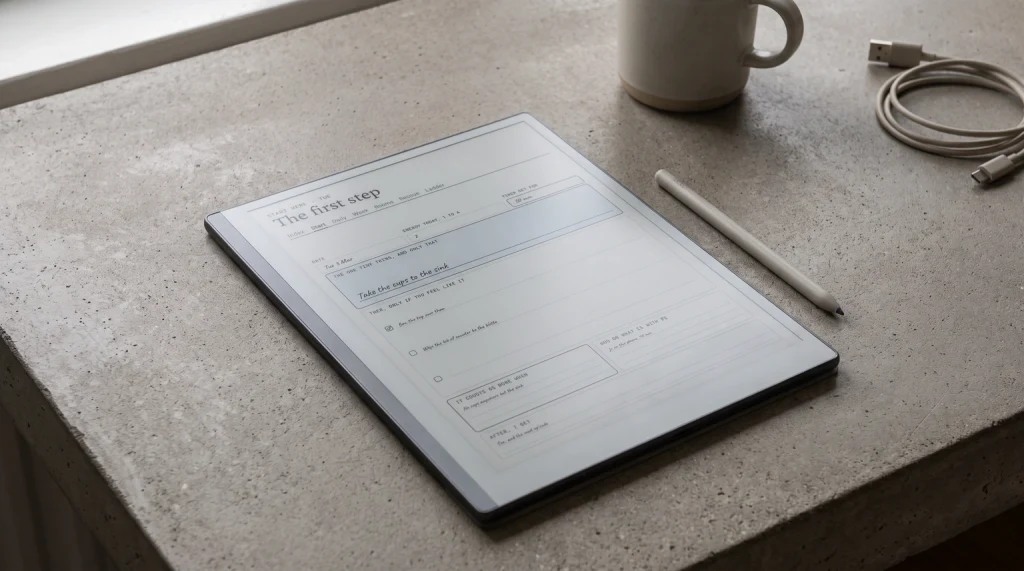
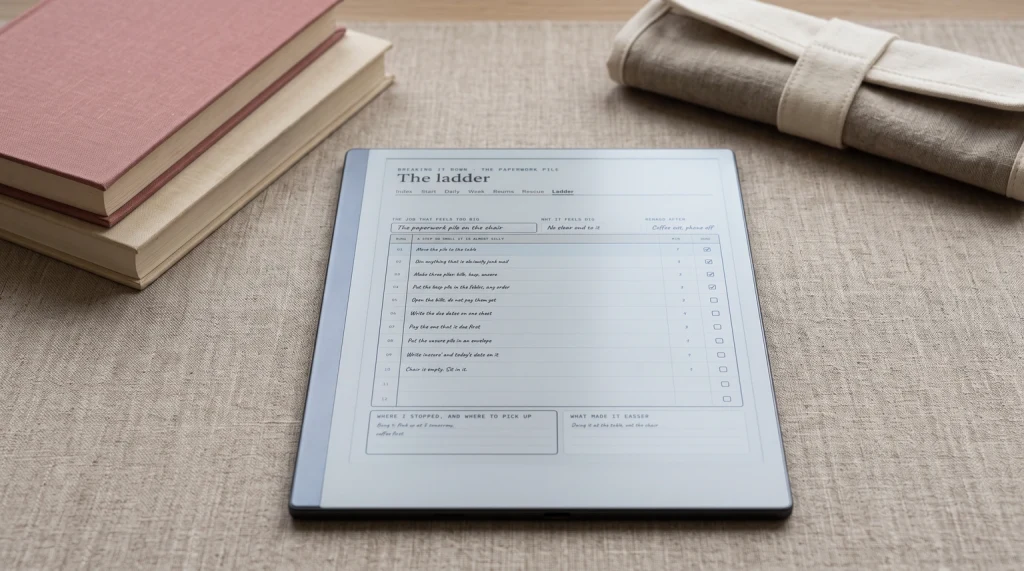
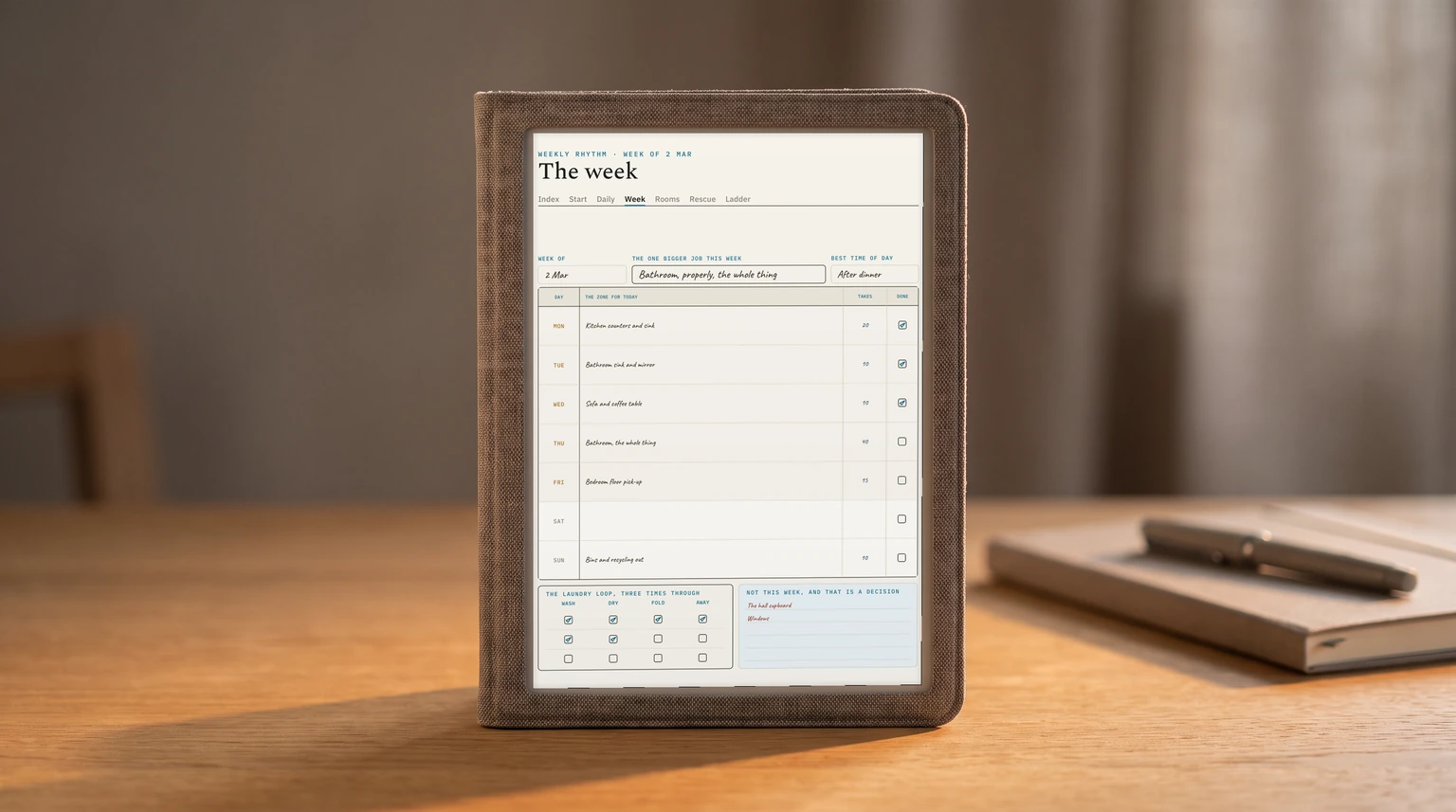
This gets confused constantly, and the confusion is expensive, so it is worth being flat about it. When people sell a digital planner for ADHD, they are selling a file. It is a PDF with pages, usually hyperlinked so the tabs down the side jump you to a month or a week, and you open it in a note-taking app on a tablet and write on it with a stylus. It is a picture of a planner that accepts ink.
That is a different product from a planner app, which is a database with a screen on it. We looked at those separately in what to check before installing an ADHD planner app. The two get shelved together and behave nothing alike.
The useful way to think about the file is as paper that has had two properties removed and one added. Removed: permanence, because ink erases, and scarcity, because pages duplicate. Added: it now lives on a device that also has everything else on it.
Run that against the criteria the Attention Deficit Disorder Association sets out for a planner page, which is what the pillar piece in this series is built on, and the picture is mixed in a way the shops do not advertise.
The gain
Three things the file genuinely improves
Low visual clutter gets easier, because you are no longer buying a physical object that has to justify its price at a glance. A paper planner competes on a shelf, which is a strong incentive toward decoration. A file competes on a listing thumbnail, which is a weaker one, and the good ones are noticeably plainer than their printed equivalents.
The brain-dump area stops being rationed. On paper you get the space the publisher allocated, and when it is full it is full. In a file you duplicate the page, so the answer to “where do I put this thought” is never “there is no room”, which is the answer that sends a thought back into the task you were doing.
And a bad page stops being permanent. Erase, or undo. That sounds cosmetic and is not: a large part of why a paper book gets abandoned is that page fourteen is a mess and page fourteen is now a fixed feature of the object you have to hold every day.
The catch
Two things it does not fix, and one it makes worse
Carrying tasks forward is the big one. ADDA’s list wants a way to move an unfinished task to tomorrow without rewriting it, because the rewriting is what makes an unfinished task feel like a growing debt. A PDF cannot do this. It is a picture. Tomorrow’s page does not know what is on today’s, so the task moves by you writing it again, in your own hand, exactly as on paper. Buyers routinely assume digital means this is solved. It is not solved, and no amount of hyperlinking solves it.
The second is the dated grid, which we will come to, because it is the whole decision.
The one it makes worse is where it lives. A paper planner sits on the desk doing nothing else. The same planner as a file sits inside a tablet that also holds a browser, a store, and whatever you were watching last night, and reaching the planner means passing all of it. If your device is a general-purpose tablet, that trade is real. It is smaller on an e-ink device, which is one of the few honest arguments for reading and writing on a tablet that only does paper things.
The question
Dated or undated is the question nobody answers
ADDA recommends undated or flexible layouts, and the reason they give is specific: it removes the guilt attached to skipped days. A dated page that was never filled in is a small permanent record of a day you did not manage. Twenty of those in a row and the file is closed for good.
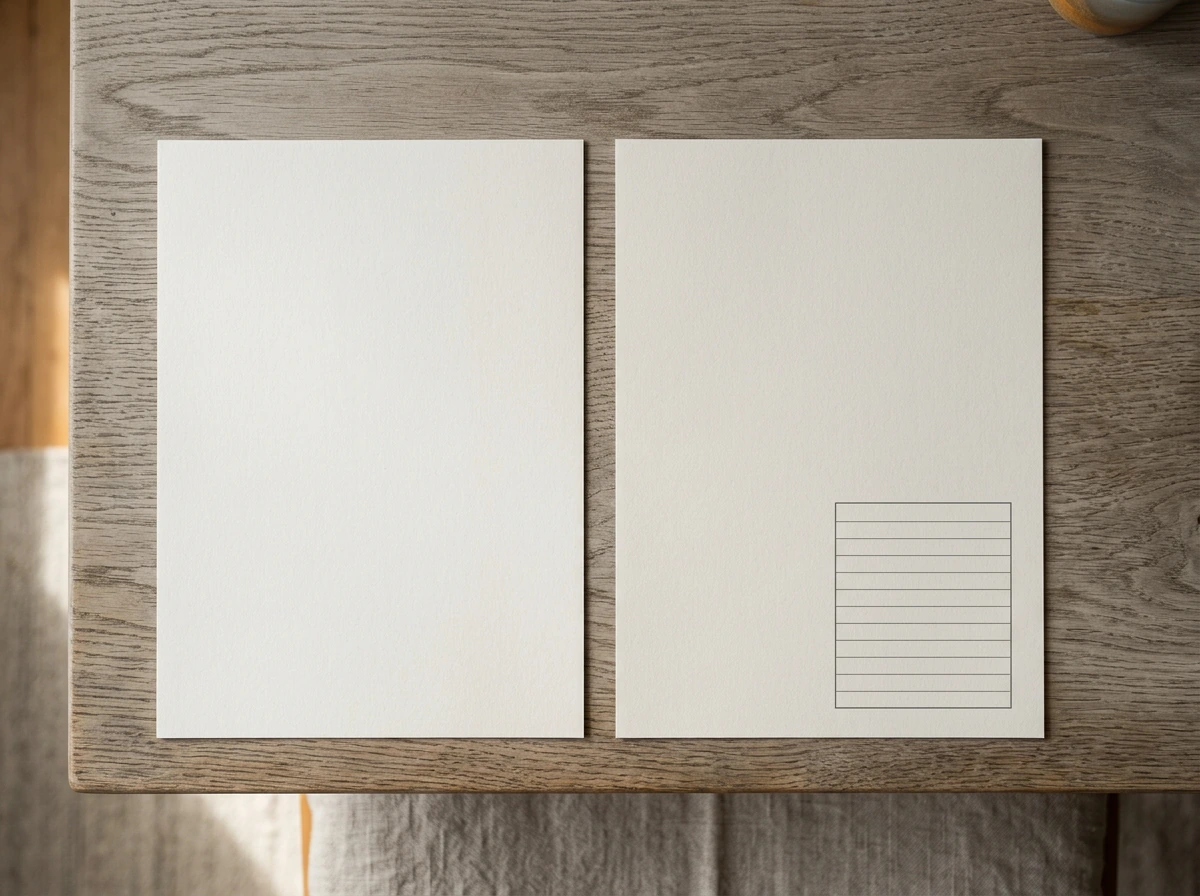
An undated file has no such record. The pages are the same pages; you write the date if you want one, and a gap is invisible because there was never a box waiting for it. Nothing else about the layout has to change. It is a single decision by the person who made the file, and it changes whether a bad fortnight ends the system.
A dated page that was never filled in is a small permanent record of a day you did not manage.
So this is the question to ask before buying, and it is close to the only one that matters: is this file dated or undated. Not what it looks like, not how many templates are in it, not what the reviews say. Whether the pages carry printed dates.
Ask it explicitly, because listings very often do not say, and the ones that do tend to bury it. A dated file is not automatically the wrong buy, either. If what has ended your previous systems is losing track of where you are in the year rather than missing days, dated is the better object. The point is to make the choice on purpose rather than to discover it in February.
The field
What the sellers in this search actually tell you
Future ADHD ranks near the top of this search and is the most established seller in it. Their own site describes the planner as “100+ ADHD-specific templates” with “built-in flexibility” and “lifetime updates plus bonus extras”, and reports 100,000+ planners sold at 4.83 out of 5 across more than 7,000 reviews. That is a real track record and we have no argument with it.
What their front page does not say, checked in August 2026, is whether the planner is dated or undated. Neither does it print a price; you click through for that. We are not singling them out, because this is the norm rather than the exception, and the Etsy listings ranking alongside them are worse about it. It is simply the demonstration that the one question worth asking is the one you will have to ask, because the page will not volunteer it.
“Built-in flexibility” and “lifetime updates” both point in the undated direction, since a file locked to a calendar year cannot meaningfully be updated forever. But pointing is not stating, and you are about to pay for the answer, so make somebody give you it in writing.
The disclosure
What we make, and why we are not selling it to you here
We make digital planners. They are PDFs for e-ink tablets and iPad apps, they are plain rather than decorated, and several of the criteria on ADDA’s list are things we already do because they happen to be good design.
They are also dated. Every planner we sell is built to a year, 2026 or 2027, with the dates printed on the pages. That is a deliberate decision made for reasons that have nothing to do with ADHD: a dated book is easier to navigate, easier to plan into months ahead, and the year is what tells you the file is current.
It also means our dated files fail the criterion ADDA weights most heavily for exactly the reader searching this term. We make one undated book, the ADHD Cleaning Planner, and it is honest to say what it is not: it is a cleaning planner, so it will not carry your appointments or your work. If skipped days are what has ended your last three planners and you want a full undated day planner, that is still a thing to buy from someone else, because we do not make one. On paper, the Panda Planner is the clearest worked example of a book that clears that bar without ever claiming to.
If skipped days are not your failure mode, and what you actually want is a plain dated layout on an e-ink tablet, then our line is a reasonable thing to look at and the hub pages are one click away. We would just rather you arrived there having read this section.
FAQ
Common questions, answered briefly
Is a digital planner good for ADHD?
What is the difference between a digital planner and a planner app?
Should an ADHD digital planner be dated or undated?
Do sellers say whether their planner is dated?
Which tablet should an ADHD digital planner go on?
If yours isn’t above, drop the question in the comments and we’ll add it.
People also ask
If you have bought a digital planner for ADHD and it lasted, we would like to know whether it was dated, and whether that turned out to be the thing that mattered or the thing you stopped noticing. Tell us in the comments.