The method
What two-column notes are, and where they go wrong
Most two-column notes fail in the same place: both columns fill up during the lecture, and the page ends the day as a transcript with a line down the middle. Two-column notes work when the two sides do different jobs at different times. This guide covers the method, how it differs from Cornell notes, a filled example and a free template.
The layout is one vertical line. The wide right-hand column takes the details: what the lecturer says, or what the reading says, in short phrases. The narrow left-hand column takes a cue for each chunk of those details: a main idea, a key term or a question. To study, you cover the right side and answer from the left.
That much every handout agrees on. What goes in the left column does not. We read the two-column notes handouts of four university learning centers and one school’s outreach program for this guide and found six different versions, from question and answer to lecture and reading. They are laid out further down, with the one question that decides between them.
Free download
Free two-column notes template (PDF)
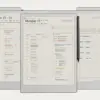
Page one is the classic split: a shaded left column about a third of the width, labelled for main ideas and questions, beside a ruled notes column, both running to the foot of the page with no summary strip. Page two splits the page down the middle and leaves a write-in label over each column, for a lecture and its reading, a quote and your response, or a question and its answer. Page three is the method on one sheet: the five steps below and five ways to label the columns. Every ruled line takes typing in a PDF reader, or print it and use a pen.
Want the summary strip after all? Our free Cornell notes template is the same page with the strip added, in PDF and Word.
Step by step
How to take two-column notes in five steps
These steps follow the Cornell system as Walter Pauk wrote it in How to Study in College, with the summary step taken out. Three of the five happen after class, and those are the ones most people skip.
- Set up the page. Topic, source and date across the top. Use a narrow left column when one side will hold short cues, and an even split when both sides carry the same weight.
- Take notes on the right only. During the lecture or the reading, write in the right-hand column and leave the left one empty. Short phrases, your own abbreviations, a line skipped between ideas.
- Fill the left column the same day. Read the notes back and fill the gaps while you still remember the lecture. Then write a main idea, a key term or a question beside each chunk.
- Cover and recite. Lay a sheet of paper over the right column. Read each cue, answer aloud in your own words, then slide the sheet down and check. Repeat the ones you missed.
- Review briefly, and often. Before each study session on the subject, run the cover-and-recite on your older pages first. A few minutes is enough.
Steps two to four come straight from Pauk. On the Cornell sheet he is blunt about the left column: “As you’re taking notes, keep the cue column empty.” His second step puts the read-back “at your next free period or at the latest during your evening study time”, and his fourth has you block out the notes with a plain sheet and recite from the cues. On step five he goes further than we would without a study in hand: “Short, fast, frequent reviews will produce far better understanding and remembering than long all-day or all-night sessions.”
Versus Cornell
Two-column notes vs Cornell notes: one strip, one step
Cornell notes are two-column notes with one more zone. In Pauk’s book you rule a vertical line two and a half inches in from the left edge, ending two inches above the bottom, then a horizontal line two inches up: a cue column on the left, a six-inch notes column on the right, and a summary area across the foot. Cornell’s Learning Strategies Center credits the system to Pauk, a Cornell education professor, and his book; Cornell’s alumni magazine dates it to the 1950s, when he was a teaching assistant, and the book to 1962.
Landmark Outreach, the outreach program of Landmark School, traces two-column notes to Pauk as well and puts the difference in one line: Cornell notes “also include a section at the bottom of each page to summarize key points.” On paper, that is right. In the method it is a little more: writing the summary is the fifth of Pauk’s six steps, so the two-column page drops a step along with the strip.
| Two-column notes | Cornell notes | |
|---|---|---|
| Zones | Two columns, top to bottom | Cue column, notes column, summary strip |
| Left column | Any width; ours is about a third | 2½ inches in Pauk’s layout |
| Left column filled | After class, or as you go in some versions | After class only |
| Review | Cover the right, answer from the left | The same, plus a summary per page |
| Best for | Vocabulary, two sources side by side | Exam review on your own |
So which one? Pick two-column notes when the left column has a job a summary cannot do: drilling vocabulary, holding a lecture against its reading, or answering quotes. Pick Cornell when the page is for exam review on your own, because the summary is the one zone that checks you understood the page as a whole, not just its parts. Our Cornell notes guide walks a full page through every step, and Spanish readers will find the same method in our guide to el método Cornell.
Variations
Six ways to label the two columns
Once the line is drawn, the labels decide what kind of notes you get. These are the six versions in the handouts we read, with who teaches each one.
| Left column | Right column | Taught by |
|---|---|---|
| Main idea | Supporting details | Landmark Outreach |
| Question | Answer | Landmark Outreach |
| Names, dates, terms, topics | Definitions, explanations, examples | University of Arizona SALT Center |
| Take notes (the larger column) | Make notes: questions, exam clues, links | Elmhurst University |
| Lecture notes | Textbook or reading notes | Western University |
| General lecture notes | What you do not understand | Miami University |
The question that sorts them: is the left column a cue, or a second source? The first three are cue versions. The left side is short, the right side answers it, and the cover-and-recite works. The last three are comparison versions: the right side holds a second kind of note, your commentary, the reading or what you did not follow, rather than the answer to a cue, so the value is in reading across the line. Western’s handout is honest about the cost of the lecture and reading version: the page can look cluttered, and the columns do not always line up. Pauk handles the lecture and textbook case with a three-column Cornell page instead, textbook notes in the middle, lecture notes on the right, and cues on the left that pull the two together.
Example
A two-column notes example, filled in
Here is a page of two-column notes on the chapter this method comes from, Pauk’s own chapter on the Cornell sheet, written on page one of the template. Every line on the right is checked against the book, so the example teaches the method while it shows the format.
| Main ideas, questions | Notes, details |
|---|---|
| Who designed the page? | Walter Pauk, Cornell University, 1950s. Book: How to Study in College, 1962. |
| Where do the lines go? | Down the left, 2½ in. from the edge, stopping 2 in. above the bottom. Across, 2 in. up: summary area. Notes in the 6-in. column. |
| When is the left column filled? | Not in class: keep it empty. Afterwards, one question per main idea. |
| How do you study from it? | Plain sheet over the notes, read the question, answer aloud, slide the sheet down, check. |
| What is the summary for? | A sentence or two per page, so the details do not hide the big picture. |
Read the left column on its own and every cue is a question you can answer out loud; cover the right column and the page becomes a quiz. That is the test of a good cue, and our Cornell notes examples apply it to four more finished pages.
The same chapter on page two of the template, as a quote-and-response page, reads differently. Left: “keep the cue column empty.” Right: the left column is a review tool, so filling it in class throws away the self-test. Left: avoid outline form, because it forces the material “into a highly regimented pattern.” Right: short phrases with space between them, not Roman numerals. Neither side is a cue here, which is why this version suits reading notes and essays better than exam review.
On a tablet
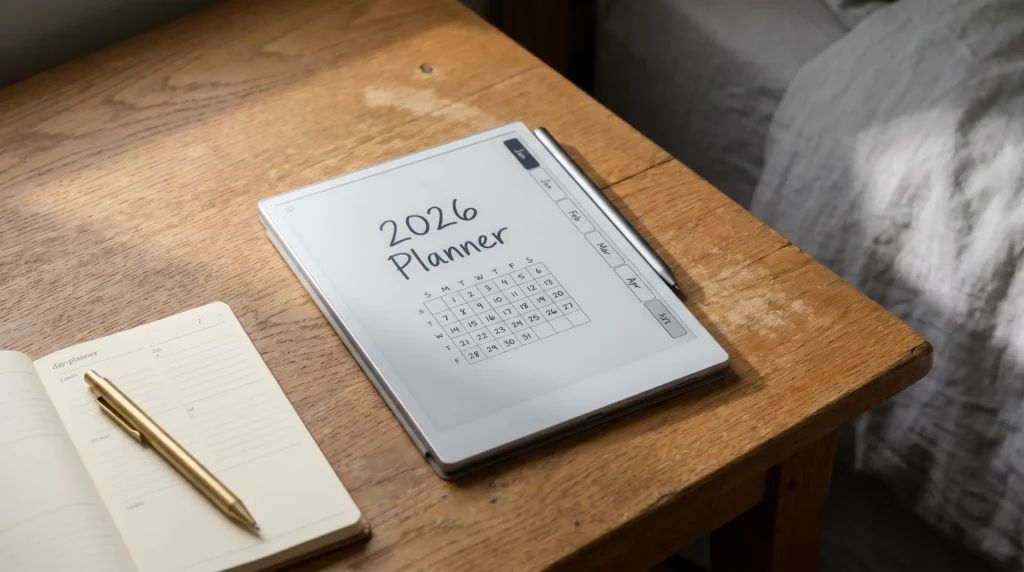
Two-column notes on a reMarkable
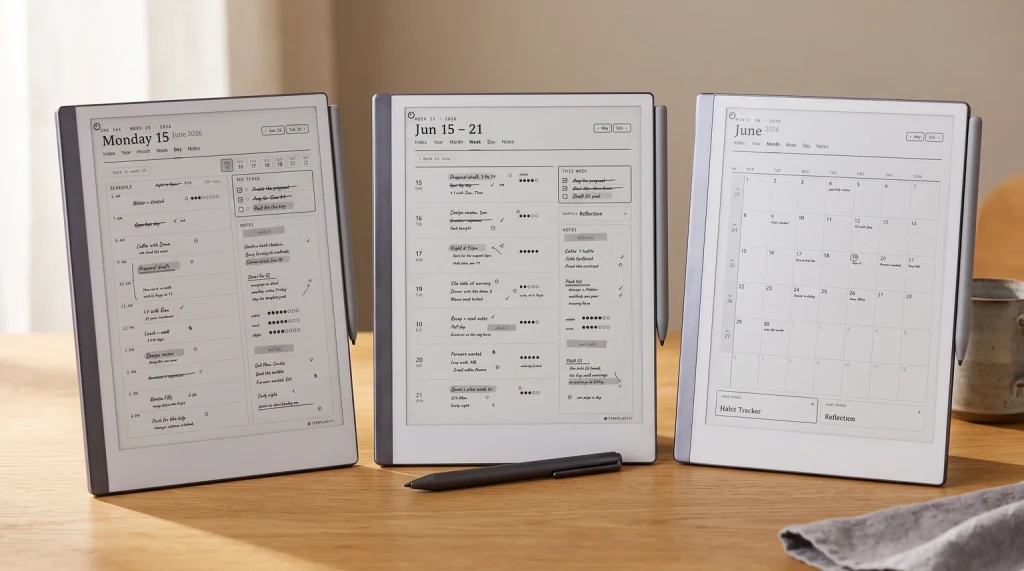
The fastest route is already on the device. reMarkable’s Templates article lists a built-in Cornell template, keywords or questions on the left, notes on the right and a summary at the bottom. Leave the bottom section empty and it works as two-column notes.
For the real two-column page, use our PDF. The same article is clear about the limits: custom templates cannot be added to the Templates menu, so you import the PDF, find it in My files and duplicate it before writing, which keeps the original blank. An imported PDF cannot become a notebook background, and handwriting in a PDF cannot be converted to typed text. For the rest of the layouts worth having, our reMarkable templates guide sorts what is built in from what is worth paying for, and our guide to making templates for the reMarkable 2 covers building your own. Every study method we cover lives on the reMarkable hub.
Loose pages are the honest limit of any free file. After a term, finding the lecture from week three means scrolling a stack of identical sheets.
Which labels do you put on your two columns? Tell us in the comments; the most common answers decide what goes on the next version of the template.
FAQ
Common questions, answered briefly
What are two-column notes?
What is the difference between two-column notes and Cornell notes?
What goes in the left column of two-column notes?
How do you study with two-column notes?
Is there a free two-column notes template?
If yours isn’t above, drop it in the comments and we’ll add it.
People also ask