The pattern
What Airbnb scams against hosts have in common
Search for Airbnb scams and almost everything you find is written for guests: fake listings, cloned payment pages, the apartment that does not exist. Hosts get a different set of Airbnb scams, and they share a shape. Somebody books a real stay, finds or invents a problem, and turns it into money: a partial refund, a full refund, a free night, or compensation under threat of a bad review.
Airbnb’s own community policy names every move in that shape. Its page on combating deception, scams, and abuse prohibits “making false reports, claims, or credit card chargebacks” and “using threats or intimidation to obtain or influence a payment, review, or other outcome”. So the rule is on your side before anything happens. The problem is that a rule only helps once somebody at Airbnb can see it was broken, and that depends almost entirely on what you can show them.
Two clocks run underneath all of this. A guest has 72 hours from discovering a problem to report it under the refund policy. You have 14 days from checkout to file a damage claim. Most scams are built to make the first clock work for the guest and the second one irrelevant.
Refund extraction
The late-night cleanliness complaint
The commonest host-side scam is the complaint that arrives at the hour you cannot fix it. A host posting on AirHostsForum in August 2026 described what they called the “midnight cleaning scam”: guests sent late-night photos of hair on the bed and dust on a range hood, with the mattress stripped to find it, in a place the host says had linens washed and dried that day. Another host in the thread put the logic plainly: at that hour it is too late to send cleaners or rebook, which is exactly why the timing is chosen.
It works because of how the refund policy is written. Airbnb’s rebooking and refund policy for homes covers a place that is “not reasonably clean and sanitary” at check-in. The guest must report it within 72 hours of discovery, supported by evidence such as photographs or videos, and if Airbnb finds the stay was disrupted, it refunds the guest in full or in part. Your payout is then reduced by the amount refunded. Photos are the evidence, and the guest is the one taking them.
The same policy gives you two openings. Airbnb says that in most circumstances it will attempt to confirm a reported concern with the host, and that hosts can dispute a guest’s claim by contacting Airbnb. It also says the guest must notify the host and try to resolve the issue directly whenever feasible, and that a fraudulent request violates the Terms of Service and may result in account termination. A guest who reported to Airbnb first, at midnight, without giving you a chance to fix anything, has already handed you part of your answer.
Several hosts in the same thread arrived at the same habit independently: a walk-through video of the finished room with a date and time visible, covering the beds, the bathroom and the kitchen surfaces, and an after-hours contact route written into the listing so a guest cannot later say you were unreachable. Our Airbnb cleaning checklist covers where the video step belongs in a turnover.
Fake emergencies
Fake emergencies and the safety suspension
The harder version replaces dirt with danger. In September 2026 a host on AirHostsForum described a guest on a two-week stay who first complained the one-bedroom listing had one bedroom, then reported a smell at 23:00, then said by 07:00 that there had been a gas leak. The host’s later update was the expensive part: the listing was suspended as unsafe, and Airbnb asked for a gas engineer to confirm there had been no leak before it could come back.
That outcome follows from the rules rather than from bad luck. The refund policy treats a place that contains “safety or health hazards” as a covered issue, and Airbnb’s Major Disruptive Events Policy page says hosts are obligated to cancel if a listing is uninhabitable, and that failing to do so may result in listing suspension. A safety report, true or false, moves the burden of proof onto you.
A safety report, true or false, moves the burden of proof onto you.
So the right response is to treat every safety report as real, quickly and in writing. Call the emergency line for that utility or service the moment the report arrives, not the next morning, and get the result of the visit on paper. Offer the guest a cancellation with a refund in the thread, so it is on record that you took it seriously and that they chose to stay. Hosts in that thread made the same point from experience: a dissatisfied guest offered a clean exit on day one rarely escalates, and if they decline, the offer itself is evidence.
Review threats
The review threat, and what Airbnb’s policy says about it
Most refund scams carry a second lever: pay up, or the review will say so. Airbnb’s reviews policy is unusually direct here. Hosts and guests “may not threaten a negative review as a means to obtain unwarranted compensation, refund, or other incentive”, and reviews may not be provided or withheld in exchange for something of value, a refund included. A review written after that kind of threat is one the policy lets you ask Airbnb to remove.
Two limits matter. Airbnb says it generally does not mediate disputes over whether a review is accurate, and that disagreement with a star rating or a subjective opinion is not grounds for removal. So the removal request has to rest on the threat, not on the unfairness, and the threat has to be in the Airbnb message thread where support can read it. A threat made by phone or text is one you cannot show. Whatever the outcome, you can still post a public response, and our Airbnb review examples cover how to write one that a future guest reads in your favour.
It cuts the other way too. A host in August 2026 reported a factual review of a problem guest disappearing three weeks after it posted, with no notice. The policy’s own definition helps here: a review that discusses the facts of a Resolution Center or AirCover claim is not automatically retaliatory, so stick to facts about the stay and nothing about the person.
Off-platform
Off-platform payments and fake Airbnb emails
The second family of Airbnb scams tries to move you somewhere Airbnb cannot see. A guest offers to pay by bank transfer for a discount, sends more than the booking and asks for the difference back, or wants your email or WhatsApp before booking. Every version is covered by Airbnb’s off-platform and fee transparency policy: requesting, sending or receiving payments outside Airbnb is prohibited, and all communication before a booking must stay on Airbnb. The practical point is protection as much as compliance. Money that moved outside the platform is money no Airbnb process can recover for you.
Phishing aims at your login and your payout details rather than a single booking. Airbnb’s page on checking whether an email, text, call or website is authentic lists the domains real Airbnb email comes from, such as @airbnb.com and @host.airbnb.com, warns about lookalikes such as @bnb.com and @reservation-airbnb.com, and says a real Airbnb link begins with https://www.airbnb.com or a country address such as airbnb.co.uk. The safe habit is the one it recommends: never sign in from a link in a message about your payout, type airbnb.com yourself and check there. Anything suspicious in your inbox on Airbnb can be reported from the message itself, through the three dots and Report this message, with an option to block the sender.
The map
Each Airbnb scam, the rule it breaks, and your clock
Put side by side, the patterns reduce to a short table. The clock column is the one to learn, because it decides whether your evidence still exists when someone asks for it.
| Scam | Airbnb rule | Clock | Your evidence |
|---|---|---|---|
| Late-night dirt complaint | Refund policy, false reports banned | Guest: 72 hours | Timestamped turnover video |
| Fake emergency | Safety hazard, suspension risk | Act the same hour | Written inspection result |
| Review threat | Reviews policy, extortion banned | Before the review posts | The threat in the Airbnb thread |
| Off-platform payment | Off-platform policy | Before any money moves | Refusal kept in the thread |
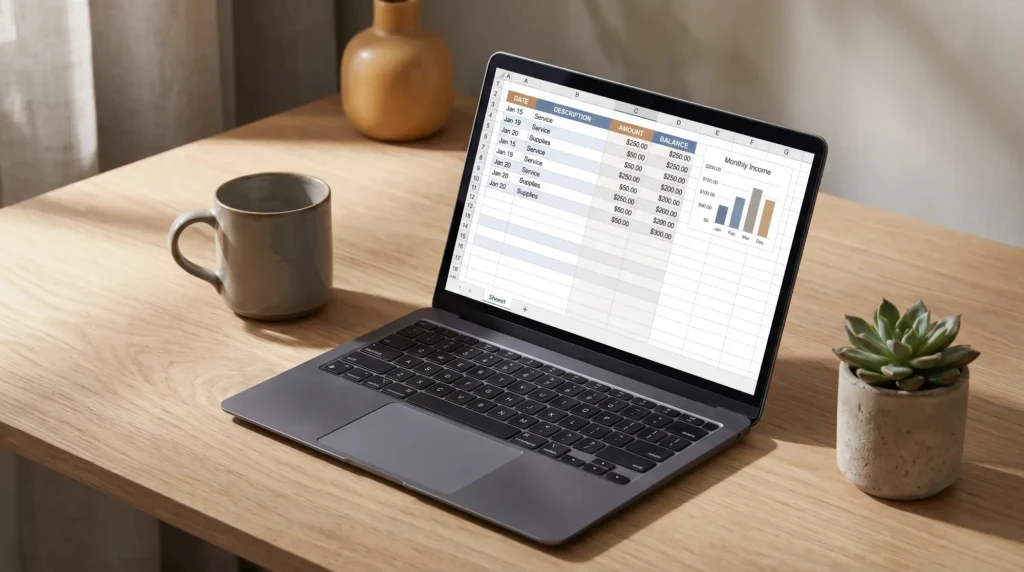
| Damage left behind | Host damage protection | You: 14 days | Photos, quotes, receipts |
The last row is the honest version of a claim, and it belongs here because the scams above often end with real damage too. Airbnb’s Host damage protection page says to file in the Resolution Center within 14 days of the guest’s checkout, with photos or videos and estimates or receipts; the guest then has 24 hours to respond before Airbnb Support reviews it. Normal wear and tear is excluded. Our Airbnb security deposit guide covers why that claim replaced the deposit most hosts can no longer take.
Before they arrive
A turnover routine built for disputes
Airbnb does some screening for you. Its AirCover terms describe reservation screening that uses machine learning to redirect bookings with a higher risk of parties and property damage, currently in the US, Canada and Australia, and guest identity verification required for guests travelling to 35 countries. Neither is a guarantee, and neither catches a guest whose plan is a complaint. The rest is routine, and it is cheap.
-
1
Film the finished room
One slow walk-through after every clean, date and time visible, beds and bathroom and kitchen surfaces in frame. Keep it for at least the 14-day claim window.
-
2
Write the after-hours route into the listing
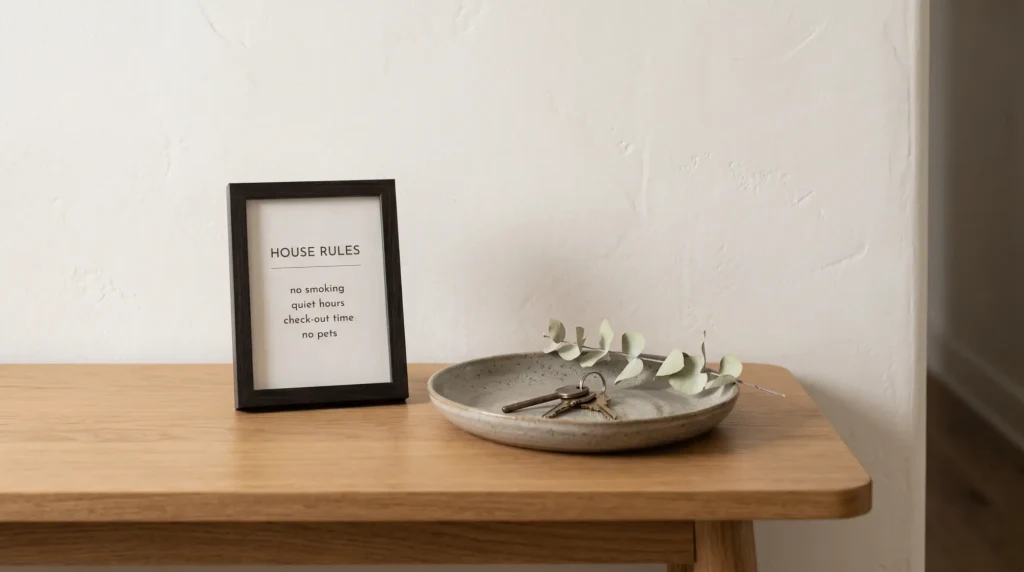
How to reach you at night, in the house rules and the welcome book, so “nobody answered” is never true.
-
3
Keep every word in the Airbnb thread
If a guest calls or texts, summarise it in the thread straight after. Support can only weigh what it can read.
-
4
Answer fast, offer a fix or an exit
A reply inside minutes, a concrete fix, and a refund-and-cancel offer when a guest is unhappy on day one. Each one is evidence later.
The second step does more than it looks. Rules that say how a problem gets reported, and how fast you respond, set the guest’s expectations before booking and give support something to point at afterwards. Our Airbnb house rules template covers how to write that part so it reads as hospitality rather than suspicion, and cancelling as a host covers what happens when a stay has to end early.

Everything you hand a guest, matched and priced to move together.
None of this makes a determined guest go away, and the forum threads are full of hosts who did everything right and still spent a week on the phone to support. What it changes is the starting point of that call. Have you had a complaint land at midnight, or a review held over a refund? Tell us in the comments what the guest did and what finally settled it, because the next host searching for this is usually in the middle of it.
FAQ
Common questions, answered briefly
Can a guest get a refund by claiming the place was dirty?
Can a guest threaten a bad review to get a refund?
How do I report a guest scam to Airbnb?
How can a host tell if an Airbnb email is real?
People also ask