The idea
What body doubling is
Body doubling is working on a task while another person is present. Cleveland Clinic defines it as doing “a task or project while in the presence of one (or more) people”, where that person “serves as an anchor to help encourage focus, accountability and productivity”. The other person is the body double. They are not coaching, advising or doing the job with you. They are just there, usually doing something of their own.
The name comes from an ADHD coach. Linda Anderson, a former president of ADDA, described it in an article first published in 1996, after a client noticed he got more done when his wife simply sat in a chair nearby. ADDA’s republished version of that article still runs body doubling groups today, which says something about how well the idea has lasted.
If it sounds familiar, it probably is. A parent sitting at the kitchen table while a child does homework is body doubling. So is a study session in a library where nobody talks. The term just gives a name to something many people with ADHD find out by accident.
The why
Why body doubling helps with ADHD
ADHD affects executive function, the brain’s ability to start, sustain and switch tasks. Cleveland Clinic’s behavioral health specialist Michael Manos, PhD, calls body doubling “a form of external executive functioning”, and puts it in plain terms: “like having an administrative assistant follow you around all day”. Part of the job your brain finds hard is handed, briefly, to the room.
Two things seem to do the work. The first is modelling. “Modeled behavior is very potent,” Dr. Manos says: someone else quietly working makes working the default behaviour in the space. The second is commitment. A session booked with another person has a start time that someone else is expecting, which is often exactly what an ADHD brain needs to begin, since getting started is frequently the hardest part.
The evidence
What the evidence actually says
Here is the honest part that most explainers skip. ADDA, the organisation whose former president named the technique, says it directly: “While there’s no research to prove its effectiveness, ADHD body doubling is helping many people get things done.” Body doubling is a practice supported by experience, clinicians’ observations and a great many people who say it works for them, not by controlled trials.
Body doubling is a practice supported by experience, not by controlled trials.
That does not make it worthless; it makes it something to test on yourself rather than take on faith. It is free, low-risk and quick to try, and you will know within a few sessions whether tasks that usually stall are getting finished. It is also not a replacement for diagnosis or treatment. If ADHD is affecting your work or home life, a clinician is the right starting point, and body doubling is one of the practical strategies that can sit alongside whatever they recommend.
The ways
Four ways to try body doubling
-
i.
In person
Easiest startA friend, partner or family member sits with you while you work. You do not need to do the same task; you need to both be doing something. A regular time, same day each week, makes it a habit rather than a favour.
-
ii.
On a video call
A call with a friend or study partner, each of you working, nobody talking much. Cleveland Clinic notes it works best when everyone keeps their camera on.
-
iii.
Among strangers
A library or quiet café, where everyone around you is working. You get the effect of other people working without having to arrange anyone.
-
iv.
In a group
Online body doubling communities and groups, including ADDA’s own sessions, where you join scheduled rooms of people working on their own tasks.
Whichever you pick, the session has the same shape. Agree a start time and length; 45 to 60 minutes is a good first test. Say your task out loud at the start, specifically (“reply to the three emails from the landlord”, not “admin”). Work. Then say what you finished at the end. ADDA suggests sharing your goal with your body double for exactly this reason: saying it to someone is what makes it stick.
At home
Body doubling for cleaning and chores
Chores are where body doubling often helps most, because they are the tasks with no deadline, no reward and nobody asking. ADDA’s own list of examples starts with laundry and paying bills. A video call while you each tidy a room, or a housemate folding washing while you clear the kitchen, turns a job that would wait all week into one that gets done in an evening.
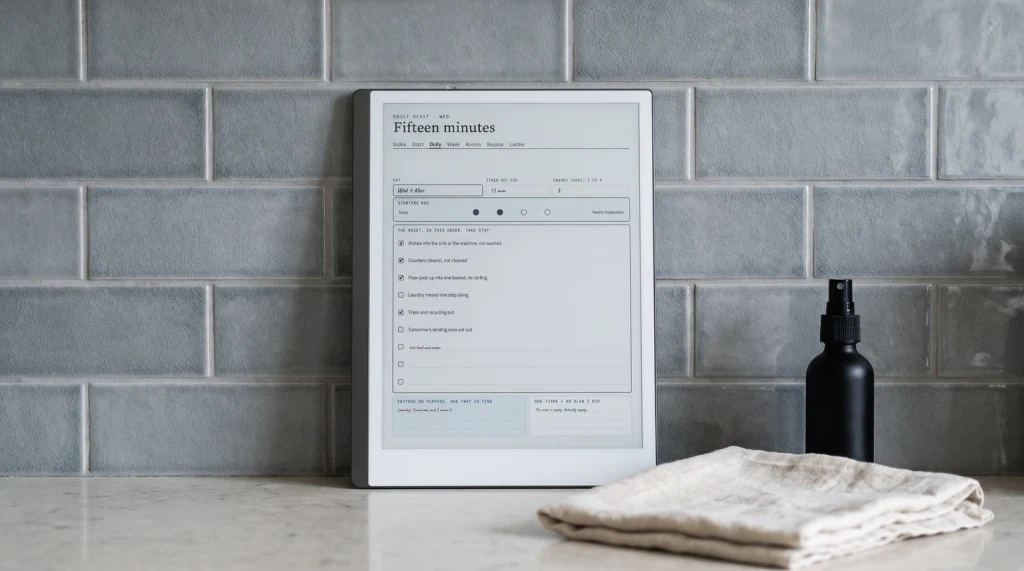
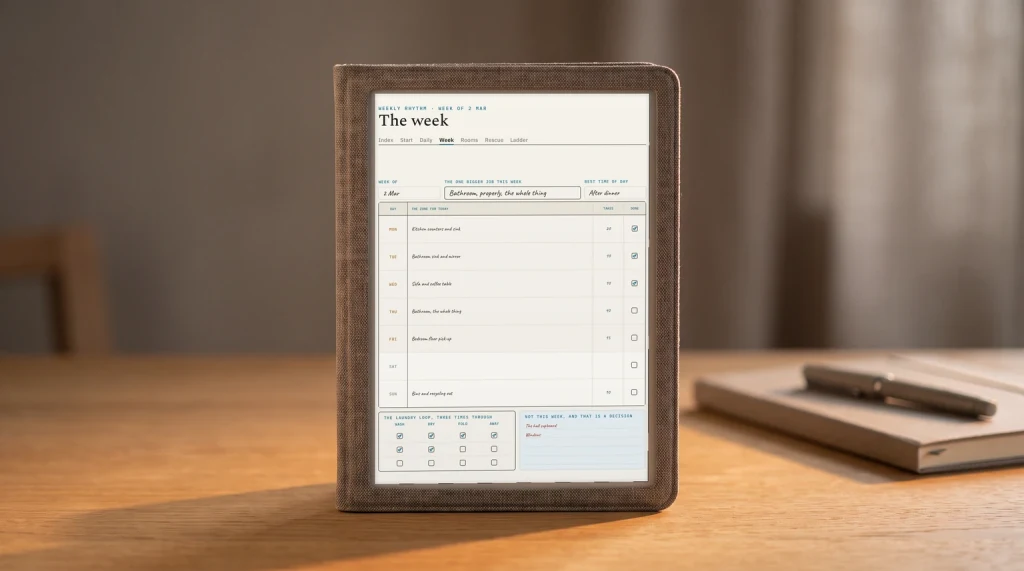
It works better when the session has a list. “Clean the flat” is too big to start; “kitchen surfaces, dishes, bins” is a session. Our guide to an ADHD cleaning planner breaks the house into short, specific tasks of exactly that size, and an ADHD planner is a natural place to book your sessions as recurring appointments, so they happen whether or not you feel like it that day.
Body doubling asks for very little: another person, a start time, and a task said out loud. If you have found a version that works, a regular call, a library corner, a group, tell us in the comments what made it stick, because the details are what make it work for the next person.
FAQ
Common questions, answered briefly
What is body doubling?
Is body doubling proven to work for ADHD?
Does virtual body doubling work?
Who came up with body doubling?
People also ask