What it is
What a reading journal is, and what it is not
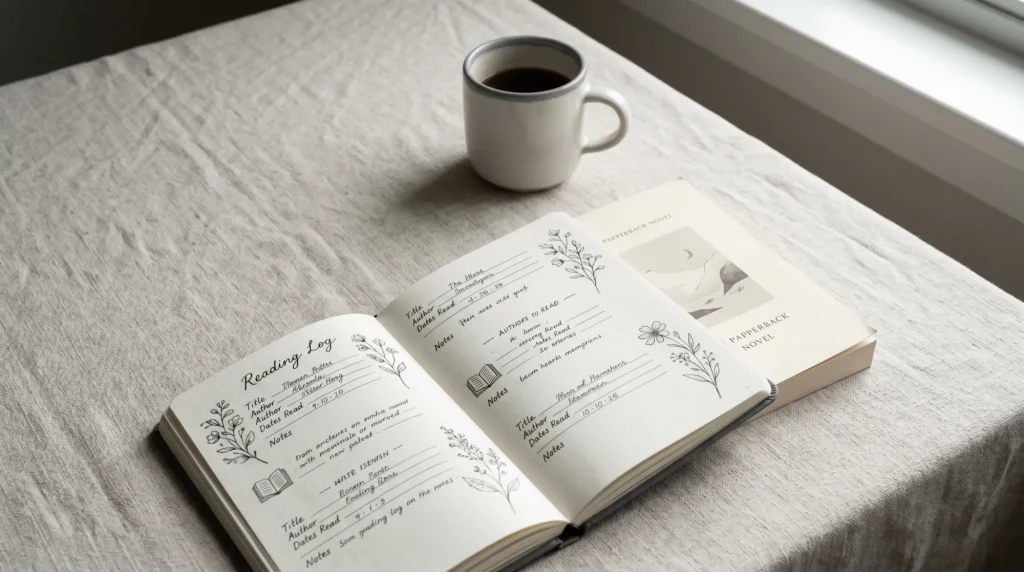
A reading journal is a place where you record not just what you read but what you made of it: the title and author, yes, but also the lines that stopped you, the way a book made you feel, and the thought you want to remember in a year. It is the difference between a list and a memory. People keep one because reading is easy to forget, a year of books blurs into a vague sense of “I read a lot,” and a reading journal turns that blur back into something specific you can revisit. It can live in a notebook, a spreadsheet, or an app, and it can be two lines a book or two pages; the format matters far less than the habit of writing something down while the book is still warm.
It helps to separate a reading journal from a reading tracker, because the words get used interchangeably and they are not quite the same thing. A tracker is about counting: how many books, what ratings, pages and genres and challenges, the data of your reading. A journal is about reflecting: the notes, the quotes, the why. The two overlap, and many readers keep one tool that does a little of each, but knowing which job you care about most tells you which to build around. If you mostly want the numbers and the lists, our reading-tracker guides are the better starting point; if you want the writing and the reflection, a reading journal is what you are after, and the rest of this guide is about keeping a good one.
What to record
What to record in a reading journal
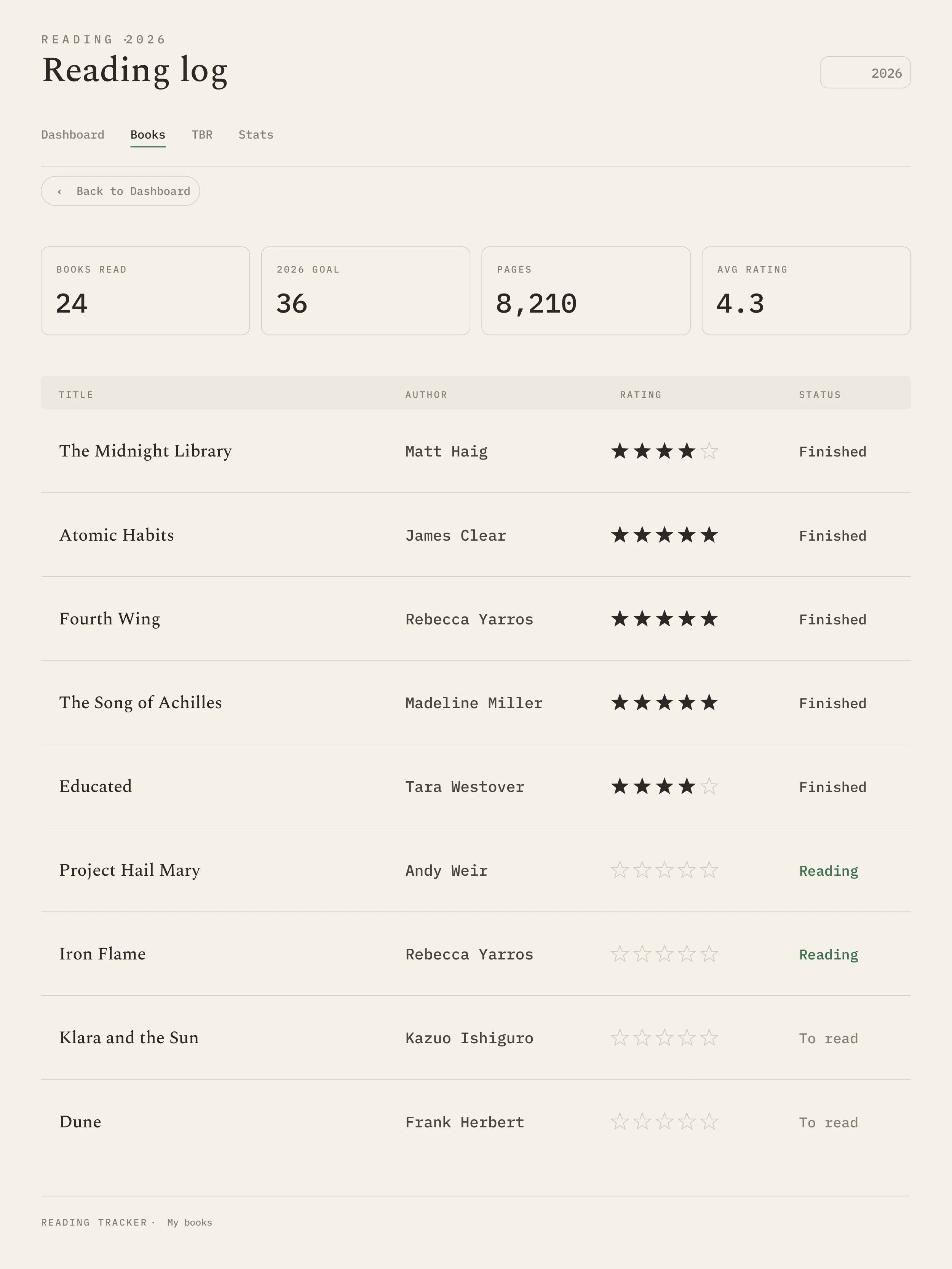

The simplest reading journal has just a few fields, and you can grow it from there. The core four are the basics anyone wants later: title and author, the dates you started and finished, a rating, and a line or two on what you thought. That alone, kept consistently, is a reading journal worth having. From there, the fields people add most are a favourite quote or two, a one-line summary so you remember the plot, the format (print, audio, ebook), and where the book came from (bought, borrowed, gifted). Heavier journalers add themes, characters, a content note, or a “who I would recommend this to” line. The trap is starting with twenty fields and quitting in a fortnight; start with the core four, and only add a field once you find yourself wishing it were there.
The other decision is how you rate and sort. A simple five-star rating is enough for most people, but plenty prefer a short written verdict, or a split rating (story, writing, how much they enjoyed it) that captures why a book worked. However you do it, consistency is what makes a reading journal useful later: the same handful of fields, filled in the same way each time, is what lets you flick back and actually compare a year of reading rather than squinting at a patchwork. Pick your fields once, keep them small, and let the habit, not the structure, do the work.
Ideas and prompts
Reading journal ideas and prompts
If a bare list feels flat, a few reading journal ideas keep it interesting without turning it into homework. Per-book prompts are the easiest: one line on what surprised you, the character you would want to meet, a sentence you would underline, or whether you would read it again. Some readers keep a running “best of the year” page they add to as they go, or a quotes page that collects the lines worth keeping across every book. A “did not finish” page, with a quick note on why, is oddly satisfying and stops you re-starting a book you already bounced off. Seasonal or themed pages (a summer reading list, a spooky-season shelf, a books-that-changed-my-mind page) give the journal some shape across the year. We have pulled together the fuller menu of reading journal ideas and prompts in its own guide if you want more spreads and questions to choose from.
For people who like the journal to look as good as it reads, the aesthetic side is a hobby in itself: hand-drawn rating bars, little book-spine doodles, colour-coded genres, a yearly bookshelf you fill in spine by spine as you finish. None of that is necessary, and a plain journal is just as valid, but if decorating is part of why you would keep one, lean into it. We cover the visual approach in more depth in our aesthetic reading tracker guide, which carries over directly to a hand-kept journal. The point of any of these ideas is the same: give yourself a small, pleasant reason to open the journal after each book, because the habit is the whole game.
Notebook or digital
By hand, spreadsheet, or app: which to keep
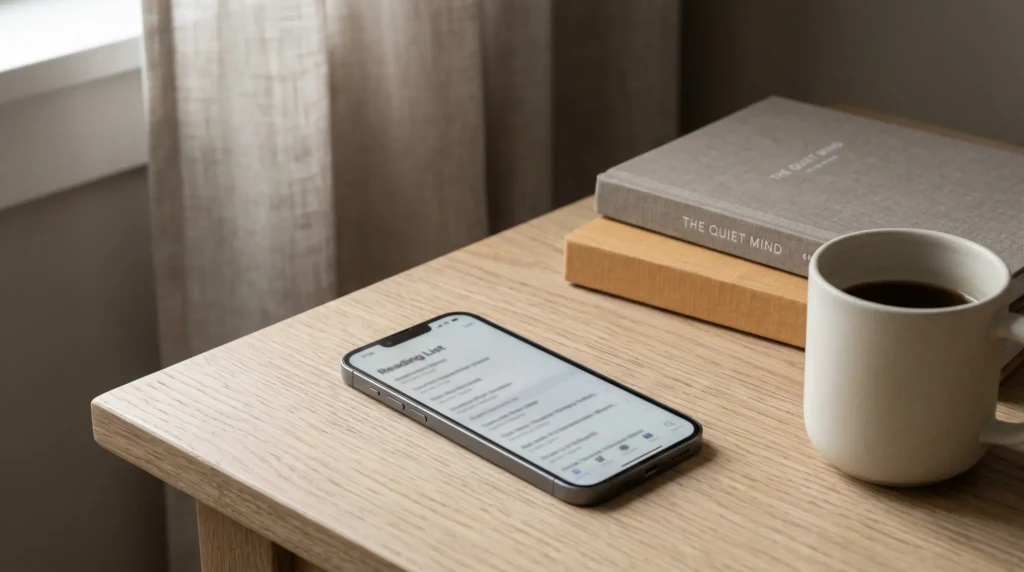
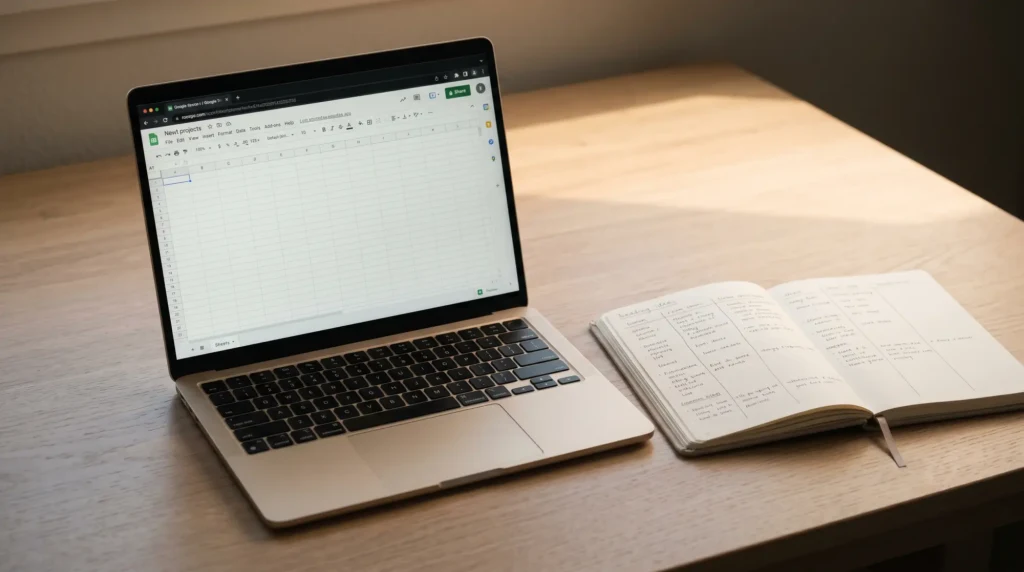
Where you keep a reading journal changes how it feels to use, and the three common homes each suit a different reader. A paper notebook is the most personal and the nicest to write in, with room for doodles and quotes, at the cost of being unsearchable and hard to tally. A spreadsheet is the opposite: plain to look at but easy to sort, filter, and count, so it doubles as a tracker. An app like Goodreads or StoryGraph is the lowest effort, with scanning and stats built in, at the cost of your data living on someone else’s platform and less room for real reflection; we weigh up the best book tracker apps separately if that is the route you want. The table lays out the trade.
| Home | Strength | Weak at | Best for |
|---|---|---|---|
| Paper notebook | Reflection, doodling | Searching, totals | Writers who love the page |
| Spreadsheet | Sorting, counting, reuse | Atmosphere | Readers who want the data too |
| App (Goodreads, StoryGraph) | Lowest effort, stats | Reflection, owning your data | Quick logging on the go |
Most committed readers end up with a pair: a notebook or a digital file for the reflection, and something that counts for the stats. There is no wrong answer, only the one you will actually keep. If you love handwriting and the journal is partly an object you enjoy, go paper. If you want to sort by rating, see your yearly totals, and never lose the file, a spreadsheet is the practical pick and quietly does the tracker job too. If you mostly want effortless logging and social features, an app is fine, as long as you are comfortable with the platform owning the record.
A tracker counts; a journal reflects. Most readers want a bit of both, and the trick is keeping the one you will actually open.What it is
Templates
Reading journal templates: free vs paid
A template saves you designing the journal from scratch, which is the slow part. Free reading journal templates are easy to find, from printable pages to copyable spreadsheets, and they are a sensible way to learn which fields you actually use before committing. Their usual limit is being one-size: a single layout that may not match how you read, with no totals or sorting if it is a printable. Paid templates earn their fee when they come structured and ready, with the fields wired up, ratings that sort, and a yearly summary that fills itself in. As with anything, only pay for one that shows you what you are getting, and ideally lets you try a sample first.
If you want the spreadsheet route specifically, where the journal also counts and sorts, we have built that set out in full. Our best reading tracker templates guide covers the layouts and which suits which reader, the reading log template guide covers the simplest list-style version, and the reading tracker spreadsheet guide is the deeper hub for the data side. Use a paper journal for the writing if you love the page; use one of those for the searchable, sortable record. Many readers run both, and the two genuinely complement each other rather than competing.
Keeping it
How to actually keep a reading journal
The hardest part of a reading journal is not starting it, it is still writing in it in March. A few habits make the difference. Write the entry the day you finish, while the book is fresh, because a week later you will only remember that you liked it, not why. Keep the per-book entry short enough that it never feels like a chore; two honest lines beat a page you dread. Keep the journal where you read, so opening it is frictionless, the notebook by the chair, the spreadsheet bookmarked, the app on the home screen. And forgive the gaps: everyone falls behind, and a journal with a few missing books is still far more useful than no journal at all. Backfill what you can remember and move on; perfection is the enemy of the habit.
The digital route
The digital route, if you want the data too
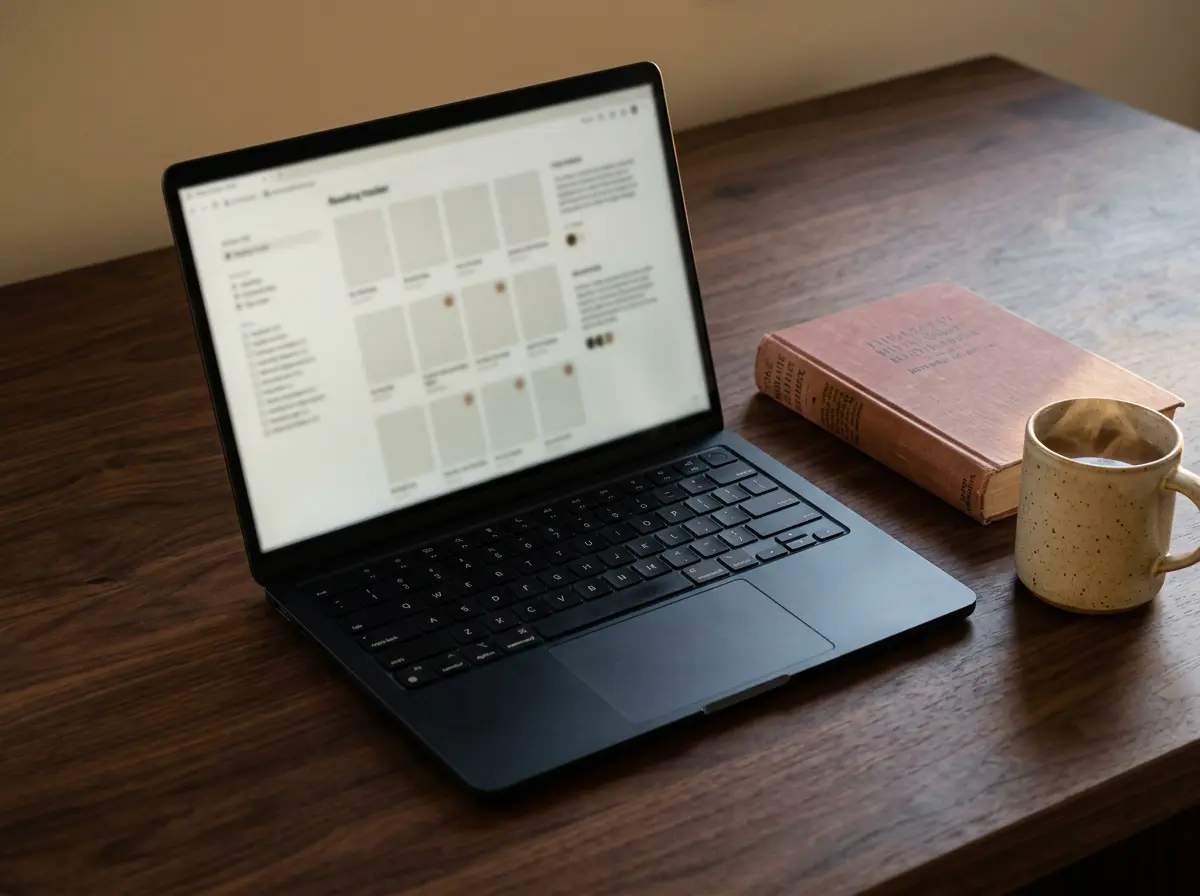
Full disclosure: we make and sell reading-tracker templates, so read this as a maker describing their own work. If you want the searchable, sortable side of a reading journal, the kind that totals your year, sorts by rating, and shows your genres at a glance, a spreadsheet does it better than a notebook ever can, and that is what we build. Our reading tracker keeps the core journal fields (title, dates, rating, notes) alongside the stats, in a file you own and reuse year after year, with a few designs if you want it to look good as well as work. It is the data half of the pair; if you also love handwriting, keep a paper journal beside it for the reflection. We would never tell you to drop the notebook, only that the counting is easier in a sheet.
Where to start
Where to start
Three quick branches. If you want the writing and the reflection, start a paper reading journal tonight with the core four fields and one prompt you like, and do not over-design it. If you want the data, the totals and sortable lists, start with a spreadsheet using the deeper guides above. If you want the lowest effort and do not mind a platform owning your record, an app will log your reading with almost no work. Most readers who stick with it end up with a notebook for the thoughts and a sheet for the numbers, and that pair, kept loosely and forgiven its gaps, is the reading journal that actually lasts.
However you keep yours, a reading journal is a small, kind thing to give your future self: a way to remember not just that you read, but who you were while you did. If what you want to keep is the writing rather than the reading of it, that is a commonplace book instead, filed by subject rather than by book. If you have a reading-journal habit, a layout, or a prompt that has stuck for years, share it in the comments. The setups that survive real life help the next reader far more than any template gallery.
FAQ
Common questions, answered briefly
What is the difference between a reading journal and a reading tracker?
What should I put in a reading journal?
How do I start a reading journal?
Should I keep a reading journal by hand or digitally?
Are there free reading journal templates?
What is a good reading journal idea to stay consistent?
If yours isn’t above, drop the question in the comments and we’ll add it.
People also ask