What it is
What the Kindle Scribe vs iPad comparison actually decides
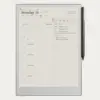
The Kindle Scribe vs iPad question gets asked because both devices are tablets you can write on. That framing is misleading. The Scribe is an 11-inch e-ink reader-and-writer running Amazon’s tightly curated shell; the iPad is a general-purpose computer with stylus support added as one feature among hundreds. Comparing them as the same product is the most common mistake in this decision.
The honest framing for any Kindle Scribe vs iPad comparison in 2026 is this: would a quieter, focused device with weeks of battery and no notifications change how you read and write, or would losing every other tablet capability frustrate you within a week? Reasonable people answer in both directions. The rest of this guide is the working filter for landing on yours.
We sell Kindle Scribe template bundles, so we have a financial reason to push you toward the Scribe. We are still going to spend section seven naming the iPad-wins use cases, because content that pretends the iPad is never the right answer reads as marketing and loses the trust the rest of the guide earns. Helpful-content first; conversion second.
Hardware
Hardware: what each is built for
| Spec | Kindle Scribe | iPad |
|---|---|---|
| Display | 11-inch mono e-ink, 300 ppi, frontlit (a cheaper model drops the light; the Colorsoft adds color in the same body). Matte, paper-like, no backlight reflection. Readable in direct sun. | 8.3 to 13-inch LCD or OLED (Mini through Pro), full RGB color, backlit. Glossy. Washes out in direct sun. iPad Pro adds ProMotion 120Hz refresh. |
| Stylus | Pen included in the price: from $429.99 without the front light, $499.99 with it. No battery, no charging, attaches magnetically, replaceable tips. | Apple Pencil sold separately ($79 to $129). USB-C or Pro variant with hover, double-tap, gestures. Pencil battery lasts a day on heavy use. |
| Battery | Weeks of normal use on a single charge. E-ink draws power only when redrawing the page. | ~10 hours of active use, less on video or gaming. Daily charging is the norm. |
| Build + weight | About 400g and 5.4 mm thin, designed for one-hand reading and writing. Sealed unit, not user-serviceable. | 293g (Mini) to 579g (Pro 13). Built for two-hand use; one-hand gets tiring on larger models. Sealed unit. |
The hardware comparison is the most-cited but least useful section of any Kindle Scribe vs iPad guide. Both devices have solid hardware in their respective categories. The Scribe will not stream Netflix; the iPad will not give you weeks of standby. Specs do not decide this question. What does decide it is the mix of hours you actually spend with the device, walked through below.
Writing
Writing experience side by side

Writing is where the Kindle Scribe vs iPad comparison gets technical. Three factors matter: latency, friction, and distraction.
Latency is roughly tied between the Kindle Scribe (~20-30 ms) and iPad Pro with Apple Pencil Pro (~9 ms with ProMotion). Both feel like ink under normal handwriting speed. Cheaper iPads (basic iPad with USB-C Pencil) lag closer to 30-40 ms, which starts to feel noticeable on fast writing. In raw latency terms the iPad Pro is the technical winner; in subjective writing feel the difference is barely perceptible at the Scribe’s price point.
Friction is where the Scribe pulls ahead for serious writers. The matte e-ink surface drags the stylus the way paper drags a fountain pen tip. iPad users buy Paperlike or similar films to fake this effect on glass; the Scribe ships with it native. After a week of side-by-side use most writers prefer the e-ink feel for handwriting and the iPad feel for sketching where smoothness matters more.
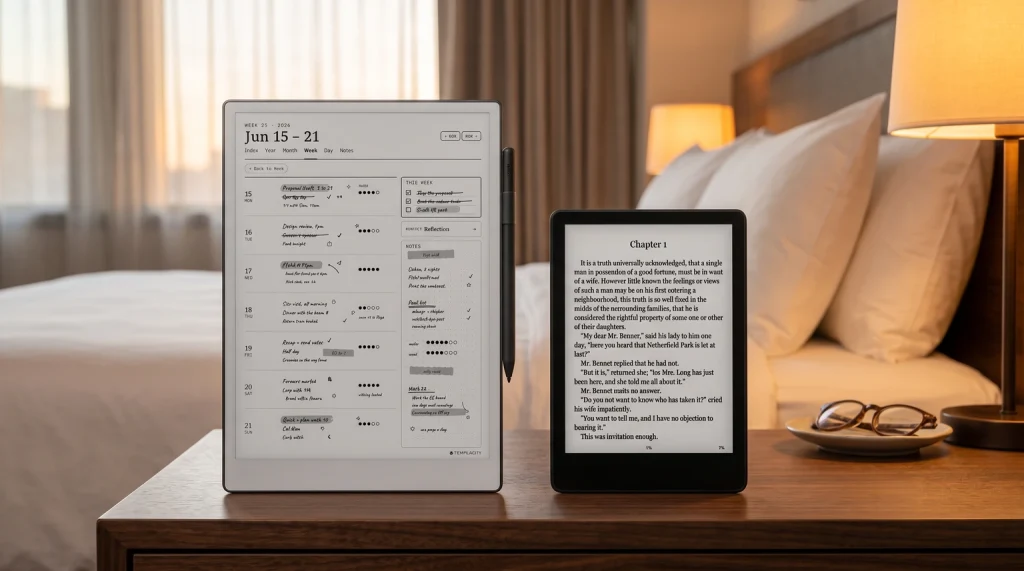
Distraction is the underrated Scribe advantage in any Kindle Scribe vs iPad comparison. The device shows a black-and-white writing surface, runs no apps, has no notifications, and cannot reach the internet beyond Amazon library sync. An iPad in writing mode still has every other app one swipe away. For people whose attention drifts (and that is most people), the Scribe’s constraint is the feature, not the limit. Our Kindle planner pillar covers the distraction-free workflow in detail.
Reading
Reading experience side by side
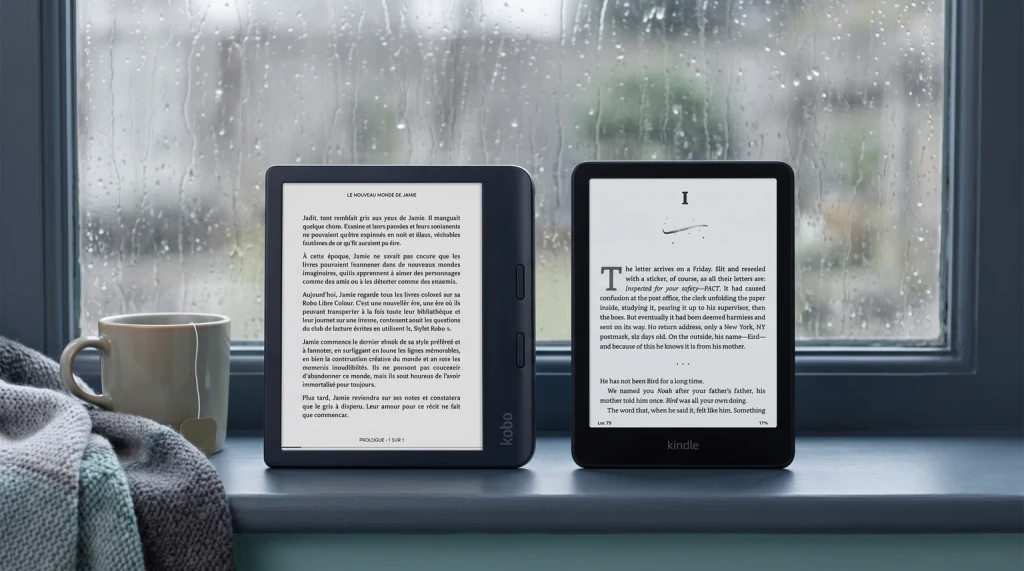
Reading is where the Kindle Scribe vs iPad comparison flips by category. The Scribe’s e-ink panel is closer to paper than any LCD will ever be: no backlight in your eyes at midnight, no glare in direct sun, no flicker, no eye fatigue after long sessions. Reading 200 pages on a Scribe feels like reading 200 pages of a paperback. Reading 200 pages on an iPad feels like watching a slideshow.
The iPad wins on rich-media reading: full-color magazines, comics, art books, layout-heavy PDFs with embedded video or interactive elements. The Scribe handles standard text and basic PDFs cleanly but cannot render color, embedded media, or complex interactive layouts. Two different reading use cases.
The Kindle ecosystem is the underrated Scribe advantage here. If you already buy books on Amazon, the Scribe slots into your existing library, read-position sync, dictionary, X-Ray, Send-to-Kindle, and the entire Kindle reading experience at the 11-inch panel size. The iPad runs the Kindle app fine but you read on a glossy backlit screen, which defeats the point of buying into Kindle in the first place. Our Kindle Scribe review covers the ecosystem fit in depth.
Ecosystem
App ecosystem and the lock-in question
The iPad runs the full iPadOS app store: hundreds of thousands of apps including Goodnotes, Notability, Procreate, Microsoft Office, Adobe Creative Cloud, the entire Apple suite, every major streaming service, and countless niche tools. Flexibility is the iPad’s headline strength.
The Kindle Scribe runs Amazon’s tightly curated environment: Kindle library, built-in notebook templates, PDF import via Send-to-Kindle, in-house handwriting OCR, and almost nothing else. No browser worth using, no third-party note apps, no streaming. By design. The Scribe is built to read and write, and the constraint is what enables the weeks-of-battery and distraction-free experience.
Lock-in goes both ways in the Kindle Scribe vs iPad comparison. iPad notes in Goodnotes are tied to Goodnotes (Apple-only export with friction). Scribe notes are tied to Amazon’s cloud (no easy export to Notion, OneNote, or Obsidian outside manual workarounds). Neither device is friction-free if your notes need to flow across teams and platforms. Pick by what you do now, not by hypothetical portability needs that may not show up.
Decision
Decision matrix by use case
| Use case | Better fit | Why |
|---|---|---|
| Already reads on Kindle, wants to add writing | Kindle Scribe | Library ecosystem fit. Reads as Kindle, writes as bonus. No friction switch. |
| Academic note-taking across long lectures | Kindle Scribe | E-ink reduces eye strain over 3-hour sessions; weeks of battery; no notification drift. |
| Long-form reading + occasional writing | Kindle Scribe | Paper-like reading is the headline. Writing is the bonus that justifies the price gap over Paperwhite. |
| Design, sketching, color illustration | iPad | Color, Procreate, layered art apps, ProMotion 120Hz smoothness. The Scribe cannot do this. |
| Video editing, coding, app workflows | iPad | Reading e-ink panels cannot render full color or video. These workflows need a computing tablet. |
| Already in Apple ecosystem (Mac + iPhone) | iPad | AirDrop, iCloud sync, Continuity. The Scribe lives in Amazon’s walls; cross-Apple friction is real. |
| Family device shared across users | iPad | Multi-user profiles, kid apps, video for road trips. The Scribe is single-user by design. |
The pattern across the matrix: reading-and-writing buyers should pick the Scribe; computing-first buyers should pick the iPad. The friction comes from buying the wrong device for your actual use, then resenting the limitations. If color matters specifically, the Kindle Scribe Colorsoft vs iPad comparison is the closer call.
Skip if
When the iPad is the right buy
Three buyer profiles should pick iPad over Kindle Scribe without hesitation. Naming them is the honest version of any Kindle Scribe vs iPad guide; pretending iPad is never right reads as marketing.
Creators who need color. Procreate, Affinity Designer, Photoshop, video editing, photo retouching. The mono Scribe cannot drive these app workflows; even the Colorsoft variant cannot. iPad Pro with Apple Pencil Pro is the right buy. The Scribe will frustrate you within a week.
People already in the Apple ecosystem. If your phone, laptop, and watch are Apple, the iPad slots in with no friction (AirDrop, iCloud sync, Continuity). The Scribe lives in Amazon’s cloud and shares files via Send-to-Kindle, not handoff. Workflow friction across devices is real and recurring.
Anyone who wants a tablet that does many things adequately rather than two things excellently. The iPad’s strength is breadth. The Scribe’s strength is depth in a narrow lane. Pick by which feels more useful to you. There is no objectively right answer; there is a personally right answer.
Verdict
What we’d buy if starting today
The other framing worth saying out loud: if your honest answer to the Kindle Scribe vs iPad question is “I’m not sure, both seem useful”, you almost certainly want the iPad. The Scribe’s value proposition is constraint, and constraint only pays off when you actively want it. Buyers who are on the fence about constraint end up using the device for two weeks and putting it in a drawer. iPads do not get put in drawers because they keep finding new uses.
Our free e-ink tablet buying guide opens with the e-ink or iPad question, then compares Kindle Scribe with reMarkable, BOOX and Supernote for readers who land on e-ink.
Whichever you pick, the decision worth making this quarter is to commit and use it. Drop a question in the FAQ below if a specific use case is unclear, and bring the conversation into the community via the share row at the bottom.
FAQ
Common questions, answered briefly
Is the Kindle Scribe better than the iPad?
Can the iPad replace a Kindle Scribe for note-taking?
Which is better for reading books, Kindle Scribe or iPad?
What about the Colorsoft variant vs iPad?
Is the Kindle Scribe vs iPad Mini comparison different?
How does the Kindle Scribe compare to the reMarkable vs iPad question?
Have a use case the FAQ misses? The share row at the bottom carries an email link. We update this guide as the device landscape shifts; flag what you’d add.
People also ask