reMarkable Sleep Screen: How to Change or Customise It (2026)
How to change the reMarkable sleep screen in 2026: the built-in options on current firmware, the custom-image and SSH paths, and which is worth your time.
Updated September 17, 20266 min read1,324 words
Built-in
Change the reMarkable sleep screen through the official settings
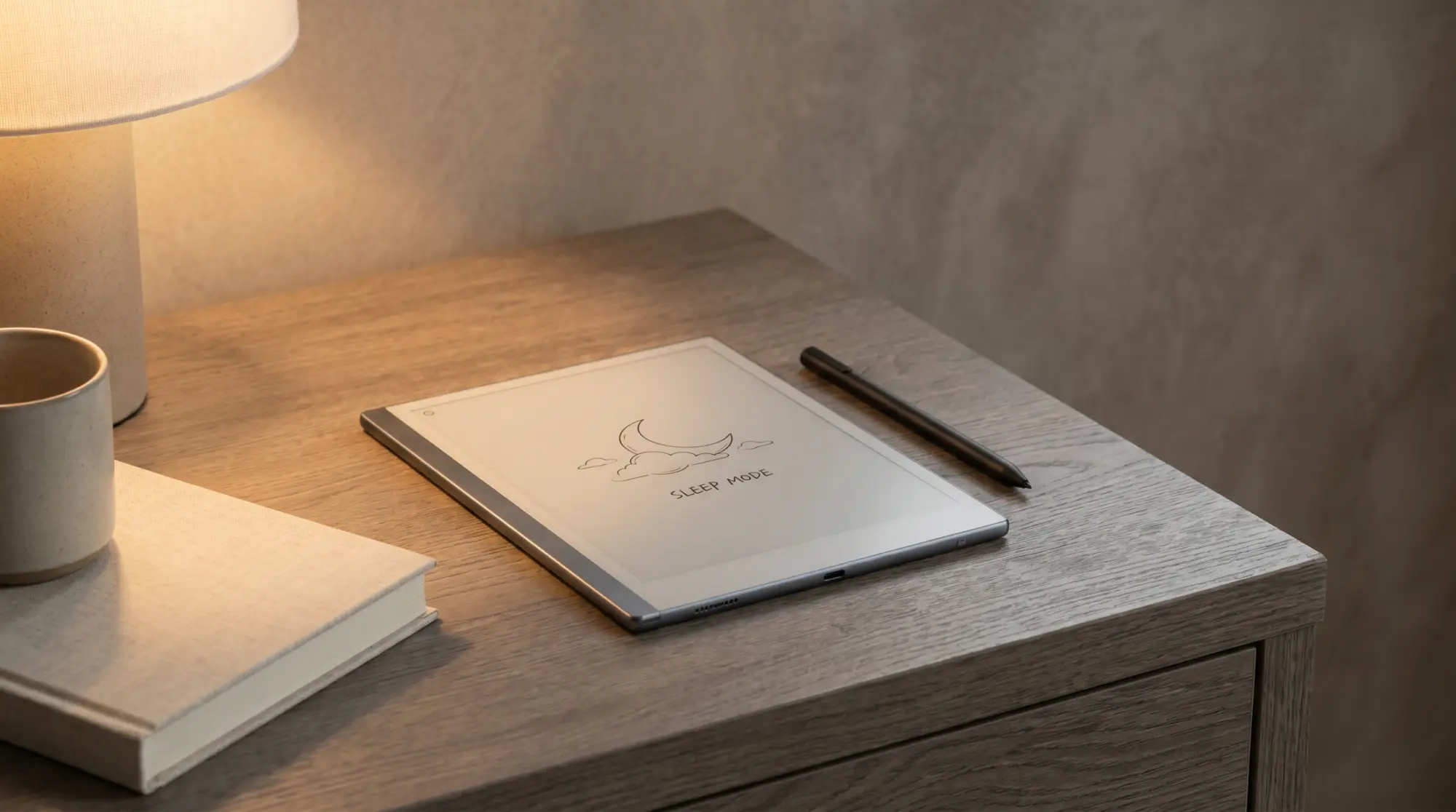
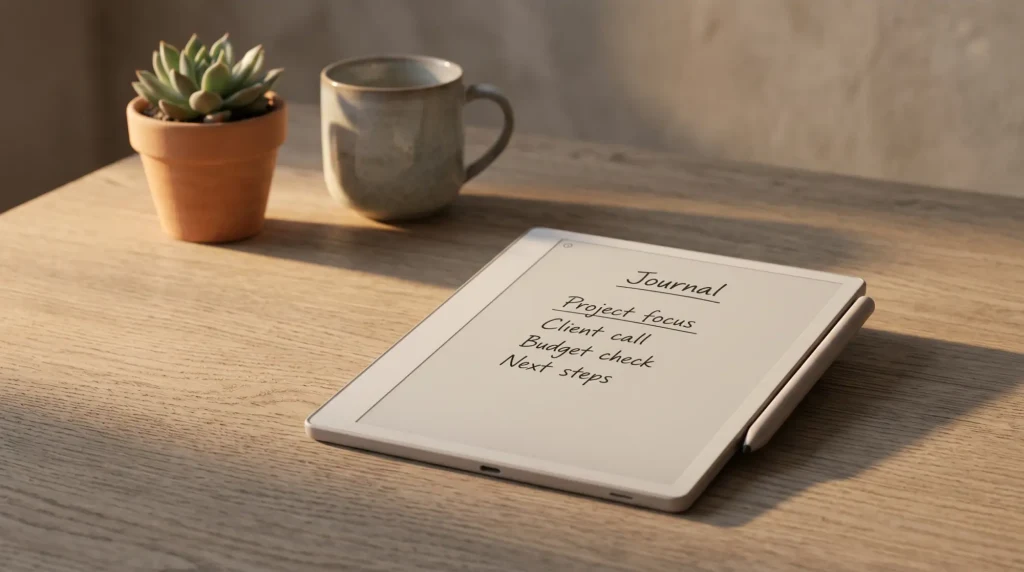
The reMarkable screensaver settings live under Settings > Power management > Sleep screen on current firmware. Two options ship by default: a fixed sleep image (reMarkable’s default art), and “last notebook page” (the page you were just on). The second option is the one most users settle on because it turns the sleep screen into useful context: you pick up the device, see the page you were on, and resume without opening anything. The default art is fine but not informative.
Recent firmware on rM2 and Paper Pro added a third option in some regions: custom image upload, where you choose a PNG from the device’s files. The image needs to be at the device’s native resolution (1404 x 1872 on rM2, 1620 x 2160 on Paper Pro) and grayscale or low-colour for clean rendering. If your firmware shows the custom option, use it; it’s the cleanest path. If it doesn’t, the next sections cover the unofficial routes.
RCU
Custom reMarkable screensaver through RCU
RCU (reMarkable Connection Utility) is the third-party desktop app that talks to the device over SSH or USB and exposes options the official app does not. It handles template installs, notebook export, and (relevant here) custom sleep-screen image upload. The path is: install RCU on Mac or Windows, connect the device, find the Screen section, drop in a PNG at native resolution, hit apply, restart the device. Five minutes once, the image stays until you change it.
RCU is the right tool for users who want a custom screensaver but don’t want to touch the device filesystem directly. It runs as a regular desktop app, the operations are reversible, and it doesn’t require enabling developer mode. The trade-off versus the SSH path below is that RCU only changes the sleep screen; it does not let you customise the suspend, poweroff, and starting images. For full control over every system image, the SSH path is the only way.
SSH
Direct reMarkable screensaver replacement over SSH
For full control over every system image, the SSH path replaces PNG files in /usr/share/remarkable/ directly. The files of interest are suspended.png (sleep screen), starting.png (boot screen), poweroff.png (power-off screen), and rebooting.png (reboot transition). Replace each with a PNG at native resolution and the device picks them up on the next state change. The community has maintained guides for this path since the rM1; it works on rM2 and Paper Pro on current firmware.
Two caveats. First, the SSH access requires the developer-mode password, which the device shows under Settings > About > Copyrights and licenses. Second, a firmware update can overwrite the files (re-replace after each update). The path is documented in the community-maintained ddvk/remarkable-hacks repo, which also covers other unofficial customisations. The risk profile is low: factory reset recovers the device cleanly if anything goes wrong.
If you’ve built a custom reMarkable screensaver setup that uses one of these paths, drop the result in the comments. The community guides cover the mechanics well; the patterns of what makes a good sleep image (low ink density for slow refresh, useful information, brand vs notebook) are still being figured out across the user base.
FAQ
Common questions, answered briefly
How do I change the reMarkable screensaver?
Three paths. Built-in: Settings > Power management > Sleep screen lets you choose last-notebook-page, the default image, or (on recent firmware) a custom PNG you upload. RCU: third-party desktop app that handles custom sleep-screen images cleanly over USB/SSH. Direct SSH: replace PNG files in /usr/share/remarkable/ for full control over every system image. Pick the path that matches how much control you want.
What size should a reMarkable screensaver image be?
Native resolution per device: 1404 x 1872 pixels for the reMarkable 2, 1620 x 2160 for the Paper Pro, 954 x 1696 for the Paper Pro Move. Grayscale or low-colour PNGs render cleanest on E Ink; the Paper Pro’s Canvas Color panel is E Ink Gallery 3, which carries colour at the full 264 PPI rather than halving it the way a colour-filter panel does. Keep ink density moderate so the slow refresh stays clean.
Will a custom reMarkable screensaver void my warranty?
The built-in setting and RCU custom upload are sanctioned paths and do not void warranty. Direct SSH file replacement is technically unsanctioned but the community has used it for years without warranty issues. A factory reset returns the device to stock if you need warranty service. The practical risk is low; the formal answer is read reMarkable’s current help page for the official position.
Can I set my last notebook page as the reMarkable screensaver?
Yes, this is the built-in option most users prefer. Settings > Power management > Sleep screen and pick “last notebook page”. The device shows whatever page you were on when it last went to sleep, which turns the lock screen into a useful context cue when you pick the device back up.
Why does my reMarkable screensaver keep reverting after firmware updates?
If you used the direct SSH path, firmware updates can overwrite the PNG files in /usr/share/remarkable/. The fix is to re-replace them after each update. Built-in settings and RCU uploads survive firmware updates cleanly because they store the custom image in user space, not system space. If you’re updating firmware often, the built-in path is the lower-friction choice.
If yours isn’t above, drop the question in the comments and we’ll fold it in next refresh.