The two kinds of money
What a church budget template has to keep apart
Most church budgets start as one list: giving at the top, salaries, utilities and ministries underneath, a sum at the bottom. It works until someone asks whether the church can afford a new roof, and the treasurer has to explain that the healthy number in the bank account is mostly not spendable.
Church money comes in two kinds. General fund money is the undesignated tithes and offerings: it pays staff, utilities, ministries and everything else. Designated money arrives with a purpose written on the envelope: the building fund, a missions offering, a benevolence fund for families in need. A gift for the building fund cannot pay the electric bill, however short the general fund runs.
So a church budget template answers two questions, not one: does the whole plan balance, and does the general fund balance on its own? This is the church version of the restricted and unrestricted split our nonprofit budget template guide works through for charities with grants.
The example
A church budget template, line by line
Here is the annual budget of a fictional congregation, with a fund column that says which money pays for each line. The whole plan balances at $382,000, and so does the general fund, at $324,000.
| Line | Budget | Paid from |
|---|---|---|
| Tithes and offerings | $312,000 in | General |
| Facility use by outside groups | $12,000 in | General |
| Building fund gifts | $40,000 in | Building |
| Missions offering | $18,000 in | Missions |
| Staff, pastor included | $180,000 out | General |
| Worship and music | $14,000 out | General |
| Children and youth | $16,000 out | General |
| Adult ministries | $8,000 out | General |
| Missions and benevolence | $34,000 out | $18,000 Missions, $16,000 General |
| Building and utilities | $62,000 out | General |
| Mortgage | $48,000 out | $40,000 Building, $8,000 General |
| Office and administration | $20,000 out | General |
Two lines are split between funds, and those splits are the reason for the column. The missions offering covers $18,000 of missions giving; the other $16,000 is a decision to send 5.1% of general giving outside the church, and it belongs in the general fund where the congregation can see it. Building fund gifts cover most of the mortgage, but not all of it, so $8,000 of mortgage sits in the general fund too. Without the column, both lines look paid for.
Ministries
Ministries are the lines that matter to the congregation
Give every ministry its own line, with a named leader who owns it: worship, children, youth, adults, missions, care. A ministry budget the leader helped write gets spent with more care than one handed down, and it turns the annual budget meeting into a conversation about what the church does rather than a list of bills.
Staff is usually the largest line, and it needs one detail a business budget never has. Under IRS rules a minister can exclude a housing allowance from income, but Publication 1828 says the church must designate it “by official action taken in advance of the payment”, and for a minister paid by a local congregation, that congregation makes the designation. Put the designated amount on its own row under staff, with the date of the board or council resolution beside it, so next year’s budget meeting renews it on time. The tax treatment itself is a question for your accountant, not your spreadsheet.
Events with their own income and costs, such as a fall festival, a mission trip or a fundraising dinner, are easier to run on a budget of their own that feeds one net line into the church budget. Our event budget template guide works through a fundraising dinner from fixed costs to the number of tickets that cover it.
The monthly report
A church financial statement template for the board
Back to the example. At the end of June the church has $71,000 in the bank, and a board looking at that figure alone would approve the roof. Then split it by fund: $38,000 is building fund money waiting for the next mortgage payments, $9,000 is the Easter missions offering not yet sent, and the general fund holds $24,000. The general fund spends $27,000 in an average month ($324,000 a year), so the church has less than one month of running costs, and nobody can see that from the bank statement.
The church has less than one month of running costs, and nobody can see that from the bank statement.
A monthly church financial statement that fits on one page puts four things in front of the board, above any table:
- General giving against budget, year to date: $148,000 against $151,000 budgeted through June, 98.0%.
- General fund spending against budget, year to date, line by line for anything more than a few points off.
- Each fund’s balance: general, building, missions, benevolence, so nobody reads the bank figure as spendable.
- Months of general fund cash: the general balance divided by an average month of general spending. Here, 0.9.
Each fund’s balance is simple to keep in a spreadsheet: last month’s balance, plus gifts into that fund, minus spending from it. Tag every gift and every payment with its fund when you enter it, and the balances never need to be worked out by hand.
Timing
Budget giving by month, not by twelfths
In the example, giving through June is $148,000. Half of the year’s $312,000 would be $156,000, and against that the church looks $8,000 behind. Its budget follows last year’s months instead, which puts $151,000 at the end of June, so giving is $3,000 behind and nobody needs to panic. Giving at many churches moves with the calendar: holiday weeks and year-end gifts run high, summer runs low. A budget that expects one twelfth of the year every month shows a crisis every summer and a windfall every December, and the board learns to ignore both.
Spread the year’s giving across the months by last year’s actual pattern instead, then compare each month with its own budget. Expenses get the same treatment where they are lumpy: insurance paid once a year, a camp deposit in March. If the general fund will dip below a month of costs before December, our cash flow forecast template guide lays out the months ahead so the board sees it in spring, not in August. For the plan-against-actual layout itself, our Excel budget template guide uses the same columns for a household.
Records
The records a church keeps alongside the budget
Churches are on the IRS list of organizations that do not have to file the annual information return (Form 990) other charities file. That makes the church’s own statements the only financial record many members ever see, which is a reason to keep them plainer and more regular, not less. Publication 1828 says there is no specific format for church records and lists the usual ones: general ledgers, receipts and disbursements journals, payroll records, banking records and invoices. A spreadsheet with a transactions tab, a budget and a monthly statement covers the first two.
Giving records are the other half. A donor who gives $250 or more in one contribution needs a written acknowledgment from the church to claim the deduction: the church’s name, the amount, and a statement that no goods or services were given in return, if that is the case. Year-end giving statements usually do this job, which is why giving by person belongs in its own records, kept apart from the budget.
Ready-made
A ready-made church budget spreadsheet
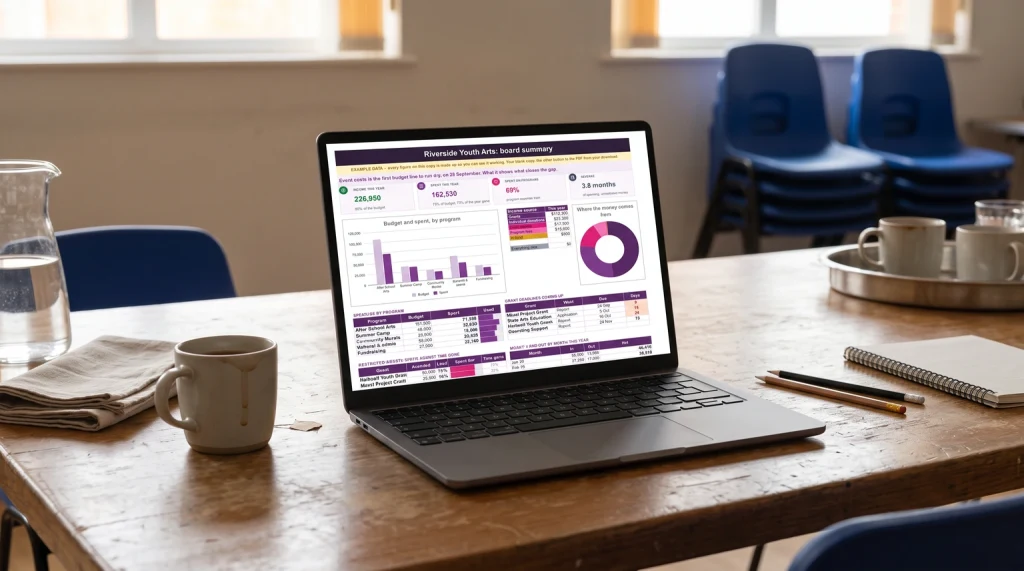
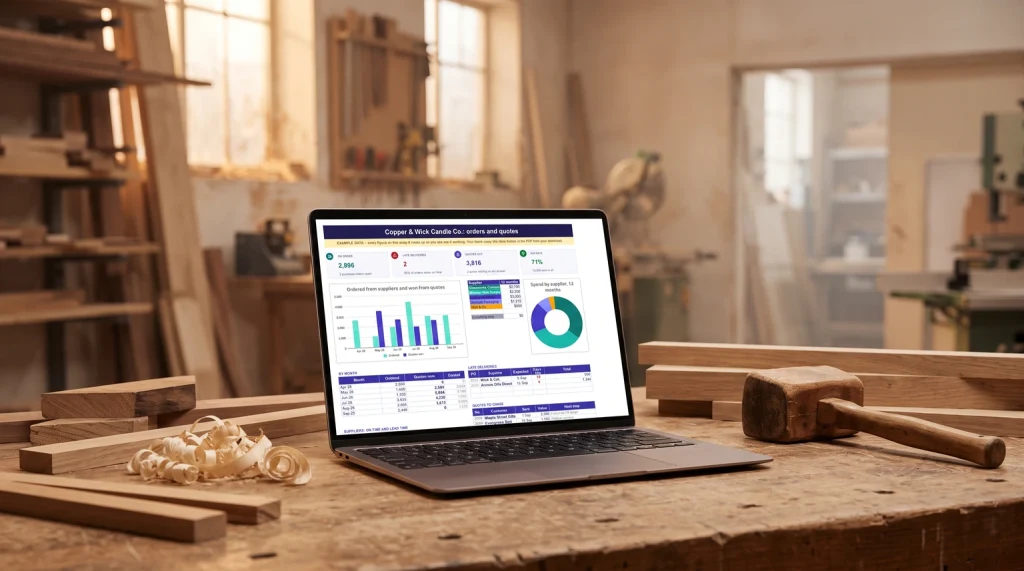
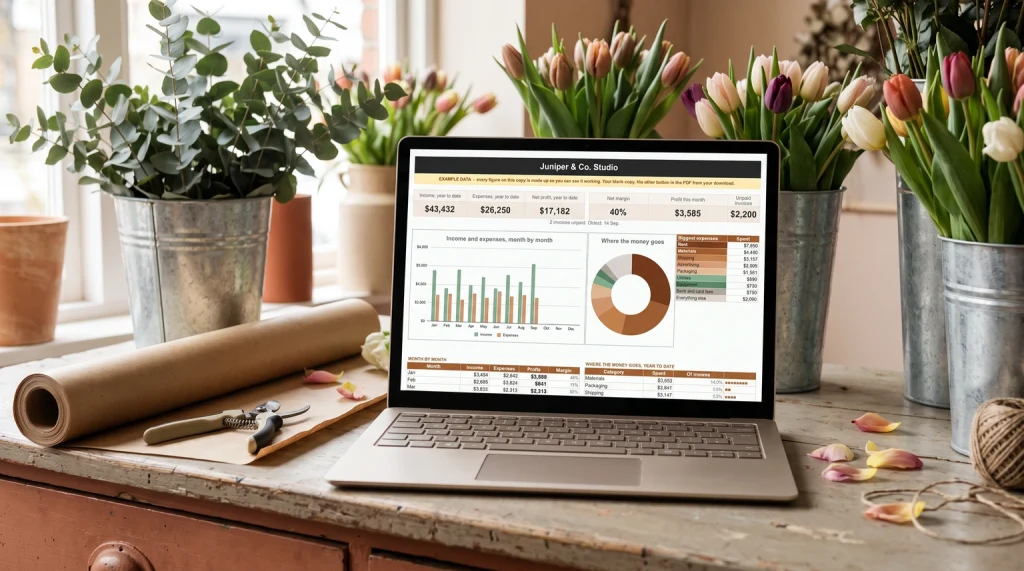
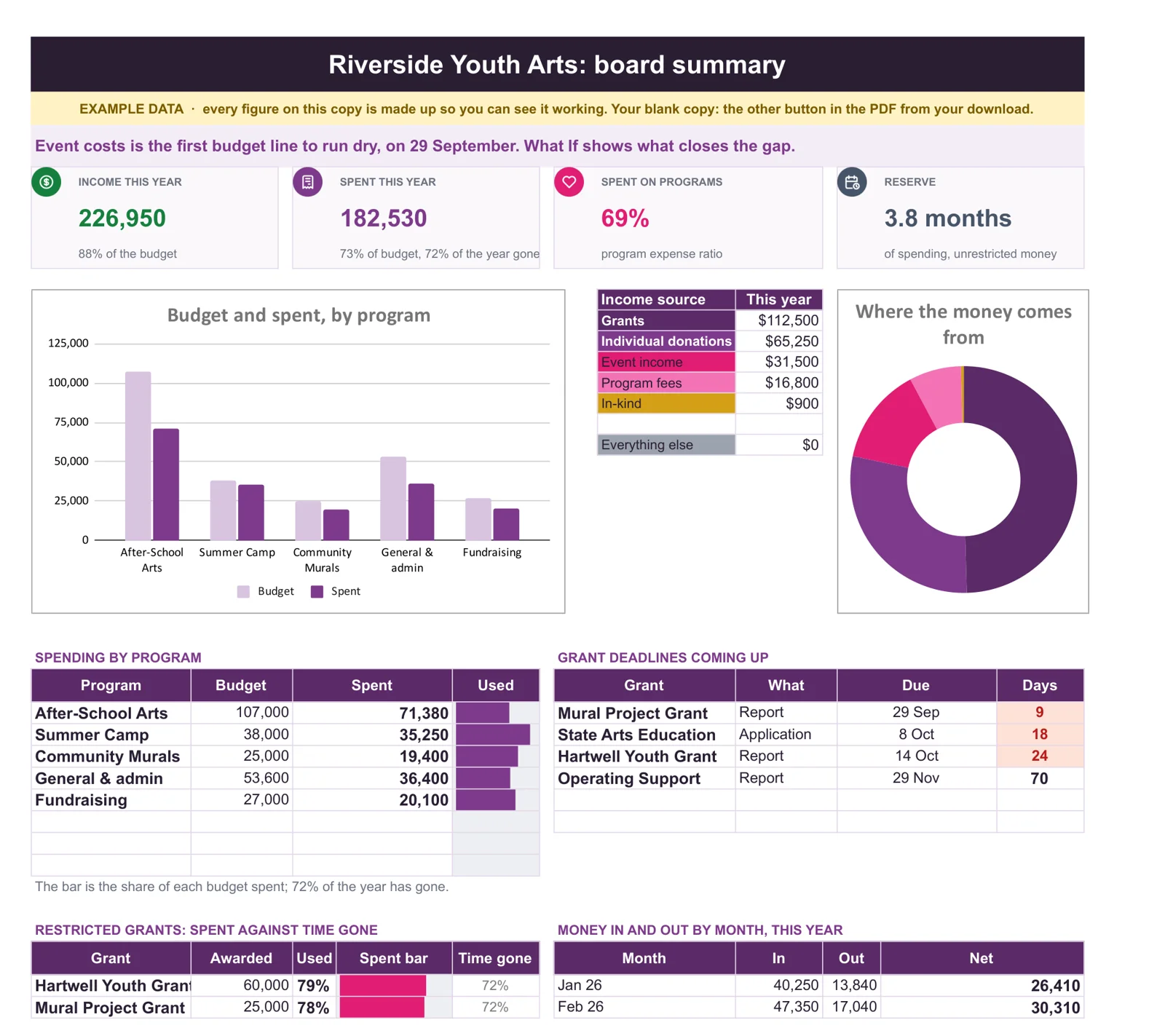
We have not built a church-only file, but our Nonprofit Budget & Grant Tracker ($49, Google Sheets and Excel) has the shape this post describes. Each ministry is a program, the office is admin, and the building fund and missions offering go in as funds; tag each payment to its fund on the Transactions tab. The Budget tab holds one line per income or expense with actual so far and a “Running hot” flag for any line spending ahead of the year. The Board Summary puts income and spending against budget and months of reserve on one page, and What If names the first budget line to run dry and the day it does. If your church holds a grant, for a food pantry say, the Grants tab tracks it from application to final report. It is a budget, not a giving database: keep giving by person and year-end statements in whatever records your giving today.
It also comes inside our Nonprofit Spreadsheet Kit with an event budget, a staff schedule and timesheet, and a marketing plan: all four for $119, against $166 bought one by one. More files in the same shape are on our Excel hub.
Whatever church budget template you use, put the fund column in before the first number, and show the general fund on its own at every board meeting. Tell us in the comments which fund causes the most confusion at yours; we read every reply.
FAQ
Common questions, answered briefly
What should a church budget include?
What is a designated fund in a church budget?
What goes in a monthly church financial statement?
Do churches have to file Form 990?
People also ask