Why prompts
Why daily journal prompts work better than a blank page
Most journals die somewhere in the second or third week. It is rarely for lack of things to say. A blank page asks you to decide what to write and then write it, every night, and on a tired evening the deciding is the part that defeats you. Daily journal prompts take the deciding away. You open the page, the question is there, and the first sentence is already half written.
The prompts below run for a calendar month, so you can start on the first and know where you are. They move through four themes, one a week, so the entries do not all sound the same by day twenty. Skip any that do not land; a prompt is an invitation, not homework.
Week one
Week one: daily journal prompts for noticing your days
Start small and concrete. The first week is about seeing your ordinary days clearly, which is what makes everything after it easier to write.
- What was the best five minutes of today, and where were you?
- What did today feel like, in one word, and why that word?
- What did you see, hear or taste today that you would like to remember?
- What took more energy than it should have?
- What went more smoothly than you expected?
- What small thing in your home are you glad you have?
- What would you do again tomorrow, exactly the same?
Week two
Week two: prompts about the people in your life
- Who made today a little easier, even without knowing it?
- What is something a friend said recently that stayed with you?
- Who do you miss, and what would you tell them today?
- Which conversation this week do you keep replaying, and why?
- Who taught you something you still use?
- What do you want the people closest to you to know about this month?
- Who could you thank this week, and for what exactly?
Week three
Week three: prompts about work, habits and yourself
- What did you finish today, however small?
- What are you putting off, and what is the smallest first step?
- Which habit helped you this week, and which got in the way?
- What are you better at than you were a year ago?
- What drained you today, and what refilled you?
- What would you like to stop saying yes to?
- What did you learn today that you did not know this morning?
- When did you feel most like yourself this week?
A blank page asks you to decide what to write and then write it, every night. Daily journal prompts take the deciding away.Daily journal prompts
Week four
Week four: prompts for looking ahead
- What are you looking forward to this week?
- What would make next month a good one?
- What is one thing you want to try before the season changes?
- What advice would you give yourself on the first of this month?
- What would you like to have more of next month, and less of?
- Which entry from this month surprised you when you read it back?
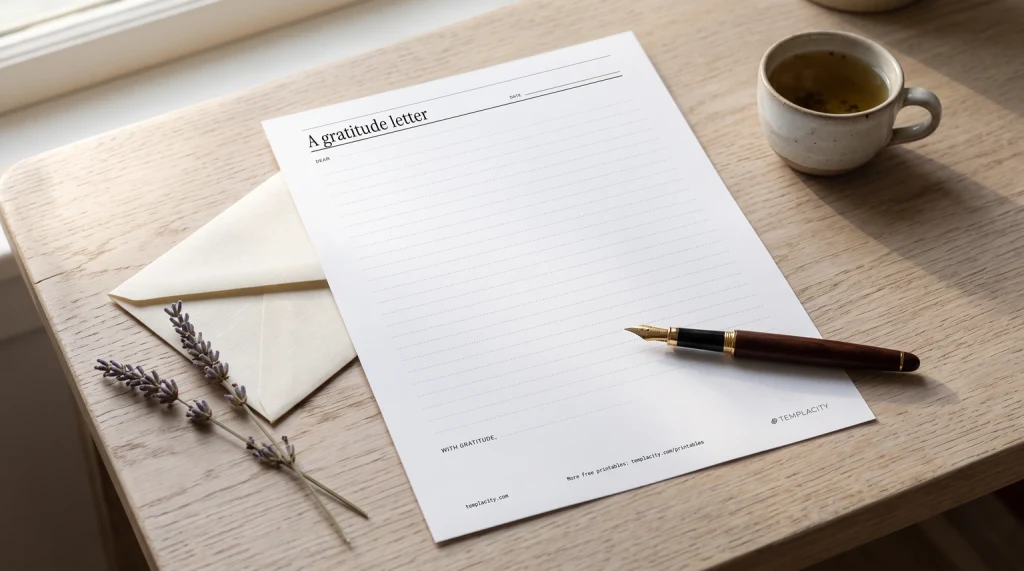
- What are three things you are grateful for this month, and why each one?
- What is one promise to yourself for tomorrow?
- If this month had a title, what would it be?
Looking back
Four weekly look-backs
At the end of each week, read the last seven entries and answer one of these. Ten minutes on a Sunday is what turns a pile of entries into something you learn from.
- Which day this week would you happily live again, and what made it?
- What came up more than once in your entries?
- What did you worry about that did not happen?
- What is one thing to carry into next week, and one to leave behind?
Short nights
The two-minute version for busy nights
Some nights a full prompt is beyond you, and that is fine. A three-line entry keeps the habit alive and still leaves a trace you can read later: one word for your mood, one thing you are grateful for, and one line from the day you want to remember. Writing down what you are grateful for is also one of the self-care habits the US National Institute of Mental Health lists in its guide to caring for your mental health, which suggests being specific. If you want prompts aimed at your wellbeing in particular, our journal prompts for mental health are built around that, and our gratitude journal prompts go deeper on the grateful line.
Where to write
Where to keep a daily journal
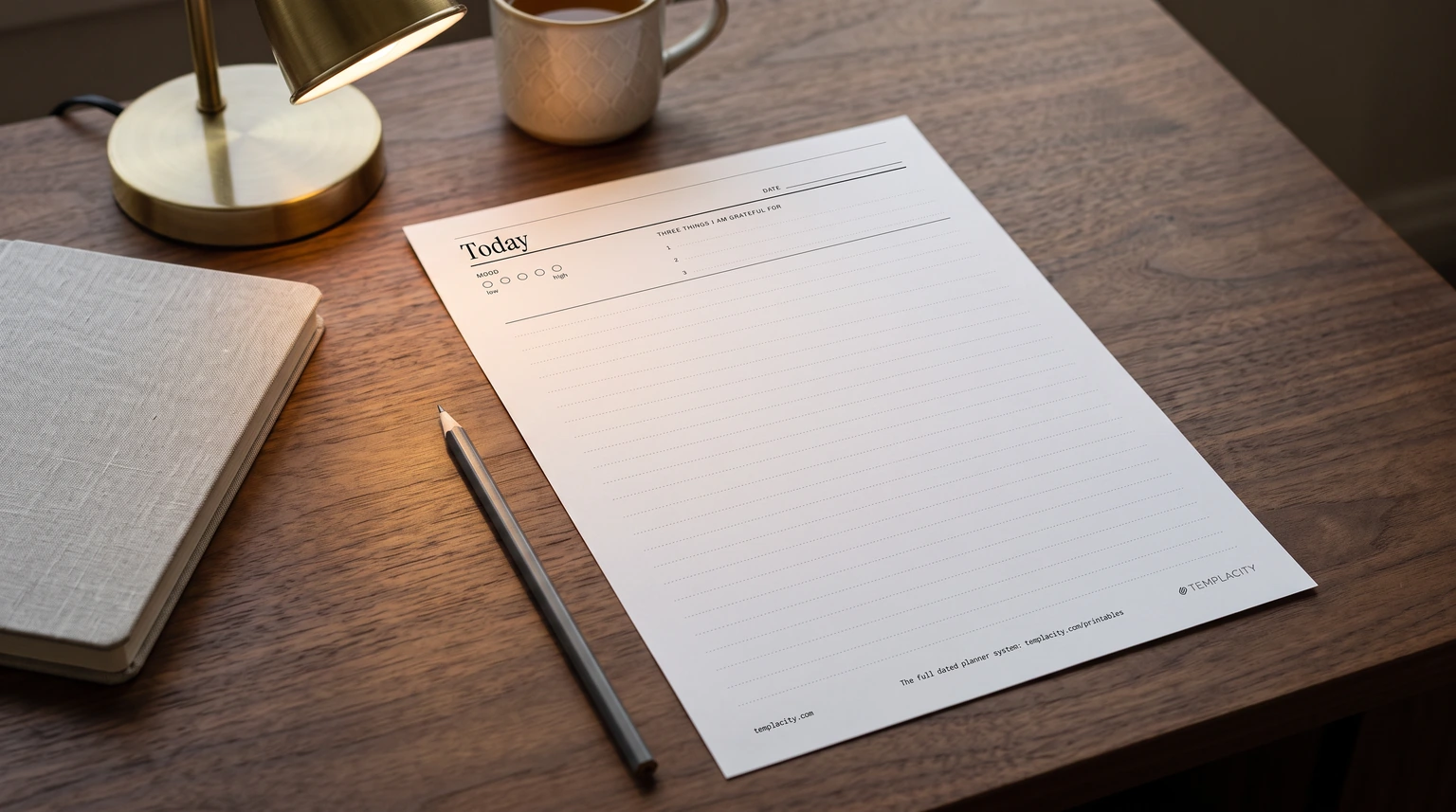
Any notebook works, but a journal with a place for each kind of entry makes the habit easier to keep. On paper, our Printable Journal ($24) is undated, so you can start in any month: each month opens with three intentions and has a one-line-a-day page, 52 weekly prompts with a full page each, and a monthly review, plus a 39-page month refill whose daily pages ask for mood, energy, sleep, what you are grateful for and a line to remember, with a weekly reflection after every seventh day. It prints at Letter, A4 or A5. To try a page first, our guide to printable journal pages walks through the page types worth printing.
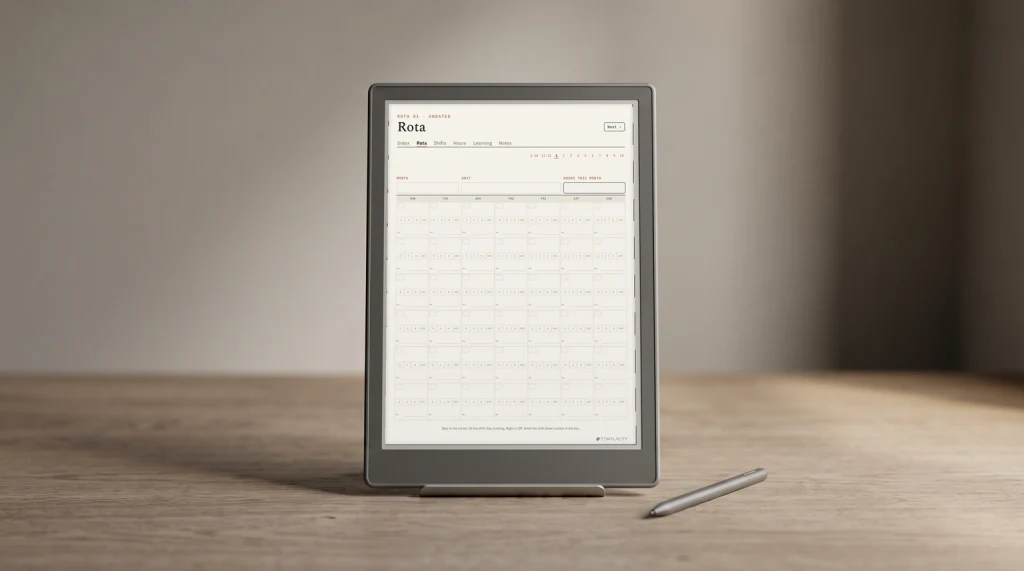
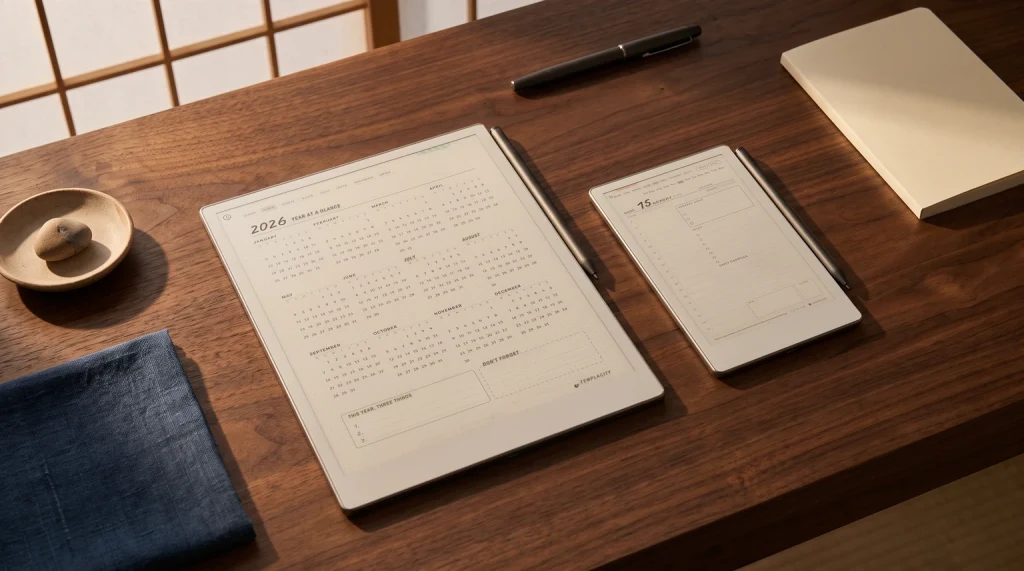
On an e-ink tablet, The Journal ($49) has a page for every day of the year, one line a day for the short nights, a mood month and a month review, in 464 hyperlinked pages with 2026 and 2027 included, for reMarkable, Kindle Scribe and Boox. Our digital journal template guide covers the setup, and the planning hub collects the rest of our journaling posts.
FAQ
Common questions, answered briefly
What should I write in a daily journal?
How long should a daily journal entry be?
Should I journal in the morning or at night?
What if I miss a day?
Got a prompt that always works for you? Share it in the comments; we will add the best ones to next month’s list.
People also ask