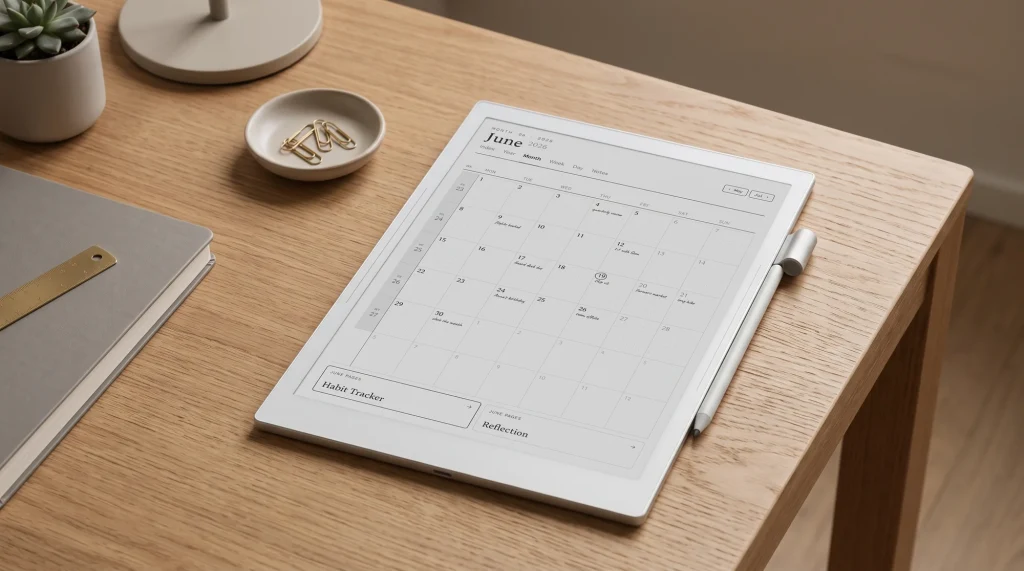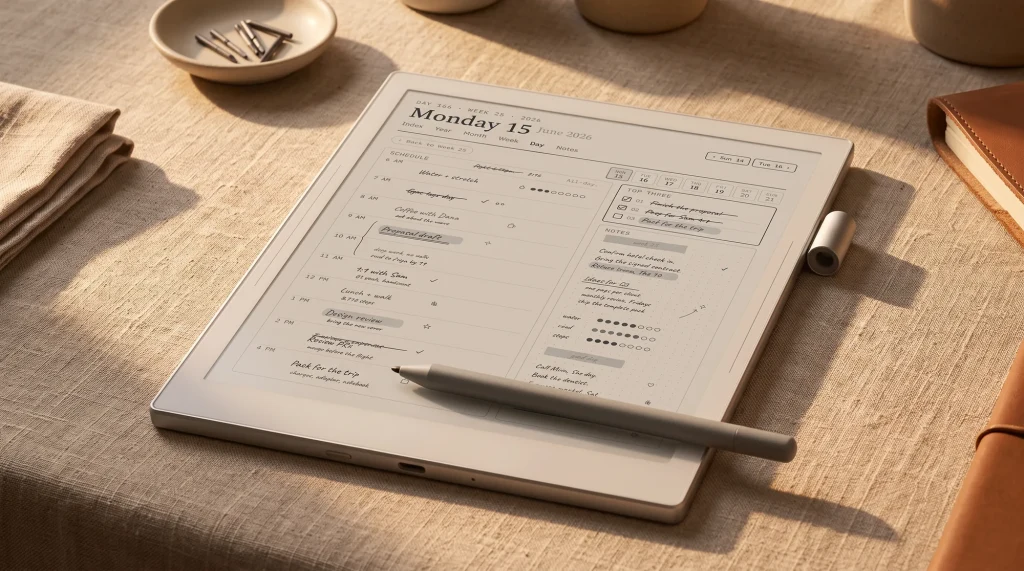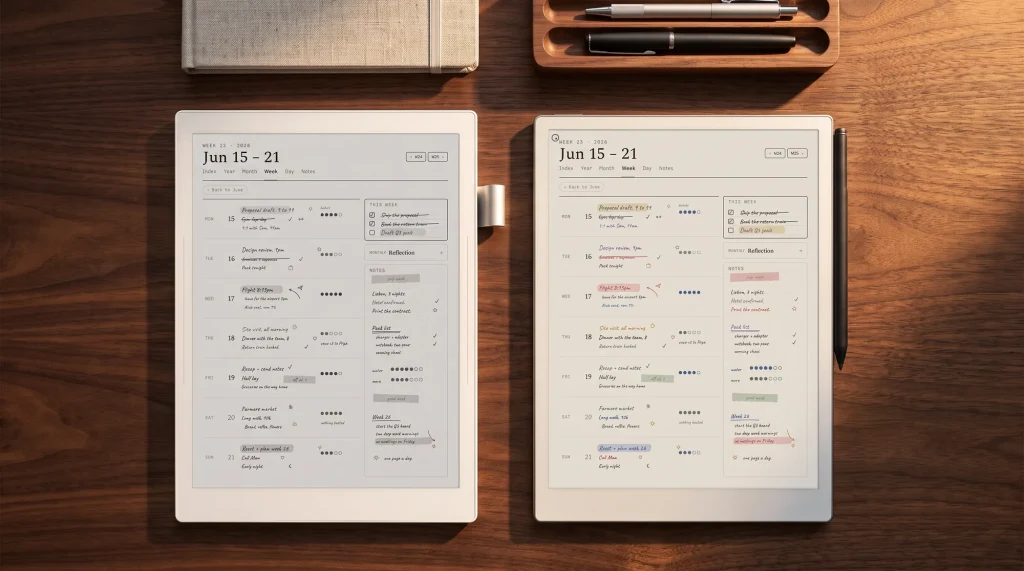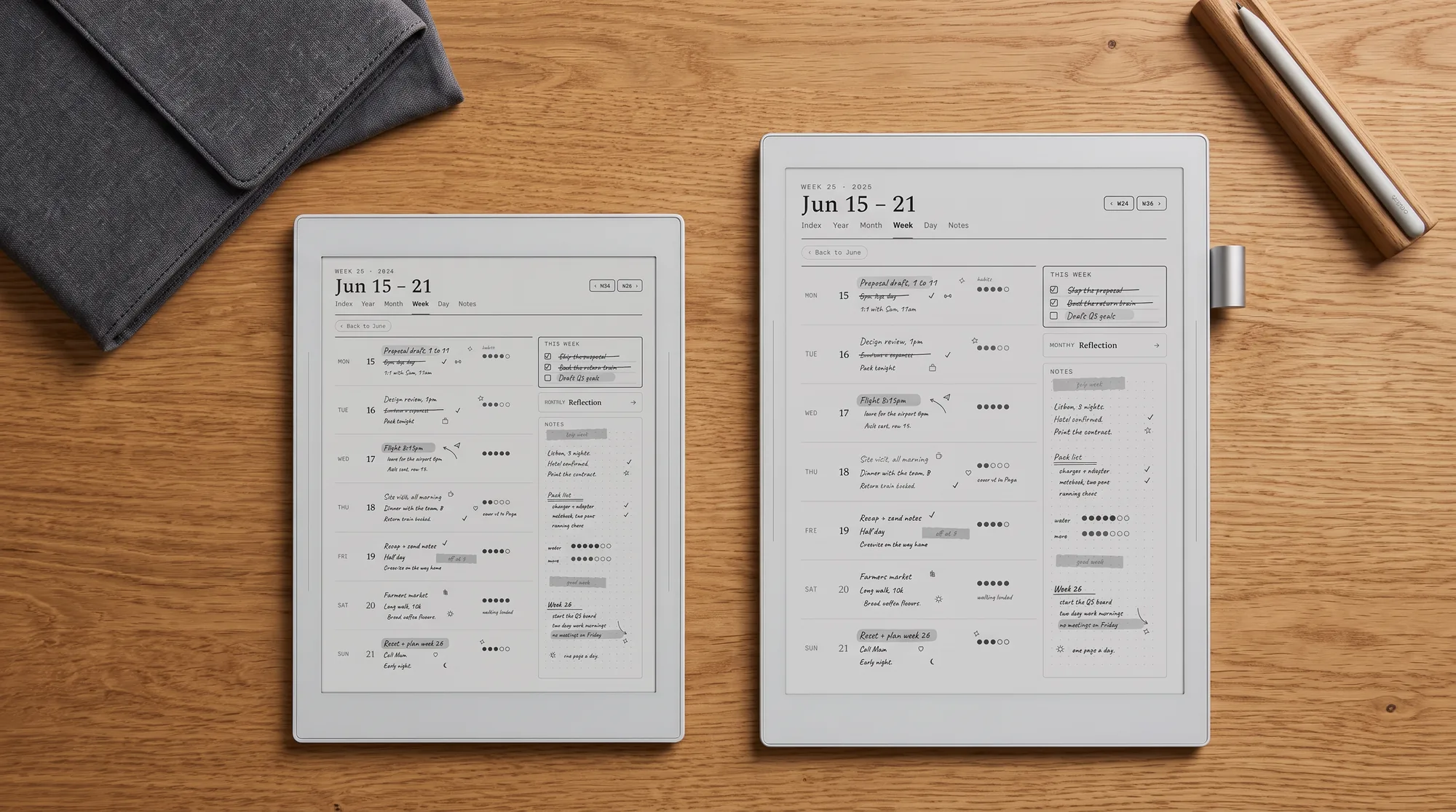
This is part of our Supernote hub. For each device on its own, see the Supernote Nomad review and the Supernote Manta review.
The choice
What the Supernote Nomad vs Manta choice comes down to
Most device comparisons pit different philosophies against each other. Supernote Nomad vs Manta is different, because these two are siblings from the same maker, Ratta, built on the same foundation. Both run Chauvet, Supernote’s closed Android-based system, on the same Rockchip RK3566 with 4GB of memory. Both take the same ceramic-nib pen, both have a replaceable battery, and both leave out a frontlight on purpose. So the usual spec-sheet duel mostly cancels out, and the decision lands on three things: how big a screen you want, which panel you get, and how much you want to spend.
The short version: the Nomad is the compact, cheaper Supernote and the Manta is the larger, pricier one with a newer screen. The Nomad shipped first, in early 2024, and the Manta followed at the end of that year as the flagship. Neither replaced the other; Supernote sells both because a 7.8-inch pocket notebook and a 10.7-inch writing slate are genuinely different tools. This guide sorts out which one you are actually shopping for.
Side by side
Hardware, head to head
Read down the two columns and the pattern is clear: the rows that differ are all about size and screen, while everything under the hood matches. That is the whole story of this comparison in one glance, and the full spec sheet below confirms it.
| Spec | Nomad (A6 X2) | Manta (A5 X2) |
|---|---|---|
| Price | From $359 | $505 |
| Screen | 7.8″ mono, no light | 10.7″ mono, no light |
| Panel | Glass Carta, older gen | Flexible Mobius Carta 1300, newer |
| Resolution | 1404×1872, 300 ppi | 1920×2560, 300 ppi |
| Weight | ~266 g | ~375 g |
| Battery | 2700 mAh | 3600 mAh |
| Chip / memory | RK3566, 4 GB, 32 GB + microSD | RK3566, 4 GB, 32 GB + microSD |
| Pen | Ceramic nib, from ~$65 (separate) | Ceramic nib, from ~$65 (separate) |
| Build | Modular, replaceable battery | Modular, replaceable battery |
Size
Size is the real decision
The 7.8-inch Nomad and the 10.7-inch Manta are almost three inches apart on the diagonal, and that gap changes what each device is for. The Nomad is a one-hand, pocketable notebook you carry the way you would a paper pocket journal: quick capture, lists, a page of notes in a meeting. At 266 grams it disappears into a bag, so it is with you more often, which for a lot of people is the whole point of owning one.
The Manta’s 10.7-inch screen is a working surface. It has the room for a full weekly spread, side-by-side notes, and marking up a dense PDF without constant zooming. It is the one you set on a desk and plan on. If your writing is layout and long-form thinking rather than quick capture, that extra canvas is worth the size and the weight, and it is the single biggest reason to spend up.
Panel and price
Panel generation and price
Beyond size, there is one real hardware difference: the panel. The Manta uses a newer flexible E Ink screen, the Carta 1300 generation, while the Nomad uses an older glass panel. In practice both write well and both are sharp at 300 ppi, but the Manta’s screen is the more modern and more durable of the two, and its higher 1920 by 2560 resolution simply gives you more usable space on that larger display. It is part of why the Manta costs more.
On price, the Nomad starts at $359 and the Manta at $505, both device-only, with the pen a separate purchase from about $65 either way. That $130 gap is the clean trade: the Nomad saves you money and weight, the Manta spends it on screen size and a newer panel. Neither is overpriced for what it is; they just sit at different points on the same line.
Whichever you pick, Supernote also sells open-box units at a discount with a longer return window; our Supernote open box guide explains what you give up and when they sell out.
Shared
What both Supernotes share
Everything that makes a Supernote a Supernote is the same on both. The same ceramic-nib pen writes on the same textured film, so the writing feel that draws people to the brand is identical. Both run Chauvet with its handwriting keyword search, document linking, and InkHub community library, and both are closed systems with no Google Play by default. Both are modular with a replaceable battery, and neither has a frontlight. Your Supernote templates work on either too; you just size them to the model’s screen, since the Nomad’s 1404 by 1872 panel and the Manta’s larger one need different dimensions.
Scorecard
How they score, axis by axis
With so much shared, the scorecard has more ties than most comparisons, and that is the honest picture. Here is where each one actually pulls ahead.
| Axis | Winner | Why |
|---|---|---|
| Portability | Nomad | 266 g and 7.8 inches; fits a pocket |
| Price | Nomad | $359 against $505, device only |
| Screen size | Manta | 10.7 inches of working canvas |
| Panel technology | Manta | Newer flexible Carta 1300 vs older glass |
| Battery capacity | Manta | 3600 mAh vs 2700 mAh |
| Writing feel | Tie | Same ceramic pen and film on both |
| Software and OS | Tie | Identical Chauvet system |
| Repairability | Tie | Both modular with a replaceable battery |
Three ties, and the rest split neatly by size and cost. The Manta wins more axes because it is the larger, newer, pricier device, but the Nomad’s two wins, portability and price, are exactly the reasons its buyers choose it. This is not a better-or-worse call; it is a bigger-or-smaller one.
Verdict
The call on Supernote Nomad vs Manta
FAQ
Common questions, answered briefly
What is the difference between the Supernote Nomad and Manta?
Is the Supernote Manta worth the extra money over the Nomad?
Do the Nomad and Manta use the same pen?
Which Supernote is better for reading?
Are Nomad and Manta templates interchangeable?
People also ask
Other questions, briefly answered
Torn between the two, or switched from one to the other? Tell us in the comments which way you went and whether size or price settled it. We keep this comparison current as Supernote updates Chauvet and refreshes the lineup.