The problem
Why a real estate transaction checklist is a timeline
Deals rarely fall apart on closing day. They slip in week two or three, when an inspection period ends on a Saturday nobody wrote down, or an appraisal comes back late and nobody noticed the loan approval date behind it was now impossible. The paperwork was all there. What was missing was a clear view of when each piece was due.
That is why a real estate transaction checklist works better as a set of dates than a list of tasks. A task list tells you what has to happen. The escrow timeline tells you by when, and which deal is closest to the edge today. Agents and transaction coordinators who carry several files at once need both, but it is the dates that cost money when they are missed.
The good news is that the dates are not random. Almost every deadline in a purchase contract is written as a number of days from one of two anchors, and once you see that, the whole real estate file gets easier to run.
Contract to close
The escrow timeline, deadline by deadline
Here is the order most financed purchases run in, with the day counts our own spreadsheet’s example copy uses for a 30-day deal. Treat the numbers as a starting point, not a rule: your contract sets the real ones, and they change by state, by form and by what was negotiated.
| Deadline | Counts from | Example day |
|---|---|---|
| Earnest money due | Contract | 3 |
| HOA documents review | Contract | 7 |
| Inspection period ends | Contract | 10 |
| Title commitment | Contract | 15 |
| Appraisal due | Contract | 21 |
| Loan approval | Closing | 25 |
| Clear to close | Closing | 27 |
| Final walkthrough | Closing | 29 |
| Closing | Closing | 30 |
The first five belong to the buyer’s due diligence and run forward from the day the contract is signed. Earnest money goes in early so the seller knows the offer is real. The HOA packet and the inspection come next, because they are the buyer’s best reasons to renegotiate or walk away. Title and appraisal follow once the paperwork and the lender’s valuer have had time to work.
The last four belong to closing and are easier to count backwards. One federal rule sits underneath them: the lender has to give the buyer the Closing Disclosure at least three business days before the loan closes, according to the Consumer Financial Protection Bureau. A clear to close the day before closing leaves no room for that, which is why it sits a few days earlier on any working escrow timeline.
When dates move
What moves when closing moves
The two anchors matter most on the day something changes. Say the lender asks for another week and both sides sign an extension pushing closing from day 30 to day 37. The inspection period, title and appraisal dates do not move: they were counted from the contract, and the contract date has not changed. Loan approval, clear to close and the walkthrough all slide a week, because they hang off closing.
A list on paper does not know that, so somebody has to rewrite three dates by hand and remember not to touch the other five. A checklist that stores each deadline as “days from contract” or “days before closing” only needs the new closing date. The same logic covers the deal that fails: once it is marked fell through, its open deadlines should vanish from your week, not sit there in red.
One deadline will sometimes break the pattern. A counteroffer gives the buyer fourteen days for inspection instead of ten, or an addendum fixes the appraisal to a calendar date. Type that one date over the worked-out one and leave the rest to the formula.
By side
A transaction coordinator checklist for each side
Behind every date sits a handful of tasks. These are the ones that most often get forgotten because they belong to nobody in particular. Use them as the task half of your transaction coordinator checklist and hang each one off the deadline it serves.
Buyer side. Send the deposit receipt to the file the day earnest money clears. Book the inspector before the contract is a day old, since the period is short and good inspectors are booked. Get the repair request out with time to negotiate before the inspection period ends. Chase the HOA packet and the title commitment rather than waiting for them. Keep the lender’s condition list in the file and tick items off as they go in. Confirm the homeowner’s insurance is bound before clear to close. Book the walkthrough when you book closing, not the day before. Confirm wire instructions by phone, on a number you already had, before the buyer sends a cent.
Listing side. Deliver the seller’s disclosures early, because the buyer’s review clock often starts when they land. Order the HOA documents the day the contract is signed. Arrange access for the inspector and the appraiser, and tell the seller when to be out. Answer the repair request inside the window. Order the mortgage payoff for title. Schedule utilities and the handover of keys, codes and remotes for closing day.
Early in a financed purchase there is one more date the buyer should know: the lender must send a Loan Estimate within three business days of receiving the loan application, per the CFPB. Comparing it with the Closing Disclosure at the end is the buyer’s best check that nothing changed quietly along the way.
Many deals
Tracking several escrows at once
One deal fits on a sheet of paper. Five deals, each at a different stage, do not, and that is when deadlines start to collide: two inspections ending the same Friday, a walkthrough on one file the morning another loan approval is due. The useful question each morning is not “what is on this file” but “what is due across every file this week, and what is already late”.
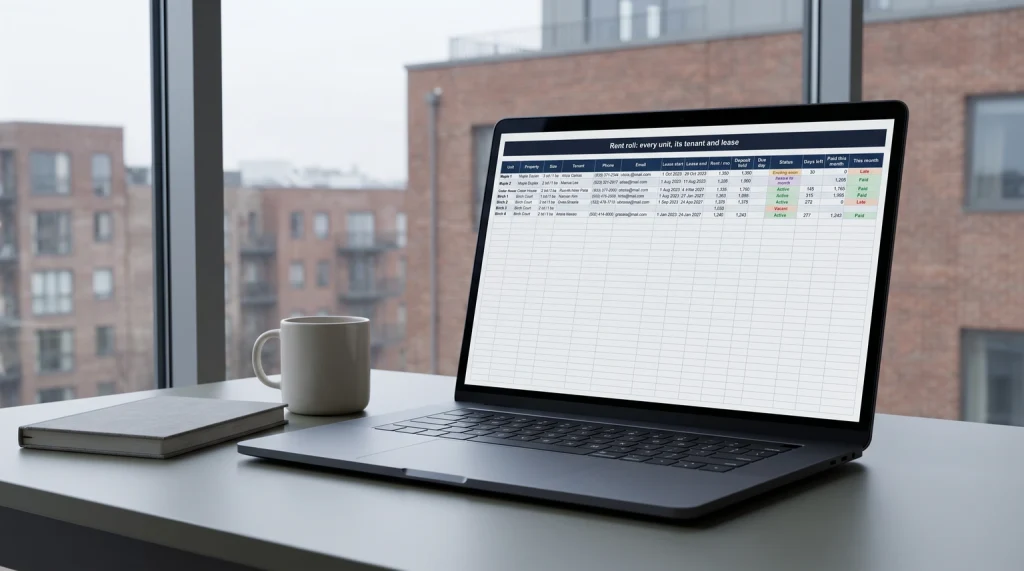
That is what we built the Transaction & Escrow Timeline spreadsheet around. You enter each deal once, with its contract and closing dates, and every deadline in the table above is worked out from them using the day counts in Settings, which you change to match the contracts you use. A Dashboard opens on the next deadline in one sentence, then what is due in the next seven days, what is past due and the next ten dates across every deal. The Timeline tab lays each deal out on an eight-week day grid, contract to close as a bar and each deadline as its letter.
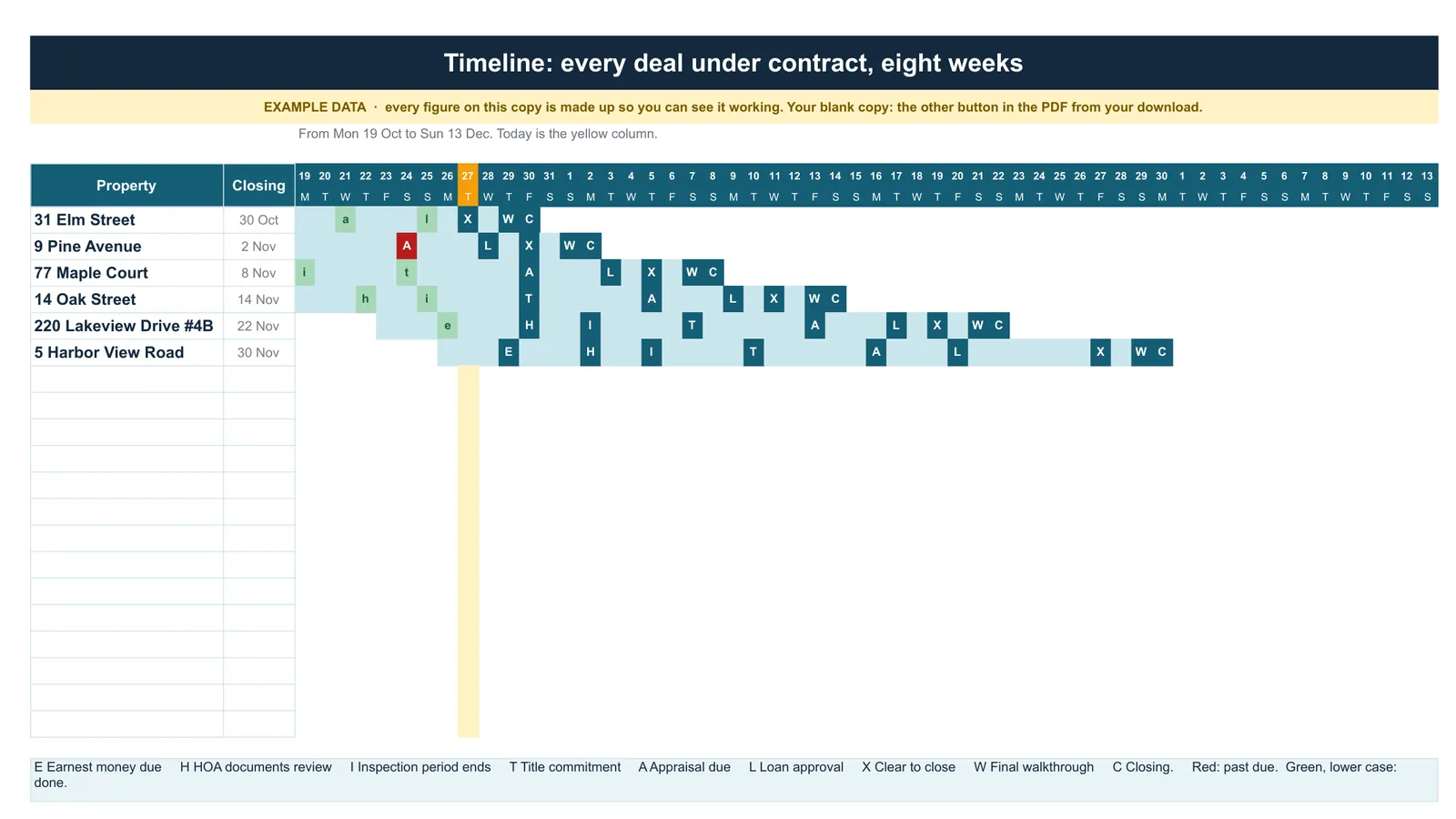
A deadline turns amber inside your warning window and red once it passes without a tick in Done. Mark a deal Closed or Fell through and its deadlines drop out of every list. It comes as a Google Sheet, with a blank copy and one filled with an example so you can see each tab working first, plus the same workbook as two Excel files. No year is printed in it, so it starts the day you do.
The habit
A five-minute morning check on the escrow timeline
Whatever you track it in, the routine is the same. First, anything past due: call, email or extend in writing today, because a missed contingency date can change who holds the earnest money. Second, anything due in the next three days: who is waiting on whom, and does that person know. Third, the week ahead: book what needs booking, like the walkthrough or the appraiser’s access. Fourth, tick off what cleared yesterday so tomorrow’s list is honest.
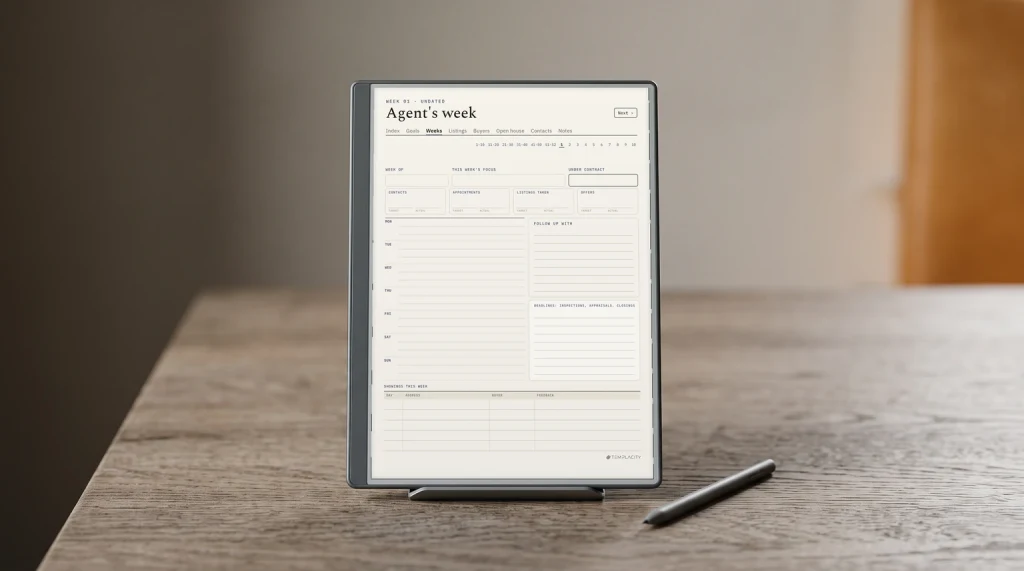
Pair it with a weekly plan that protects lead work, the way our real estate agent planner post lays out, and the transactions in escrow stop crowding out the ones that have not started yet. New buyers from the weekend start with a good open house sign-in sheet; the checklist takes over once they are under contract.
A real estate transaction checklist earns its place when it tells you, before coffee, which deal needs you today. Tell us in the comments which deadline slips most often in your market, and whether your contracts count in calendar days or business days; we read every reply.
FAQ
Common questions, answered briefly
What goes on a real estate transaction checklist?
How long is a typical escrow timeline?
What does a transaction coordinator track?
When does the buyer get the Closing Disclosure?
Does the Transaction and Escrow Timeline work in Excel?
If your contracts count days differently, change the day counts once and every deal follows.
People also ask