The category
What makes a Japanese planner different
Nothing about a Japanese planner is decorative, which is the first surprise for anyone arriving from the photographs. The word covers books from several makers who never coordinated with each other and yet keep landing on the same three decisions, and those decisions are what people are actually buying when they buy into the category.
The first is paper. Every serious book here is printed on stock thin enough to fit a full year between two covers you can hold in one hand, and thin paper that still takes ink is a genuinely hard manufacturing problem. The second is the timeline. Where a Western planner gives you ruled lines and a box per day, these give you hours, usually all twenty-four of them, running down the page. The third is that the book and its cover are separate purchases, so the outside outlives the year inside it.
Everything else people associate with a Japanese planner, the washi tape and the pen collections and the layouts on social media, is what owners do with the books rather than anything the makers put in them. The books themselves are plain, and the plainness is the point.
The paper
The paper is most of the argument
Hobonichi prints the Techo on Tomoe River paper and fits 464 pages, one for every day plus the extras, into an A6 book of 105 by 148 mm. KOKUYO developed its own stock, which it calls THIN PAPER, for the Jibun Techo, and uses a slightly thicker one called MIO PAPER for the business edition. Stalogy gets 368 pages into the 018 notebook and its own product page leads on how thin the result is for that count.
This matters more than it sounds. Page count is the thing a planner cannot cheat: a day per page means 365 sheets before you have added a single monthly spread, and 365 sheets of ordinary paper is a brick. Thin stock is what makes the daily format portable at all, and portability is what decides whether a planner gets used, which we go into in the Original against Cousin comparison.
The layouts
Four makers, and the layout each one commits to
The books diverge on what they print on the page, and that is the decision worth spending time on. Prices below come from each maker’s own store and were read on 12 August 2026; where a figure is in yen or dollars, that is the currency the maker publishes in.
| Maker | The book | What it costs | The layout it believes in |
|---|---|---|---|
| Hobonichi | Techo Original A6, 464 pages, on Tomoe River | ¥2,860 for the book, covers from ¥2,200 | One open page per day, and almost no instruction on it |
| KOKUYO | Jibun Techo, A5 Slim 217 by 136 mm or B6 Slim 190 by 120 mm | DAYs $70.80 in A5 Slim, Diary $53.80, Lite $48.10 | A 24 hour timeline down the centre of every day |
| Stalogy | 018 Editor’s Series 365Days, 368 pages, grid or lined | Sold through stationery retailers, not direct | A grid and a faint date row, and nothing else imposed |
| MD Paper | MD Notebook Diary, part of the 2027 calendar collection | Sold through their own store and retailers | Notebook first, diary second, with the paper as the pitch |
Read down the last column and the choice stops being about brands. Hobonichi hands you an empty page and trusts you; KOKUYO schedules your day before you open it; Stalogy refuses to decide anything; MD treats the diary as a notebook that happens to carry dates. Those are four different opinions about what a planner is for, and any of them is right for the person it suits.
The 24 hour timeline is the convention that surprises Western buyers most. The Hobonichi Cousin runs its weekly spread from 5am to 4am rather than stopping at midnight, so a late shift or a long flight stays inside the day it belongs to. The Jibun Techo DAYs puts the same idea down the middle of a daily page. Once you have used one, a planner that ends the day at 11pm feels like it was designed by someone who has never worked a night.
Hobonichi hands you an empty page and trusts you. KOKUYO schedules your day before you open it.On the layout question
The vocabulary
The words you will hit while shopping
Half the difficulty of buying a Japanese planner from outside Japan is that the product pages assume you already know the vocabulary. Six words cover almost all of it.
- Techo
- The Japanese word for a pocket notebook or planner. Hobonichi Techo means the Hobonichi planner, and nothing more exotic than that.
- A6 and A5
- 105 by 148 mm and 148 by 210 mm. A5 is exactly twice the area of A6, which is the whole size decision in one line.
- Slim
- KOKUYO’s narrower cut. A5 Slim is 217 by 136 mm and B6 Slim is 190 by 120 mm, both taller and thinner than the plain A sizes.
- January start and April start
- Two editions of the same book. April start exists because the Japanese school and business year begins in April, and Hobonichi sells both.
- Avec
- A year split into two thinner books, January to June and July to December, for people who want the format without carrying twelve months of paper.
- Tomoe River
- The thin, ink-resistant paper Hobonichi prints the Techo on, and the reason a 464 page book stays pocket-sized.
The one that catches people out is the April start, because a book bought in March is not necessarily a book that begins in January. If you are buying from a reseller rather than the maker, check which edition is in the listing before the year begins in the wrong month. Our explainer on what a Hobonichi is covers the lineup this vocabulary describes.
The calendar
The whole category goes on sale in the same month
This is the part nobody tells first-time buyers, and it explains why the internet fills with Japanese planner content every August. The makers all launch the next year within about a month of each other, and the popular designs do sell out.
Hobonichi opens the 2027 lineup on 1 September at 11am Japan time, with preview exhibits in Tokyo and Kyoto from 25 August. KOKUYO ran Jibun Techo 2027 pre-orders from 7 August and ships from 4 September. MD released its 2027 calendar collection on 4 August 2026. Three makers, three separate companies, one fortnight.
What that means in practice is simple. Covers and collaboration designs are the scarce items, not the books, so if you want a specific cover you buy in the first week and if you want the planner you can take your time. Buying under time pressure is how people end up with their fourth unused daily book, and the honest fix is to decide the layout before the launch rather than during it.
Buying abroad
Getting one outside Japan
Two of the makers have solved this and the rest have not. Hobonichi publishes full English editions: the English Original book is ¥2,860 and the English Cousin is ¥4,620, the same prices as the Japanese ones, with English calendars and indices and without the Japanese holidays. KOKUYO runs a store in US dollars that lists the Jibun Techo DAYs at $70.80 in A5 Slim and $62.30 to $68.00 in B6 Slim, and ships to a list of countries including Canada, the UK, Australia, Hong Kong and Singapore.
Stalogy and MD are mostly bought through stationery retailers rather than direct, which is fine for the product and worse for knowing what you are paying. The general rule for the category is that the sticker price is the smaller half of the decision: shipping from Japan, the cover you did not budget for, and the fact that the book expires on 31 December all add up. Our guide to hobonichi alternatives runs those numbers against the Western books that do the same job.
The file
The same formats as a file
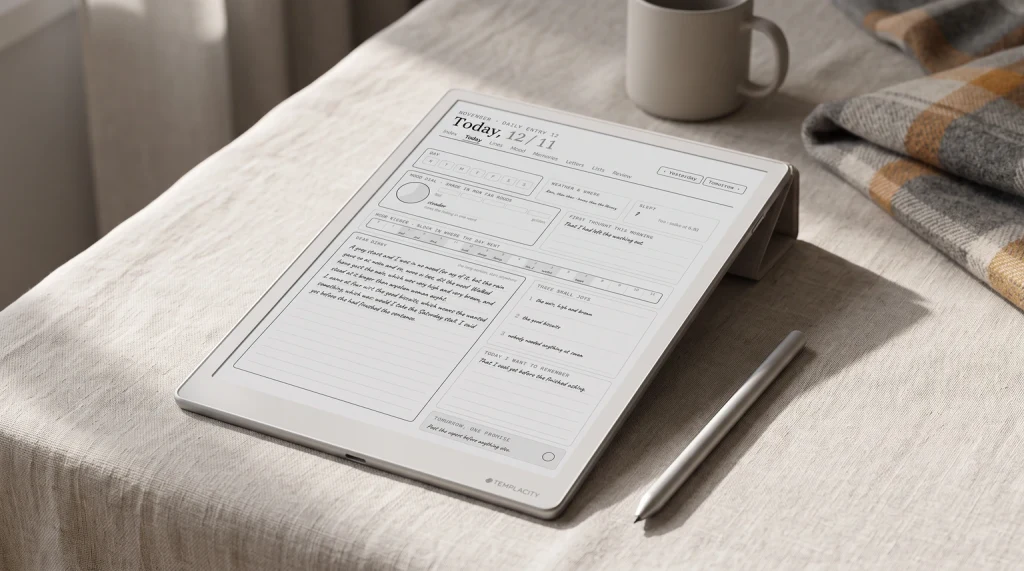
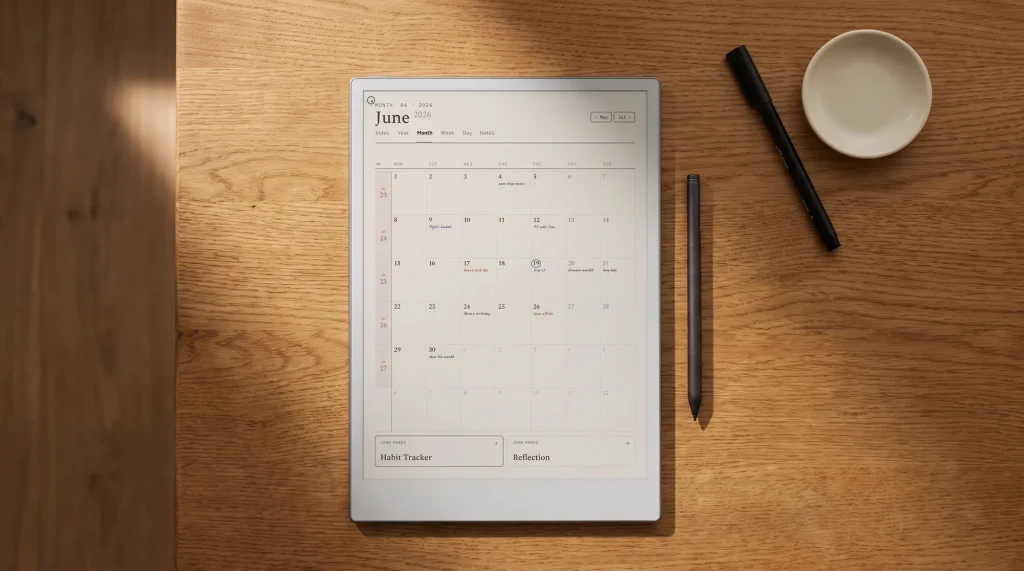
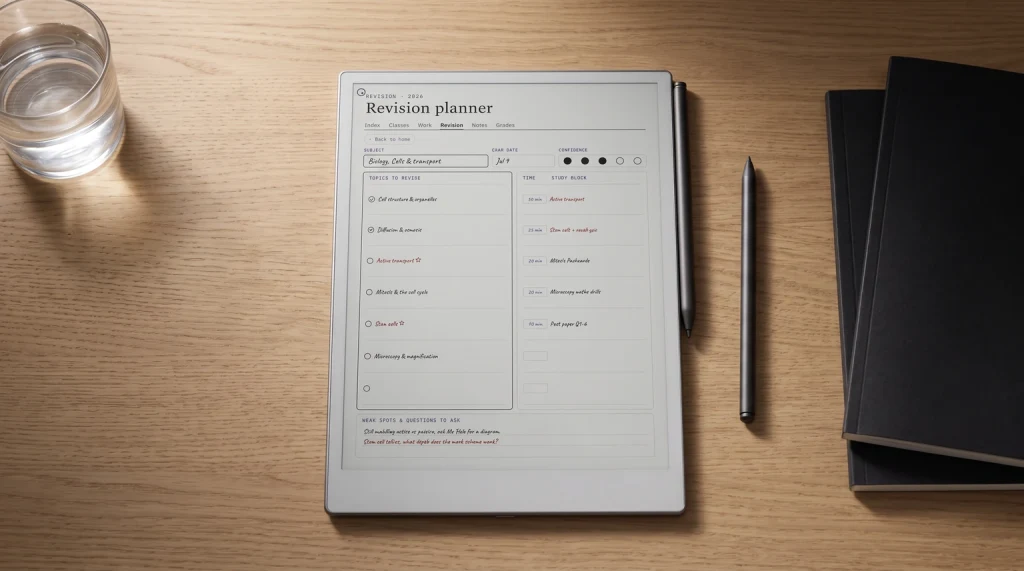
None of these layouts are owned by anyone. A page a day, a vertical weekly with hours, a grid with a faint date row: they are formats, and formats travel. That is why the same shapes now exist as hyperlinked PDFs for people who write on an e-ink tablet, and why the digital versions can do one thing the paper cannot, which is carry an unlimited number of pages without getting thicker.
What does not travel is the paper, and for a lot of buyers the paper is the purchase. The honest position is that a file wins on weight, search and page count, and loses on feel. If you are weighing it up, our digital planner guide covers the formats and our roundup of the best digital planners for e-ink tablets covers which files behave on which hardware.
Choosing
How to pick your first one
Four questions settle it, and none of them is about brand. Answer them in this order, because the later ones stop mattering once the earlier ones are decided.
-
i.
How much did you actually write last year
Weigh firstNot how much you meant to. A page a day is 365 sheets of commitment, and the most common failure in this category is buying the daily book and stopping in March. A weekly costs less and gets used more often.
-
ii.
Do you plan by the hour
If your day is a sequence of appointments, the 24 hour timeline is the reason to be in this category at all, and the Jibun Techo DAYs or the Hobonichi Cousin are the two books built around it. If your day is not, that timeline is printing you will write over.
-
iii.
Where does the writing happen
A6 is a coat pocket and A5 is a desk. This decides more than page size does, because a planner that is not with you when the thing happens is a planner you stop filling in.
-
iv.
Does the printed layout help or annoy you
Some people need the scaffolding and some resent it. If every printed box has felt like a box you failed to fill, the Stalogy answer of a grid and a date row is the one to try before spending more.
For a first Japanese planner and no strong answer to question two, the Hobonichi Techo Original is the least expensive way into the category that is still the real thing: ¥2,860 for the book and ¥2,200 for the cheapest cover. If the timeline is the draw, the Jibun Techo DAYs is the better book and costs roughly twice as much once it lands. Both restock in September, so there is no version of this decision that has to be made today.
FAQ
Common questions, answered briefly
What is a Japanese planner?
Which Japanese planner is best for beginners?
When do Japanese planners go on sale?
Why are Japanese planners so thin?
What does January start or April start mean?
If you have run one of these for a few years, we would like to know which layout you settled on and how many books it took to get there. The first-year photographs are everywhere; the fourth year is the part worth reading about.
People also ask