Why it works
Why a food journal for weight loss works
A food journal for weight loss is simple: you write down what you eat and drink, as you eat it. It does not change your diet on its own. What it changes is attention. Most of what we eat is eaten without much thought, the handful from the snack bowl, the second coffee, the bite of a child’s dinner, and none of it registers until it is on a page.
The best known evidence comes from a weight-loss trial run by Kaiser Permanente’s Center for Health Research and published in the American Journal of Preventive Medicine in 2008. Nearly 1,700 people followed a diet high in fruit and vegetables, went to weekly group sessions and exercised for at least 30 minutes a day. After six months the average loss was 13 pounds, and the people who kept daily food records lost twice as much weight as those who kept none. The lead researcher’s summary was that the more food records people kept, the more weight they lost.
Two honest caveats. The journal was one part of a larger program, so it did not do the work alone. And the people who kept records may have been the most committed to begin with. Still, the pattern is consistent enough that writing it down is one of the cheapest habits you can add to any plan.
What to log
What to write in a food journal, and what to skip
The CDC’s own printable, “My Food and Beverage Diary”, is a single page: a week of days, each split into breakfast, lunch and dinner with a snack slot after each. That is the floor, and it is enough for many people. If you want the journal to teach you something, add a few more fields, but no more than you will actually fill on a Tuesday.
| Field | Why it helps | Worth it? |
|---|---|---|
| What and how much | The core record | Always |
| Time | Shows long gaps and late eating | Always |
| Hunger, 1 to 5 | Separates hunger from habit | Yes |
| Where, with whom | Finds the situations that trip you | First month |
| Mood | Spots eating to cope | If it applies |
| Calories | Precision, at a cost in time | Optional |
Calories are the field people argue about. Counting them gives the most precise picture, and some plans need it. It is also the field that makes people quit, because looking up every number turns a thirty second habit into a chore. If you are not sure, start without them. A journal you keep for twelve weeks without calories beats a flawless one you abandon in ten days.
The habit
How to keep a food diary for weight loss past week two
Most food diaries die in the second week, and for the same few reasons. These habits keep it alive.
- Write it as you eat. An evening reconstruction from memory misses the small things, and the small things are the point.
- Log the bad days too. A journal that only records good days teaches you nothing about the days that matter. No judgement on the page, just the record.
- Estimate, do not weigh. A fist, a palm, a cupped hand. Close enough every day beats exact for a week.
- Keep it where you eat. A page on the fridge, a tab in the planner you already open, a note on the tablet beside the kettle.
- Read it back weekly. Ten minutes on Sunday is where the patterns show: the 4pm slump, the weekend drift, the meals that keep you full.
A journal you keep for twelve weeks without calories beats a flawless one you abandon in ten days.What to log
One more honest note. For some people, tracking every bite feeds anxiety rather than awareness. If logging food makes you feel worse about eating, or you have a history of disordered eating, stop and talk to your doctor or a registered dietitian before you continue. The same goes for any medical condition that shapes what you eat.
Formats
Food journal template: paper, printable or tablet
The best food journal template is the one within reach when you eat, so the format matters more than the design.
- A printable food journal on the fridge or in a binder is the lowest-friction option for home meals. The CDC’s one-page diary is a sound free starting point.
- A small notebook travels with you, which matters if most of your eating happens away from home.
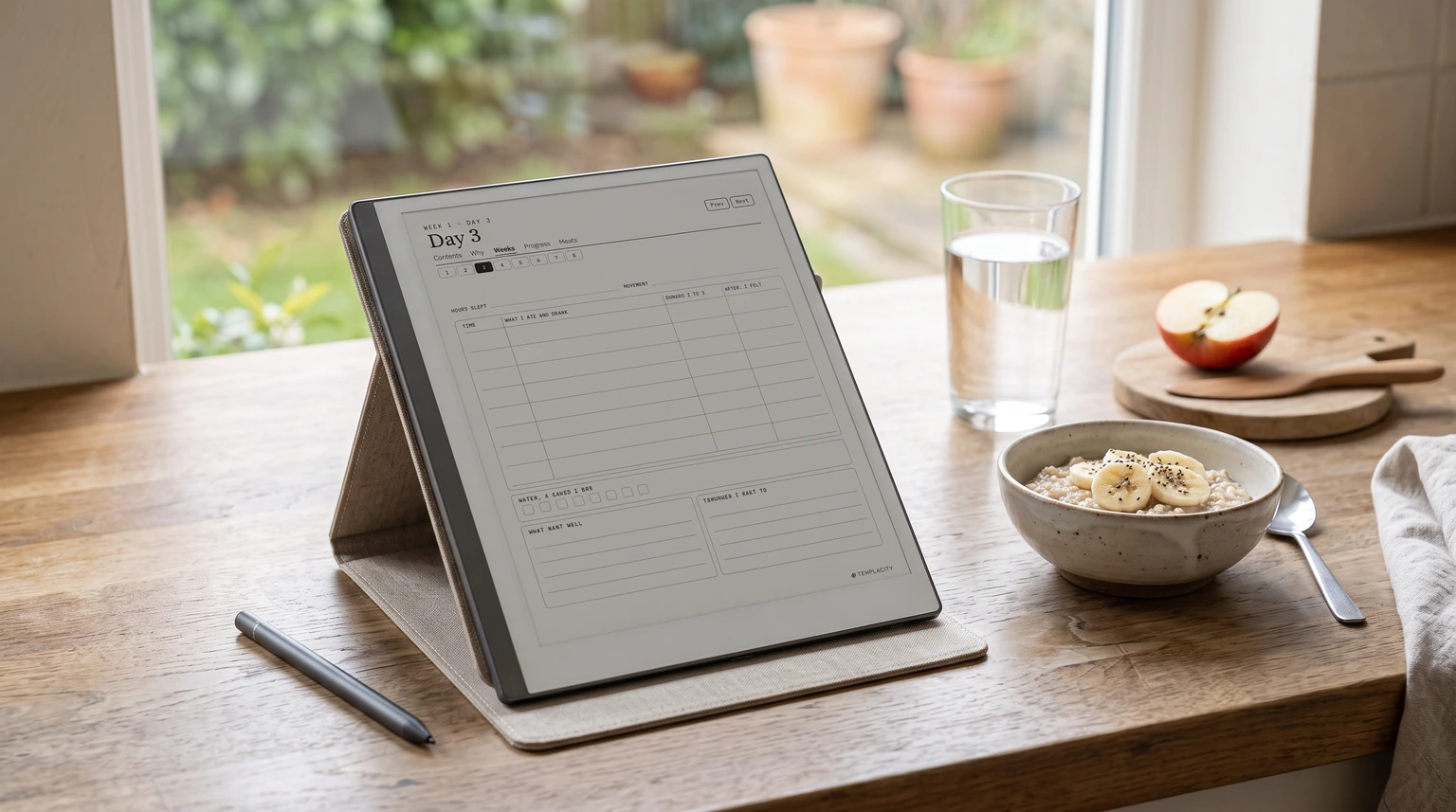
- A tablet journal in Goodnotes, Notability or on an e-ink tablet suits people who already plan their day on one; the food log sits one tap from everything else.
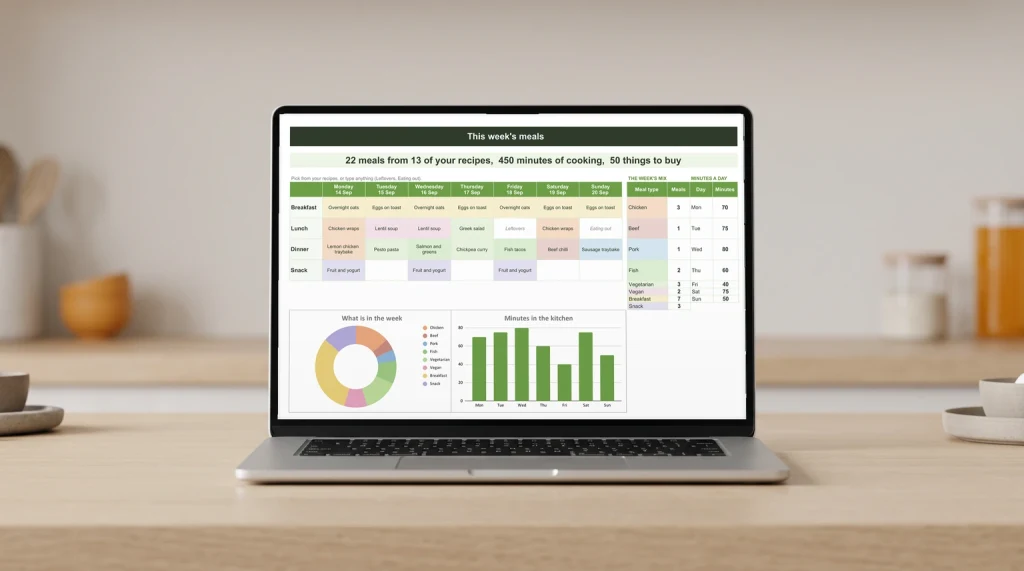
- A spreadsheet suits people who want totals and charts, and works best filled in once a day from quick notes.
Our free printable food journal is the two pages this guide argues for: a daily page with time, what you ate and drank, hunger from 1 to 5, how you felt after, water, sleep and movement, and a weekly review for patterns and one thing to try next week. US Letter, with A4 and A5 versions; print a week at a time.
Full disclosure: we sell the bound version. The Food Diary is twelve weeks of those daily pages with a review after each week, for iPad, e-ink tablets and to print. If you are logging food to track symptoms rather than weight, The Food & Symptom Diary tracks symptoms and stool type beside each meal, with a reintroduction log and questions for your appointment.
Whichever you pick, set it up for the week ahead in one sitting. If you track habits alongside food, our digital habit tracker guide covers keeping both in one place.
Plan, then log
Pair the food journal with a meal plan
A food journal records what happened. A meal plan decides what will. The two work best together: the journal shows you which meals kept you full and which left you raiding the cupboard at four, and next week’s plan uses more of the first kind. Our Google Sheets meal planner and printable grocery checklist handle the planning side for free.
Full disclosure: we sell a printable for that half. The Printable Meal Planning Pack holds a month of dinners, a weekly planner, a prep day and a grocery list that hand off to each other, drawn separately for Letter, A4 and A5. It plans meals; it is not a food log, so pair it with whichever journal format above you will keep.
Food journals are personal, and what works for one person is noise for another. If a field, a format or a trick has kept your food diary going past the first month, share it in the comments. The next person starting one will thank you for it.
FAQ
Common questions, answered briefly
Does keeping a food journal help you lose weight?
What should I write in a food journal for weight loss?
Do I need to count calories in a food diary?
How long should I keep a food journal?
Is there a free food diary template?
If yours isn’t above, drop the question in the comments and we’ll add it.
People also ask