What it is
What a parenting plan is, and what a template does
A parenting plan is the document two parents use to set out how they will share the care of a child after separation: the living arrangements, the decisions, the holidays, and the everyday logistics that used to be settled under one roof. A parenting plan template gives that document a shape, a ready set of headings and prompts so you are not staring at a blank page trying to remember everything that matters. The plan itself is yours; the template is the scaffolding that makes sure nothing important gets left out. Some parents write one because a court asked for it, others because they would rather agree the details calmly now than fight about them later. Either reason is a good one.
It helps to be clear about what a parenting plan is not. It is not the same as a custody order, which is the arrangement a court approves or imposes; a plan can become part of an order, but on its own it is an agreement between the two of you. It is also not a one-time form you file and forget. The useful version is a living document you revisit as the child grows and circumstances change. And it is not legal advice: what is enforceable, and how a plan is treated, depends on your state and your court. A template helps you organise your thinking and reach agreement; it does not replace a lawyer where one is needed.
What to include
What to include in a parenting plan
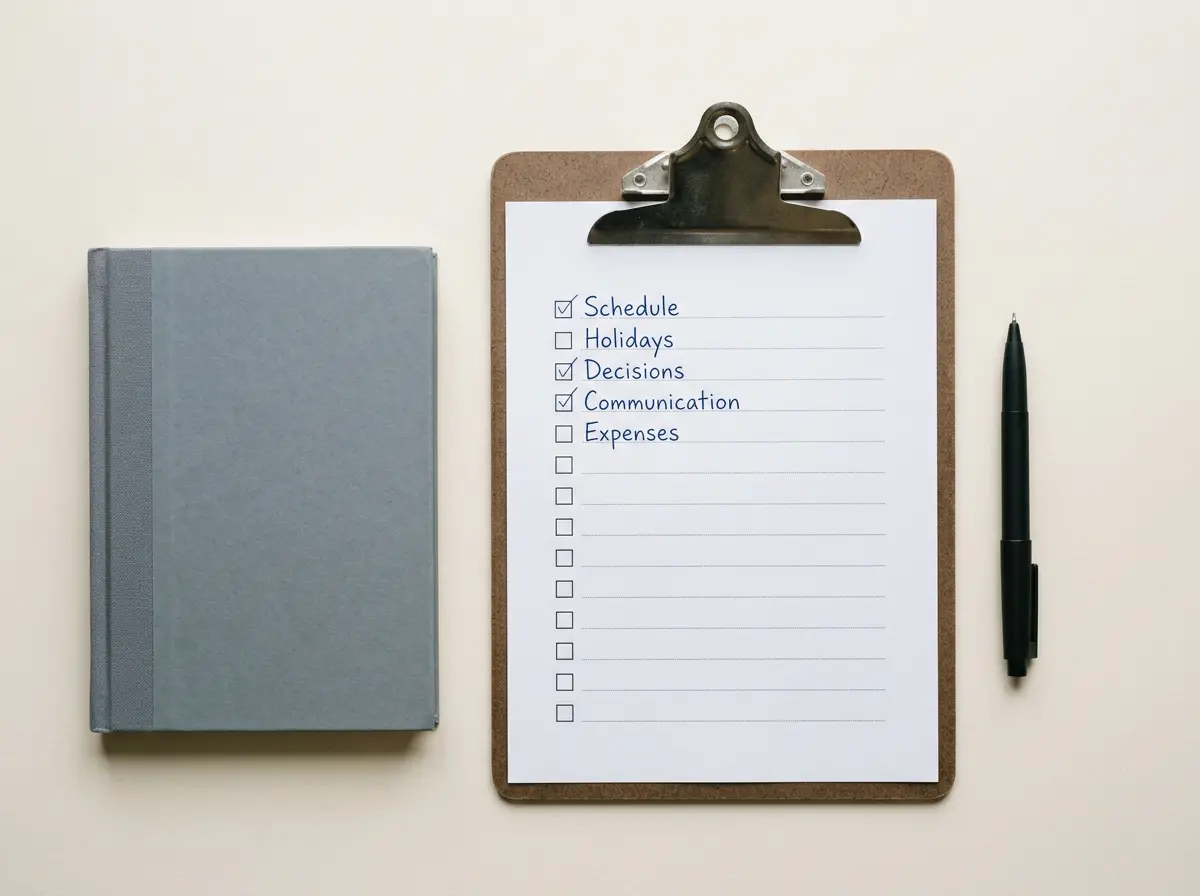
Most parenting plan templates cover the same core sections, and it is worth knowing them before you pick one so you can tell a thorough template from a thin one. The point of each section is to remove a future argument by answering its question in advance. Here is the working checklist of what a full plan covers.
| Section | What to specify |
|---|---|
| Living arrangements | The regular schedule: which nights the child is in each home, and how handovers happen. |
| Holidays and special days | How school holidays, birthdays, and cultural or religious days are split or rotated year to year. |
| Decision-making | Who decides on school, health, religion, and travel: jointly, or one parent for day-to-day and both for the big calls. |
| Communication | How the parents talk (app, email, shared calendar), how fast to reply, and how the child contacts the other home. |
| Money and expenses | Who pays for what beyond child support: activities, school costs, medical bills, and how you settle shared expenses. |
| Changes and disputes | How to request a change, how much notice to give, and what you do when you disagree before involving a court. |
| Practical logistics | Travel and pickups, what moves between homes, new partners, and rules you both agree to keep consistent. |
A thin template stops at the schedule and decision-making. A thorough one keeps going into the parts people forget until they bite: who collects the child when one parent is ill, how a missed pickup is handled, whether the child can be introduced to a new partner and when, and how school kit or medication travels between homes. None of these need long legal language. A plain sentence each, agreed in advance, is worth more than a page of formal wording nobody reads.
The schedule
The custody schedule inside the plan
The schedule is the heart of most parenting plans, and it is the section parents argue over most, so it earns its own attention. Decide first whether you are aiming for roughly equal time or an unequal split, because that choice drives the rest. If you want equal time, our guide to the common 50/50 custody schedules walks through the patterns (2-2-3, 2-2-5-5, week on week off) and who each suits. If equal time will not work for your family, an unequal arrangement is normal and often better for the child. Whatever you choose, write the pattern into the plan in plain terms, with named handover times and places, so there is no room for “I thought you said”.
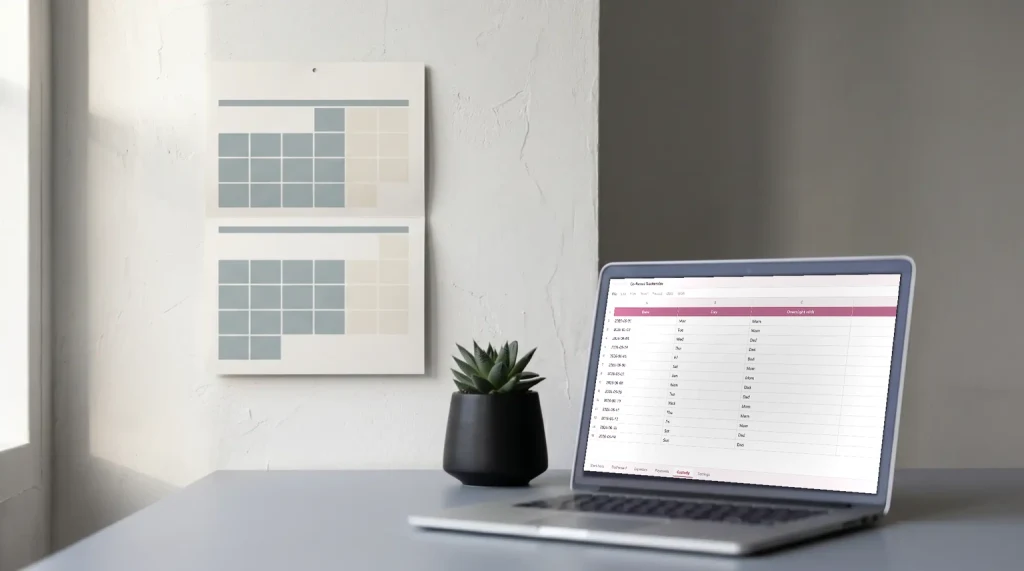
A schedule also needs the exceptions written down, not just the routine. Holidays, in-service days, and the long summer break rarely fit the term-time pattern, so a good plan sets out how those are handled before they arrive. The cleanest way to hold all of this is a single shared schedule both homes can see, rather than two private calendars that drift apart. A ready custody schedule template gives you the grid; the parenting plan is where you record the rules that sit behind it.
Decisions and money
Decisions, communication, and expenses
Beyond the calendar, three sections do the quiet work of keeping a plan from breaking down. Decision-making sets out who has the say on school, health, religion, and travel; most plans give each parent the day-to-day calls while the child is with them and reserve the major decisions for both. Communication sets the channel and the tempo: which app or email thread you use, how quickly to reply on ordinary matters versus urgent ones, and how the child reaches the other parent. Keeping that exchange in one written place matters more than it sounds, and a simple communication log gives you a calm, dated record if anything is ever disputed.
Money is the third, and the one most likely to sour goodwill if it is left vague. A plan should say who covers what beyond any child support: activities, uniforms and school trips, medical costs, and how you split and settle the shared ones. You do not need an accountant, just a clear rule and a running record both parents can see. A shared co-parenting spreadsheet handles the expenses and the schedule in one place, which is why we built the Co-Parent Tracker around exactly these sections: schedule, expenses, and a communication record that both homes update. The plan writes the rules; the tracker is where they are lived out week to week.
A plain sentence each, agreed in advance, is worth more than a page of formal wording nobody reads.On writing the plan
Using the template
How to use a parenting plan template
A template is only useful if you fill it together, or at least exchange drafts in good faith. The practical route is to work through each heading, write a first version in plain language, and mark anything you cannot yet agree rather than leaving it blank. Aim for specific over comprehensive: a plan that nails the schedule, decisions, and money clearly will serve you better than one that covers thirty headings vaguely. Date the version, both keep a copy, and treat it as the reference you return to rather than re-litigating from memory. When circumstances change, change the document on purpose, with a note of when and why, instead of letting practice quietly drift away from what is written.
Keep the finished plan where both homes can reach it, alongside the live schedule, so it is a working reference and not a file nobody opens. The plan and the calendar belong together: the plan is the why, the schedule is the when. Parents who keep both visible and current argue less, because most disputes are really about a detail that was never written down, not about bad faith.
When to get advice
When a template is not enough
A template is the right tool for two parents who can broadly cooperate and want to agree the details well. It is not the right tool for everything. If there is abuse, if you or your child feel unsafe, or if the other parent will not negotiate in good faith, a document is not the answer; the right next step is a family lawyer, a domestic-abuse service, or the court. If you want your plan to be legally binding, that usually means having it approved as part of a court order, and the wording and process for that depend on your state and jurisdiction. A high-conflict dynamic also changes the job: where cooperation cannot be assumed, the structure that helps looks different, and our guide to high-conflict co-parenting covers it. None of this is legal advice, and what applies to you depends on your situation and your order. Use the template to organise and agree; bring in a professional for the parts that sit above it.
Building one of these is hard, less because the document is complicated and more because it asks two people to imagine every ordinary week ahead and decide it kindly. If a section of your plan has saved an argument, or quietly failed, tell us in the comments. The real experience of parents who run these agreements helps the next person write a better one than any blank template can.
FAQ
Common questions, answered briefly
What should a parenting plan include?
Is a parenting plan legally binding?
Can we make a parenting plan without a lawyer?
What is the difference between a parenting plan and a custody order?
How detailed should a parenting plan be?
Can a parenting plan be changed later?
If yours isn’t above, drop the question in the comments and we’ll add it.
People also ask