The gap it fills
What Airbnb Earnings Protection is, and what AirCover never did
It is easy to assume AirCover already pays you when a storm closes the road for a week. It does not. AirCover’s Host damage protection reimburses damage a guest causes, and Airbnb’s own page is plain that it “isn’t an insurance policy.” The week your place sits empty because the power is out is not damage, and no guest caused it.
Airbnb Earnings Protection is the product written for that week. Airbnb describes it as insurance that “pays you when you can’t host because of severe weather, guest damage, power outages, and other reasons,” with the payout based on your past earnings rather than on the bookings you lost. That last part is the real change: you do not need upcoming reservations to claim.
It is also a separate purchase, not a feature that switches on. It is placed through STP Insurance Services LLC and offered by Airbnb Insurance Agency LLC, and you buy it per listing. If you have read our AirCover for Hosts breakdown, think of this as the third product sitting beside the two halves covered there.
Covered events
The five covered events and the threshold behind each
Airbnb calls its list “a full list of covered events,” and every item on it carries a number. The number is the whole claim: an event that falls one day or one category short of it is not covered under that line.
| Event | Threshold on Airbnb’s list |
|---|---|
| Unexpected damage | Damage from weather, guests or other reasons needing at least 4 days of repairs |
| Power outage | No electricity at your place for at least 3 consecutive days |
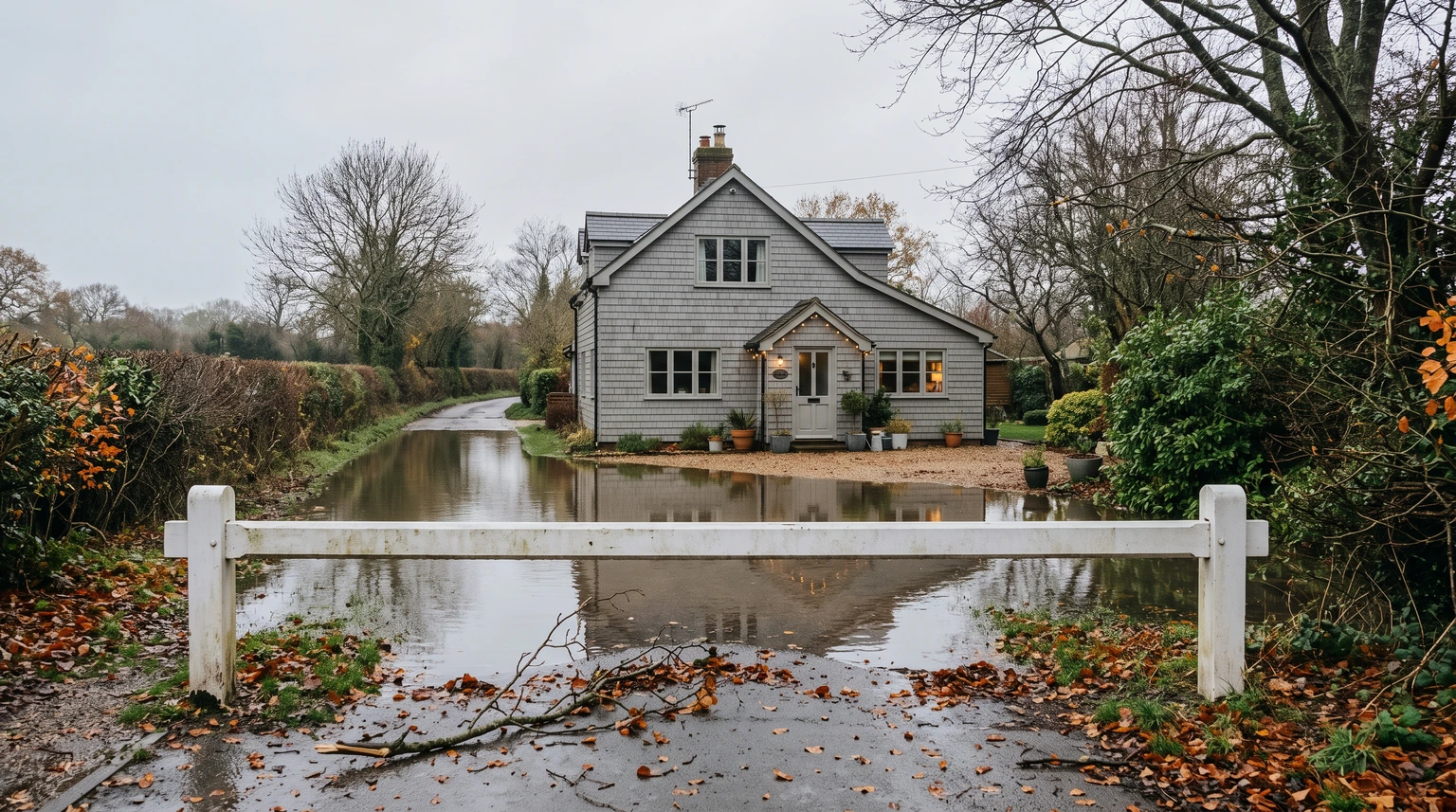
| Lack of access | Closed roads or other restrictions for at least 7 days in a row |
| Severe weather | A named tropical storm or hurricane of Category 4 or higher at your property |
| Natural disaster | An earthquake of magnitude 7.5 or stronger, or a named wildfire of 15,000+ acres affecting your property |
Read the severe weather line carefully. A named storm below Category 4 does not trigger it on its own. That storm can still lead to a claim, but only through one of the other doors: repairs that run four days or more, three days without power, or a week with the road shut. In practice the duration lines are the ones most hosts will lean on, and the severe weather line is the high bar.
Under all of it sits the clause from the page’s small print: loss of income must be “a direct result of a cause that’s not specifically excluded in the policy.” Airbnb does not publish the exclusions in the article, so the policy document is where you find them before you buy, not after.
Eligibility
Who can buy it: four conditions, not one
The headline line most summaries repeat is “5 or fewer listings with over 50 nights reserved on a listing in the past year.” Airbnb’s eligibility answer lists more than that. Your listing may qualify if you:
- have 5 or fewer listings, with over 50 nights reserved on a listing in the past year;
- live in the US, with a listing in any state except Indiana, Maine, Missouri, New Jersey and New York;
- have ACH (direct deposit) as one of your payout methods, with your currency set to USD;
- hosted your first reservation at least one year ago.
That makes it a product for small, established US hosts. A new listing in its first year, a professional manager with a portfolio, and anyone paid out by PayPal or in another currency are outside it as written. The five excluded states are on Airbnb’s roadmap: the article, dated May 20, 2026, says it “will roll out by early next year” there.
Coverage is per listing. Airbnb’s answer to whether you need a separate plan for each one is “Yes,” with the coverage amount for each listing set from its average monthly earnings over the past year. A two-listing host with one busy cabin and one quiet studio is buying two different amounts of cover.
The payout
How the payout and the claim work
Airbnb says you get “your full coverage amount, based on your past earnings, for every verified and approved claim,” with no deductible and no booking requirements. The amount is set in advance from your history, so a claim is not an argument about which reservations you would have had.
The claim itself has three steps on Airbnb’s page. You file online with evidence, such as photos of damage or documentation of a road closure. A third-party insurance adjuster may contact you for more detail before approval. After approval you fill in a short form confirming your loss, and the money lands in your bank account within a few days. For severe weather and natural disasters, Airbnb says a claim is started for you.
The amount is set in advance from your history, so a claim is not an argument about which reservations you would have had.
The evidence habit is the same one that wins damage claims. Date-stamped photos at the start of the event, a screenshot of the utility’s outage notice, and the county’s road-closure page saved as a PDF are cheap to gather on day one and hard to rebuild on day nine. The four-day, three-day and seven-day clocks are what an adjuster will check first.
Timing and cost
When to buy it, and what it costs
Timing matters more than usual. Airbnb says the plan “provides immediate coverage, but it won’t cover issues that you knew about or events that started before the policy purchase date,” and gives the example that coverage is not available once a hurricane has been named. A coastal host who waits for the forecast has waited too long.
On price, Airbnb publishes nothing beyond “Premiums vary by location and are subject to change.” Any figure you read elsewhere is one host’s quote, not the price. The honest way to judge it is your own arithmetic: compare the quote with one average month of that listing’s earnings, since that average is what sets your coverage, and with how often your area actually loses a week to the events in the table.
Your other cover
How it sits beside AirCover and your own policy
Three products now touch a single bad week, and each pays for a different thing. Host damage protection reimburses what a guest broke. Your own property policy covers the building and its contents. Airbnb Earnings Protection covers the income the week cost you. Airbnb’s answer on overlap is that it “can work alongside other insurance”: claiming damage under a property plan “won’t conflict with an Earnings Protection claim.”
What Airbnb cannot tell you is whether your own policy already pays for lost rent; that depends on the policy, and the page itself tells you to “talk to your insurer to see how your plan overlaps.” Do that before buying, with the threshold table above in hand, so you are not paying twice for the same empty week. The same logic runs through our Airbnb security deposit guide: know which product pays for which loss before something goes wrong.


Everything you hand a guest, matched and priced to move together.
Read Airbnb Earnings Protection as a threshold product: check your listing against the four eligibility conditions, hold each covered event against its number, and buy before the season that worries you rather than during it. If you have filed a claim or had a quote, tell us in the comments what it came to for your area, because that is the number nobody has published yet. More host guides sit in the Airbnb hub, including what the platform takes in Airbnb host fees.
FAQ
Common questions, answered briefly
Is Airbnb Earnings Protection part of AirCover?
Do I need upcoming bookings to make a claim?
Who is eligible for Airbnb Earnings Protection?
How much does Airbnb Earnings Protection cost?
People also ask