The point
What self-discovery journal prompts are for
Most of us could describe a friend more accurately than we could describe ourselves. We know what we do, roughly, and what we are supposed to want. What we actually value, what we are quietly good at, and why the same argument keeps happening are harder to see from the inside. Self-discovery journal prompts are questions that make you look at those things on purpose.
They work slowly. One honest answer to a good question can tell you more than a month of daily entries about what happened at work. That is why the advice below is one prompt a week, not a list to get through in an evening. If you want to go into the harder, more uncomfortable parts of yourself, our shadow work prompts are built for that; these are gentler.
Values
Self-discovery prompts about what you value
- What would I do with a free year if money did not matter?
- Which three words would I want people to use about me, and why those?
- When did I last feel proud of myself, and what does that say about what I value?
- What makes me angry on behalf of other people?
- What do I spend money on without guilt?
- Which rule I was raised with do I still believe, and which have I dropped?
- What would I refuse to do, even for a lot of money?
- What do I admire in someone I do not much like?
- Where do I spend time I later wish I had spent elsewhere?
- What does a good life look like to me, not to anyone else?
Past
Prompts about where you have come from
- What did I love doing at ten years old, and do I still do it?
- What is a moment that changed the direction of my life?
- What did my family teach me without meaning to?
- What is something I believed five years ago that I no longer do?
- Which mistake taught me the most?
- What was the hardest year of my life, and what did I learn about myself in it?
- Who was I trying to impress at twenty, and why?
- What part of my past am I still explaining to people?
- Which old version of me would be surprised by who I am now?
- What would I tell myself on my first day at my first job?
Strengths
Prompts about your strengths and what drains you
- What do people ask me for help with?
- What do I do that feels easy to me and hard for others?
- When do I lose track of time?
- Which task do I always put off, and what does it have in common with others I avoid?
- What drains me even when I am good at it?
- What compliment do I find hardest to accept?
- What have I taught myself?
- When have I surprised myself by coping well?
- What would I like to be known for in ten years?
- What is a weakness I have made peace with?
Self-discovery happens more in the re-reading than in the writing.Self-discovery journal prompts
People
Prompts about how you are with other people
- Who do I feel most like myself around, and why?
- What do I need from friends that I rarely ask for?
- What role do I usually play in a group?
- Which argument keeps coming back in my life, and what is it really about?
- How do I show love, and how do I like to receive it?
- When do I say yes and mean no?
- Whose opinion of me matters more than it should?
- What is a boundary I need and have not set?
- Who would I like to be closer to, and what is in the way?
- What do I want the people I love to remember about me?
Future
Prompts about who you want to become
These pair well with choosing a word of the year: answer a few, and the word often picks itself.
- Who am I becoming, and do I like that person?
- What would I do if I knew nobody would judge me?
- What do I want more of next year, and less of?
- What is one habit the person I want to be would have?
- What am I waiting for permission to do?
- What would I regret not trying?
- Where do I want to be living in five years, and why there?
- What does success mean to me now, compared with five years ago?
- What is one thing I can do this month that my future self will thank me for?
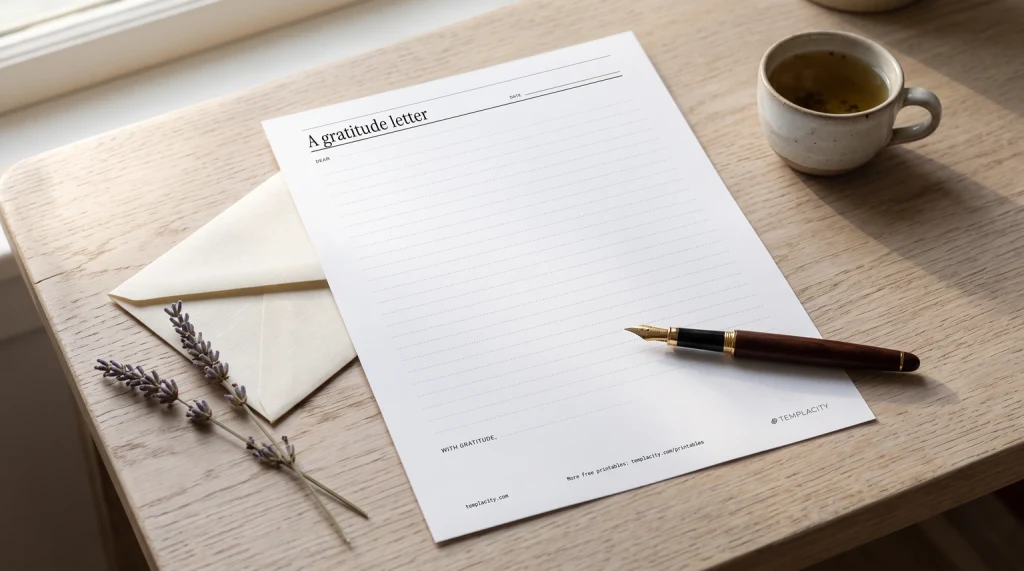
- What would I write in a letter to myself to open a year from now?
How to use them
How to use self-discovery prompts over a year
Pick one prompt each week and give it a full page. Write for ten minutes without editing; the useful answer is often in the second paragraph, after the one you thought you would write. Every three months, read back everything so far and write one more page: what keeps coming up? Patterns you would never see in a single entry show up clearly across a dozen.
Some prompts will stir up hard things. That is normal and usually useful, but if writing brings up feelings that stay heavy for weeks, talk to someone. The US National Institute of Mental Health advises seeking professional help for severe or distressing symptoms that have lasted two weeks or more, and our journal prompts for mental health cover the gentler daily side.
Where to write
Where to keep a self-discovery journal
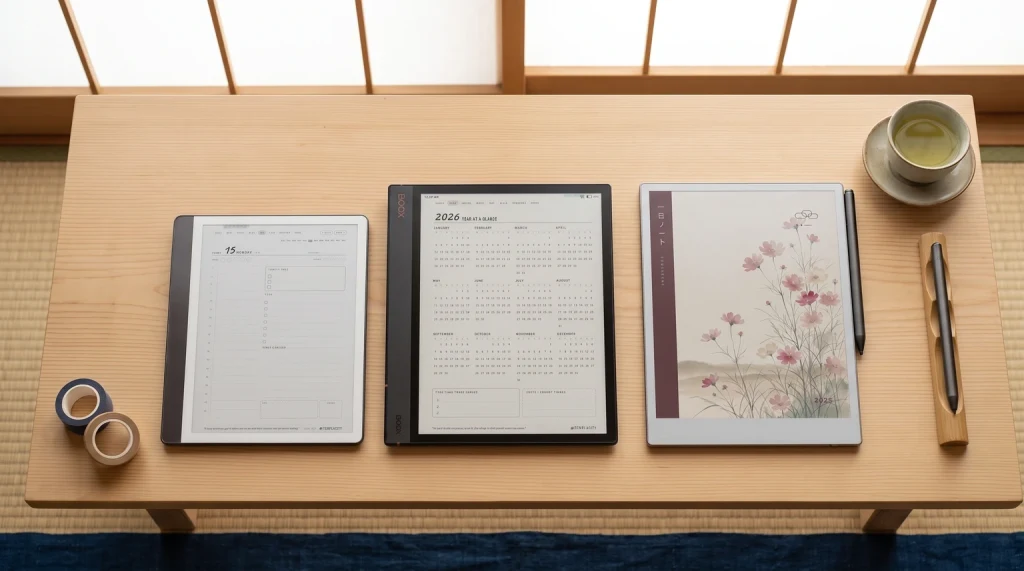
A prompt a week needs room. Our Printable Journal ($24) is built around exactly that rhythm: 52 weekly prompts, each with a full page to write on, plus four “Dear future me” letters for the last prompt in this list. It is undated and prints at Letter, A4 or A5. On an e-ink tablet, The Journal ($49) has four sealed letters to later, sixteen running lists of your own and a year in review, across 464 hyperlinked pages for reMarkable, Kindle Scribe and Boox. For a lighter daily habit alongside, see our daily journal prompts, and the planning hub for the rest.
FAQ
Common questions, answered briefly
What are good self-discovery journal prompts?
How often should I do self-discovery journaling?
What is the difference between self-discovery and shadow work prompts?
What if a prompt brings up something painful?
Which question here was hardest to answer? Tell us in the comments, only as much as you are comfortable sharing, and the one you would add.
People also ask