The split
Fixed costs and per-head costs
Most event budget templates list costs in one column: venue, catering, band, printing. That tells you what the event costs at one guess of attendance and nothing about what happens if the guess is wrong. The single most useful change is a second column that marks each line as fixed or per head.
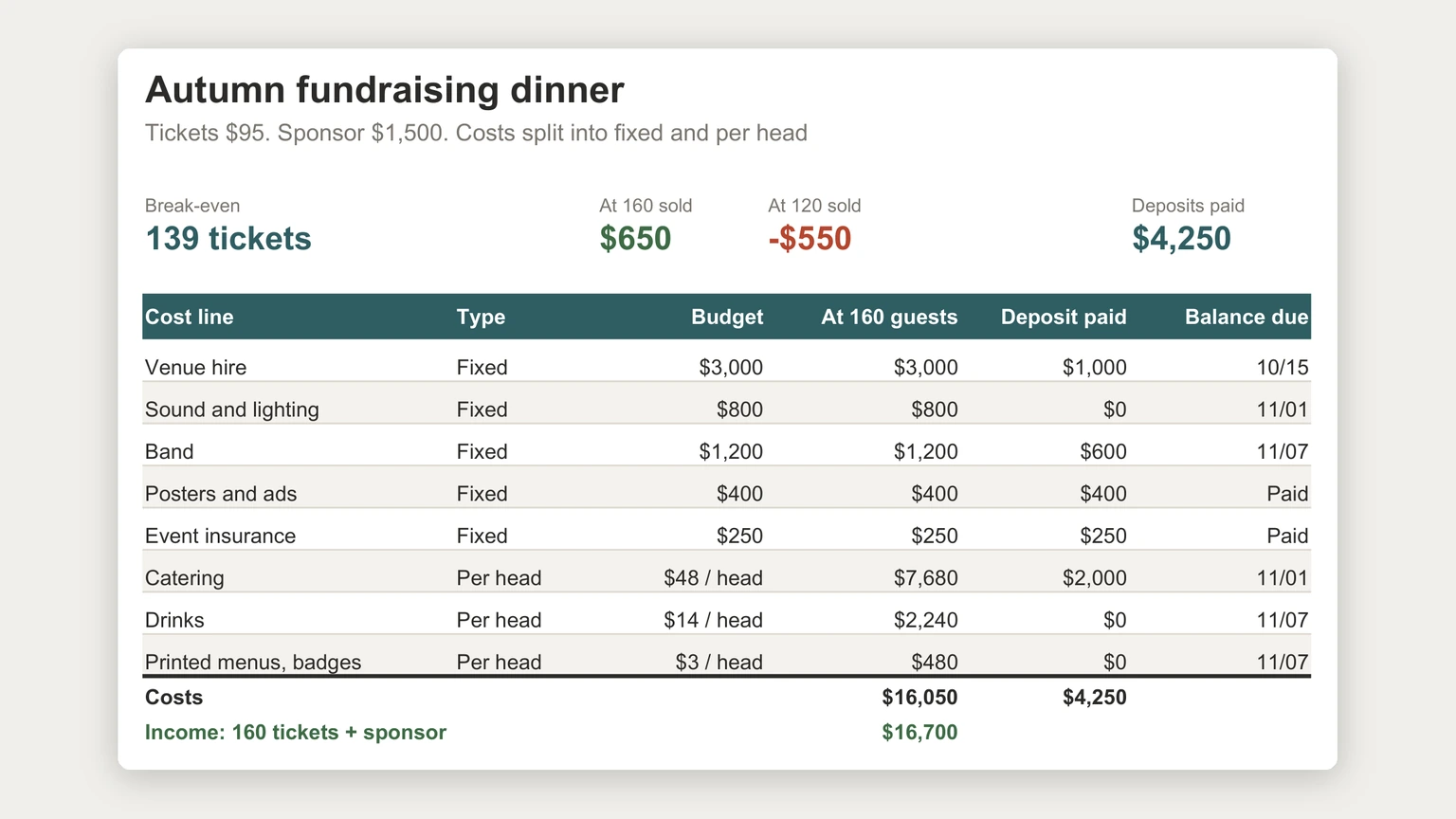
Fixed costs are paid whatever the turnout: venue hire, sound and lighting, the band, marketing, insurance. Per-head costs scale with guests: food, drinks, printed menus and badges. In the example at the top of this page, a fictional fundraising dinner, fixed costs are $5,650 and per-head costs are $65 a guest.
Break-even
The break-even number every event budget template needs
Once costs are split, you can work out how many guests the event needs to pay for itself. Each ticket sells for $95 and each guest costs $65, so every ticket contributes $30 towards the fixed costs. A $1,500 sponsor covers part of those, leaving $4,150. Divide $4,150 by $30 and round up: 139 tickets.
Now run the two cases that matter. At 160 guests the dinner brings in $16,700 against $16,050 of costs, a $650 surplus. At 120 guests it loses $550. The gap between those two outcomes is 40 people, and the break-even tells you exactly where the line sits between them, which is the number to watch as ticket sales come in.
The gap between those two outcomes is 40 people, and the break-even tells you exactly where the line sits.
Levers
What moves the break-even
Three levers, and the sheet shows the effect of each immediately. A higher ticket price widens the contribution per guest. Every dollar off the per-head cost does the same, which is why a menu change often matters more than a cheaper band. And every dollar of sponsorship or fixed-cost saving comes straight off the amount the tickets have to cover.
The per-head side is also where the guest list and the budget meet. If you are counting RSVPs, count people in every number, the approach our wedding guest list template guide takes, and feed the attending figure straight into the budget’s guest cell.
Vendors and dates
Deposits, balances and when they fall due
An event budget has a timing problem that a household budget does not: most of the money leaves before the event and most of it comes in close to the date. Add two columns to every cost line, deposit paid and balance due date. In the example, $4,250 of deposits has already gone out, and the balances for sound, catering, drinks and printing all land in the first week of November.
Sort by balance due date a month out and you have the payment schedule. If ticket money arrives through a platform that pays out after the event, the gap between paying vendors and receiving income is exactly the problem our cash flow forecast template guide lays out month by month.
In Google Sheets
Setting it up in Google Sheets
Make the type column a dropdown with two values, fixed and per head; Google’s help page on dropdown lists in Google Sheets gives the route, Insert then Dropdown. Then fixed costs are one SUMIFS on that column, which Google describes as returning “the sum of a range depending on multiple criteria”, and per-head costs are another.
Keep ticket price, sponsorship and expected guests in labelled cells at the top, and make everything else read from them. For charity events, the dinner’s result then flows into the organisation’s wider budget; our nonprofit budget template guide shows how fundraising costs sit in their own column there. More templates like this are on our Google Sheets hub.
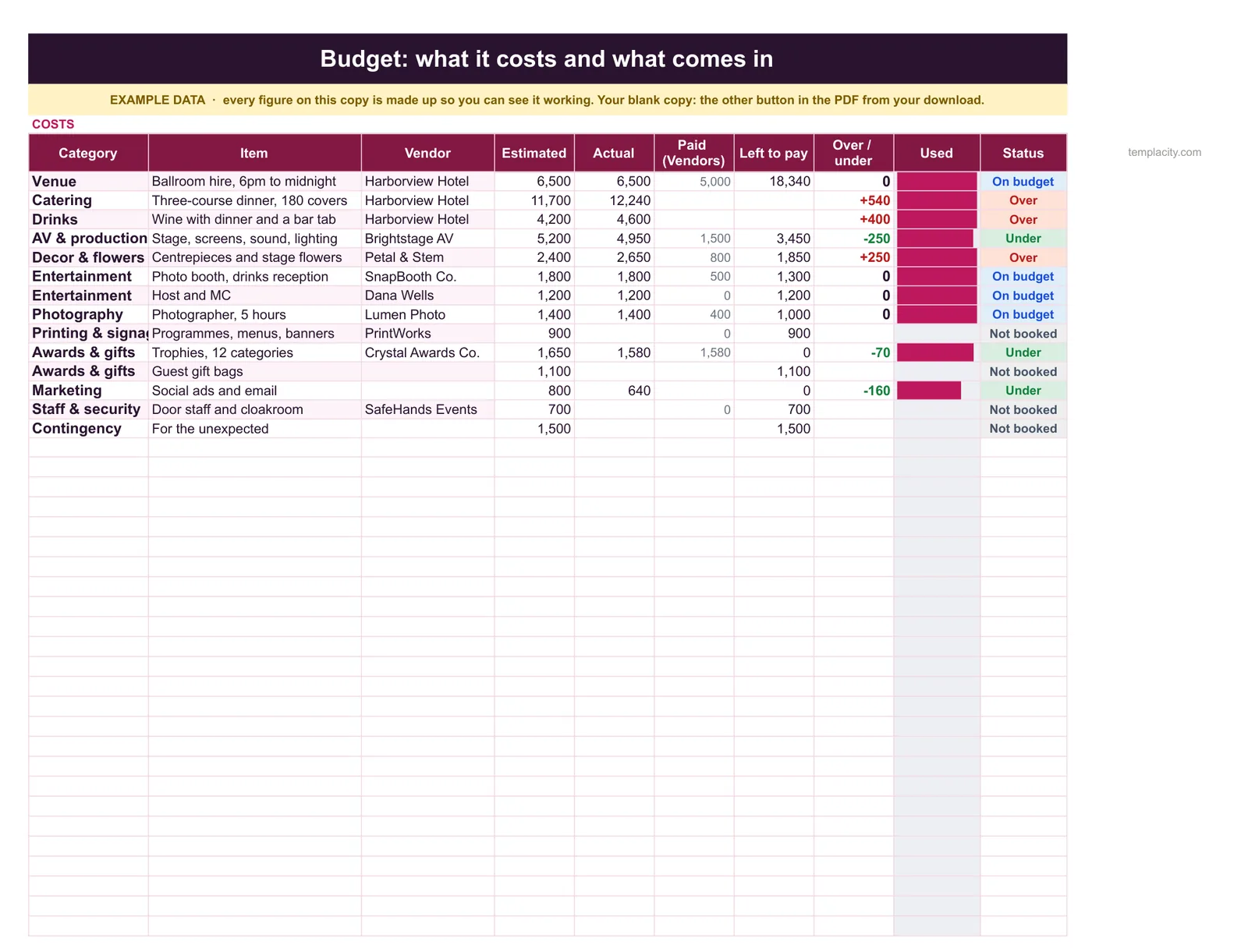
If you would rather start from a finished file, our Event Budget & Planner Spreadsheet ($39, Google Sheets and Excel) keeps costs by category against estimate, paid and left to pay, beside income from tickets and sponsors. Vendor payments carry their due dates, the timeline moves when the event date does, and the attendee list counts seats, tickets and dietary needs.
An event budget that knows its break-even turns every quote and every ticket sale into a decision you can make on the spot. Tell us in the comments what kind of events you plan and which cost surprised you last time; we read every reply.
FAQ
Common questions, answered briefly
What should an event budget template include?
How do you calculate the break-even for an event?
What is the difference between fixed and per-head event costs?
Should an event budget track deposits?
People also ask