The basics
What Airbnb self check in actually means
Airbnb’s definition is short and worth taking literally: “Self check-in means guests can access a place without needing the host to be there.” Not a preference for less contact, not an upgrade. A property where arrival does not depend on anybody’s schedule matching anybody else’s.
Guests can access the place any time after their designated check-in time on the arrival date, and the details reach them in their reservation details along with a reservation reminder email. That is the whole mechanism, and the interesting part is not how it works but when the information becomes visible, which is not when most hosts assume.
The methods
The four methods Airbnb names
Airbnb lists four: a key lockbox, a smart lock, a keypad, and a key or access via building staff such as a doorperson or front desk. Choosing between them is mostly a question of what fails and how loudly.
-
i.
Key lockbox
SimplestNo power, no connectivity, nothing to update. Fails on code hygiene rather than on hardware, since a code that never changes has been handed to every guest you have ever had.
-
ii.
Keypad
A code per booking without an app or an account in the way. Runs on batteries, which means the failure mode is silent and gradual rather than sudden, so it needs a diary entry rather than a warning light.
-
iii.
Smart lock
Remote control and a log of who came in when, at the cost of depending on connectivity and a phone that works. Best paired with a mechanical fallback rather than trusted alone.
-
iv.
Building staff
The most robust and the least controlled. It works until the desk is unattended at one in the morning, so it needs its own stated hours in your instructions.
Whichever you choose, it becomes a filterable attribute on your listing, which is a separate benefit from the convenience. Our Airbnb amenities list guide covers why appearing in a filter is a different kind of win from ranking well in one.
The window
The 48-hour rule, and why it is the wrong way round
Here is the detail that reshapes how you should write everything else. Airbnb’s page on check-in and checkout instructions says that guests will see your check-in method, such as smart lock, keypad or lock box, but “they won’t see the detailed check-in instructions until 48 hours before check-in”. On the same page: “The checkout instructions are available to guests prior to booking.”
Two things follow for anyone booking more than two days ahead. Your careful arrival paragraph is doing nothing at the moment they are deciding, because they cannot see it. Anything reassuring about arrival, the fact that the entrance is well lit, that the lockbox is beside the door rather than around a corner, that arriving at midnight is genuinely fine, has to live in the listing description instead, where it is visible.
And the guest arriving in three weeks is booking on trust rather than on detail. That is not a problem to solve with more instructions; it is a reason to say the reassuring thing where it can be read.
The other list
Your checkout list is a marketing document
Since checkout instructions are visible before booking, they are read by people choosing between you and somebody else. Airbnb offers a fixed set of options to switch on: return keys, lock up, turn things off, throw trash away, gather used towels, and additional requests, with up to 140 characters of optional detail.
A host who switches on all six and fills the 140 characters has published a chore list to prospective guests. A host who switches on two has published a place that is easy to leave. Both are visible at the same moment, and only one of them reads as hospitality.
A long checkout list is visible exactly when it can cost you a booking, and unenforceable exactly when you would want it to matter.
The second half of that is a separate rule and it is worth knowing before you write anything. Airbnb states that cleaning fees cover standard cleaning between reservations, and that hosts “may not charge guest fees for failing to perform specific cleaning or checkout tasks”. So the list cannot be backed by a charge. It is a request, published to people deciding whether to book, with no consequence attached. Our Airbnb cleaning checklist guide covers how to price and sequence the turnover on the assumption that none of it gets done.
The instructions
Writing arrival instructions that survive a dead battery
Instructions are written by somebody who knows the building, for somebody who has never seen it, at night, tired, possibly in the rain, on a phone at nine percent. That is the design brief, and most instructions fail it by being accurate rather than usable.
Four habits fix most of it. Describe what the guest can see rather than what the address says, because street numbering is frequently wrong and a green door beside a bakery is not. Give the sequence in the order it happens, one action per line, rather than as a paragraph. Name the thing that always confuses people, since every property has one and yours is the reason for half your arrival messages. And put the code on its own line so it survives being screenshotted.
The instructions live in the Listing editor under the arrival guide. Anything longer than the arrival itself belongs in the welcome material rather than in the arrival steps, and our Airbnb welcome book guide covers that split.
What breaks
What breaks, and the backup that fixes all of it
Self check-in fails in a small number of predictable ways. A battery dies in a keypad or smart lock. Connectivity drops. A guest arrives before the designated check-in time and finds the code not yet working. Somebody cannot read a screenshot at night because the code was buried in a paragraph. A code was never changed and a previous guest still knows it.
One backup covers nearly all of them: a second, independent way in that does not depend on power or on your phone, and a person who can reach the property. That is usually a spare key in a mechanical lockbox at a different location, plus a neighbour or cleaner who has agreed in advance. The point is independence rather than redundancy, since two smart locks on the same network fail together.
The habit that prevents the rest is a code change per booking and a battery date in the diary. Neither is interesting and both are the difference between a system that works and one that works until it does not. Our Airbnb house rules template guide covers where arrival expectations sit alongside the rest of the rules.
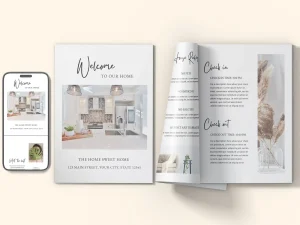
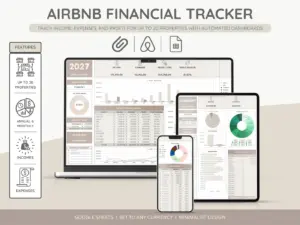
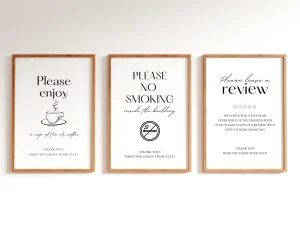
Everything you hand a guest, matched and priced to move together.
Put the reassurance in the listing description where it is visible, keep the checkout list short because it is read before booking and cannot be enforced after, and give yourself one independent way back into the building. Tell us in the comments which method you settled on, because the split between lockbox and keypad is the most argued-over decision in hosting and both sides have a point.
FAQ
Common questions, answered briefly
When do guests see the check-in instructions?
Are checkout instructions visible before booking?
What self check-in methods does Airbnb support?
Can I charge a guest who ignores the checkout list?
People also ask