
The difference
Why a short term rental spreadsheet is more than an Airbnb one
An Airbnb-only tracking sheet works until the day it quietly stops: the day you list on Vrbo, take a direct booking from a returning guest, or pick up a mid-term corporate stay. Each new channel arrives with its own fee structure, its own payout timing, and its own tax handling, and a spreadsheet hard-coded around one platform’s math starts producing wrong answers without looking any different.
The wrong fix is a second spreadsheet. Parallel sheets drift apart within a quarter: an expense logged in one, a blocked date in the other, two versions of the truth and no appetite to merge them. The right fix is structural and small: one ledger, a channel column on every row, and fee math that follows the channel. Our Airbnb spreadsheet guide covers the single-platform layout this post extends.
Channel math
What each channel does to your numbers
| Airbnb | Vrbo | Direct | |
|---|---|---|---|
| Host-side fee | ~3% split or ~14-16% host-only | Commonly quoted ~8% all-in pay-per-booking | ~3% card processing |
| Who markets the listing | The platform | The platform | You (site, repeat guests, referrals) |
| Occupancy tax handling | Often collected and remitted for you | Varies by jurisdiction | Entirely yours to collect and remit |
| Payout timing | ~24h after check-in | Typically after check-in, schedule varies | Whenever you charge the card |
| Spreadsheet implication | Copy fees from payout statement | Copy fees from its own dashboard | You ARE the payout statement |
Read the last row twice if direct bookings are on your roadmap. Platform channels hand you a statement to copy; a direct booking generates no paperwork unless your spreadsheet is the paperwork. Hosts consistently report direct stays as the ones missing from their books at filing time, precisely because nothing arrived in an inbox to remind them. The platform-side fee mechanics are unpacked in our Airbnb host fees explainer.
The columns
The columns a multi-channel ledger needs
A short term rental spreadsheet starts from the single-platform bookings ledger and adds four columns: channel (Airbnb, Vrbo, direct, other), channel fee as a dollar amount copied from that channel’s statement rather than recalculated, occupancy tax handled-by (platform or you), and payout date. The fee-as-dollars rule matters more than it looks; percentages drift by channel, country, and month, while the withheld dollar figure on a statement is simply true. Expenses stay channel-agnostic in their own log; cleaning costs the same regardless of who booked the guest.
From those columns, two summaries earn their place. Revenue by channel tells you where the business actually comes from, which is routinely a surprise (a channel with a third of the bookings producing half the net is common once fee differences compound). And effective fee rate by channel, net of everything, tells you whether pushing repeat guests toward direct booking is worth the marketing work it costs.
Percentages drift by channel, country, and month; the withheld dollar figure on a statement is simply true.The columns
The habit
The weekly reconciliation that keeps channels honest
Multi-channel tracking fails by accumulation, not catastrophe: one unlogged Vrbo booking in March, one direct stay in May, and by autumn the sheet is a rough sketch. The counter-habit is small: once a week, count bookings per channel in the sheet against each channel’s dashboard, and once a month run the full bank reconciliation described in our Airbnb bookkeeping spreadsheet guide. Five minutes weekly is what keeps the ledger a record instead of a reconstruction.
One view
One dashboard for the whole rental business
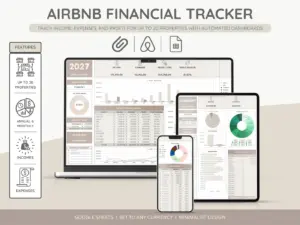
The payoff for the channel column arrives in the dashboard: occupancy, revenue, fees, and margin for the whole operation on one screen, filterable by channel when a question needs it. That is the view that turns channel strategy from a feeling into a decision, and it feeds the same margin math as our profit calculator guide, just with the channel dimension added. Airbnb’s hosting resources are still worth reading even for multi-channel hosts; the operational advice transfers.


Everything you hand a guest, matched and priced to move together.
One ledger, a channel column, fees copied as dollars, and a five-minute weekly count: that is the whole short term rental spreadsheet, and it scales from one Airbnb listing to a mixed portfolio without being rebuilt. If you run channels we did not cover (mid-term platforms, corporate housing sites), tell us in the comments how their fee math behaves; multi-channel host reports are how this guide grows.
FAQ
Common questions, answered briefly
What should a short term rental spreadsheet track?
Should you use separate spreadsheets for Airbnb and Vrbo?
How do you track direct bookings for a vacation rental?
Which channel has the lowest fees for short term rentals?
If yours isn’t above, drop the question in the comments and we’ll fold it in.
People also ask