The trap
Three different products are sold as a 2026-2027 planner
Search for a 2026-2027 planner in July and the results look interchangeable. They are not. Three different date spans share the 2026-2027 label, and which one arrives depends on which corner of the shelf you reached into. This is the single most expensive thing to get wrong about the purchase, because a dated book you cannot use is not returnable in any useful sense once you have written in it.
The most common version is not two years at all. It is the academic year. The Happy Planner’s 2026-2027 collection is dated July 2026 to June 2027, twelve months, built to open when the school year does (checked July 2026). Blue Sky describes its own 2026-2027 range in the same terms, as a July 2026 to June 2027 academic planner, and treats July 1st as the start of the planning season (checked July 2026). Neither is a two-year planner. Each is one year, offset by six months.
The second version is the genuine article: twenty-four months running January 2026 through December 2027. This is what most people picture when they type the phrase, and it is the smallest part of the shelf by a wide margin.
The third is the one nobody expects. See It Bigger’s two-year collection, the products actually named “2 Yr”, is dated 2026-2028 and sells at $12.99 (checked July 2026). Anyone who searched for 2026-2027 and bought from that collection gets a span that begins and ends a year later than the one they went looking for.
| AcademicJuly 2026 to June 2027 | Two-yearJan 2026 to Dec 2027 | Rolling2026 to 2028 | |
|---|---|---|---|
| Months covered | 12 | 24 | 24 |
| Covers all of 2027 | No, stops in June | Yes | Yes |
| Covers all of 2026 | No, starts in July | Yes | Partly |
| Usual page depth | Weekly, sometimes daily | Monthly | Monthly |
| Who it actually suits | Teachers, students, anyone whose year resets in August | Long-range and project work you want in one book | Nobody who typed 2026-2027 into a search box |
The practical consequence is worth stating plainly, because it changes how you shop. Blue Sky, whose 2026-2027 line is academic, publishes no twenty-four month product at all. On that site the thing you searched for is not a category that exists. Read the date range on the product page rather than the years in the title, every time, on every site. The years in the title are marketing; the date range is the product.
The ceiling
Why a two-year planner is almost always monthly
Once you find a real twenty-four month book, a second pattern shows up, and it is the one worth understanding before you spend anything. Two-year planners are monthly. See It Bigger’s two-year collection is monthly across every product in it, in both the large and the pocket size (checked July 2026). Weekly and daily two-year books do exist, but they are the exception rather than the shape of the category.
That is not a design preference or a cost saving. It is arithmetic, and it is worth doing once so the shelf stops looking arbitrary.
A monthly two-year planner needs twenty-four spreads. Add covers, a holiday list and a few note pages and you have a book under a centimetre thick that slides into a jacket pocket. Now ask the same book for weekly pages. One hundred and four weeks at a spread each is 208 pages of grid before a single note page is added. Ask it for daily pages and the number is 730. A dated daily planner for one year is already a brick; two of them in one binding is not a product anyone carries to a meeting.
So paper offers a real choice, and it is not the choice the category name implies. You can have two years, or you can have weekly and daily depth. Getting both inside one spine is close to impossible, which is why the two-year section of most catalogues is the pocket monthly section wearing a longer label.
Knowing that reframes the whole purchase. If a monthly grid genuinely suits how you plan, a two-year book is a good and cheap answer, and you should buy one and stop reading. If you have ever filled a weekly spread, you are not choosing between planners here. You are choosing between two years and enough room to write, and paper will not give you both.
The math
What re-buying a dated planner every year costs you
Two-year planners exist because dated planners expire, and the expiry is the part of the model nobody prices properly. Every December the book you have carried for eleven months stops working, and the thing you actually lose is not the book. It is the system inside it: the tabs you added in March, the shorthand you invented for recurring work, the two pages at the back that turned into the place you keep everything.
The cash number is the easy half. A pocket monthly book runs into low double digits, and the two-year version is not far off double the price of a one-year version, which is the honest reason it is cheaper per month rather than a bargain. The number that actually hurts is January: a fresh planner, a blank system, and two weeks of re-entering birthdays, recurring meetings and the reference pages you had built up.
You can have two years, or you can have weekly and daily depth. Getting both inside one spine is close to impossible.On what the two-year shelf is really selling
This is where the two-year format earns its keep, and where most of the marketing points in the wrong direction. The pitch is usually about seeing next year’s dates from this year, which is a real but small benefit that a wall calendar also delivers. The larger benefit is that the handover in December stops happening. You cross a month boundary rather than a system boundary, and the setup you built in year one is still sitting there in year two.
Which is a strange thing to buy a pocket monthly book for. If the value of two years is continuity of setup, then the setup has to be worth continuing, and a grid of one-inch boxes is not much of a setup. That mismatch is the whole reason this post exists.
School year
When the July to June version is the one you want
Plenty of people searching for a 2026-2027 planner want exactly the academic book and should buy it without a second thought. If your year genuinely resets in August, a January-to-December planner is the wrong shape and always has been. You spend the autumn writing in a book that started eight months ago and the spring in one that ends in the middle of a term.
The market for this is well served and easy to shop, because the teacher and student versions are the ones the big brands put their design work into. The Happy Planner’s 2026-2027 collection is built around it, with dashboard, horizontal, vertical, teacher and student layouts across the July 2026 to June 2027 span (checked July 2026). Blue Sky runs daily, weekly and monthly academic layouts on the same dates (checked July 2026). Neither is trying to be a two-year planner and neither should be judged as one.
The trap only closes when your year does not reset in August and you buy the academic version anyway, because it was the one the search results surfaced in July. You will notice in the second week of July 2027, when the pages run out and the next six months of your life are not in the book. If you are not on a school calendar, check that the date range starts in January before anything else.
There is a middle case worth naming: people whose work runs on a school calendar but whose planning horizon is longer than one year, which describes most teachers with a curriculum to build. That is the group the paper market serves worst, because the academic books stop in June and the two-year books drop to monthly. It is also the group with the most to gain from the rest of this page.
The workaround
Where the two-year planner constraint disappears
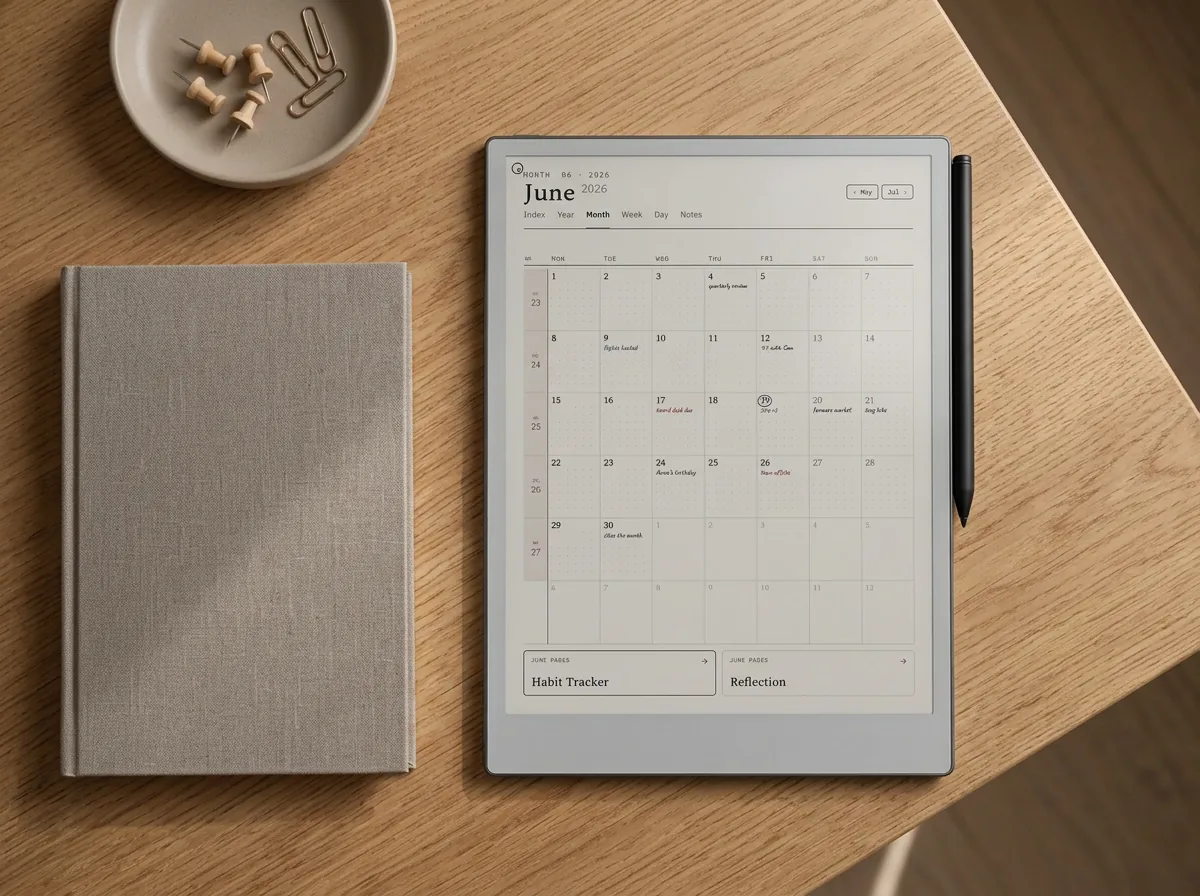
Every limit described above comes from the spine. A file does not have one. Page 208 of a PDF costs exactly what page 8 costs, which is nothing, and the difference between a monthly two-year planner and a weekly one is a few megabytes rather than a manufacturing decision. That is the entire argument, and it is worth being honest that it is a boring one. The digital version wins here not because it is cleverer but because it is not physically bound.
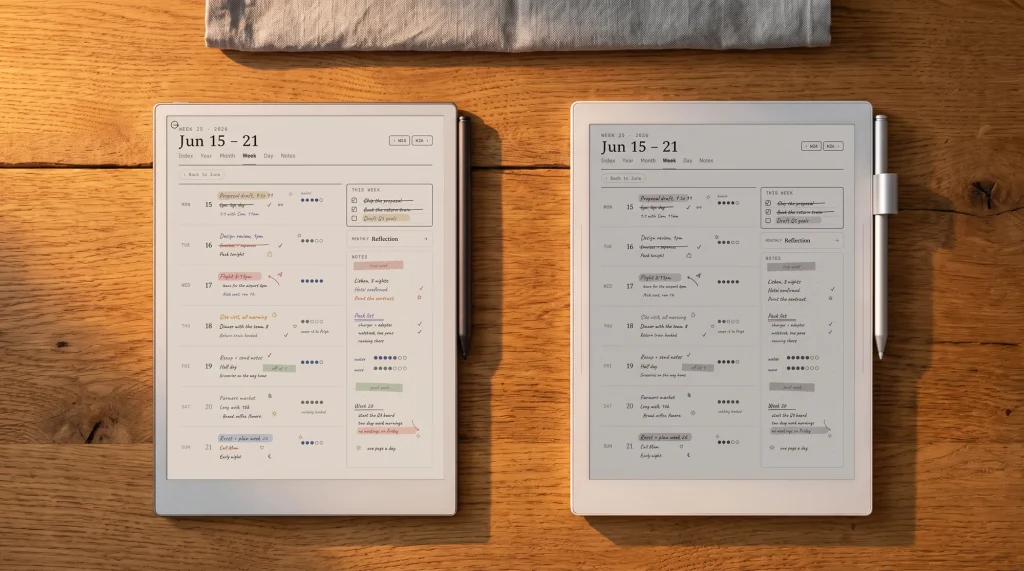
What that buys in practice is the combination paper refuses: twenty-four months of monthly overview, 104 weekly spreads under it, and daily pages beneath those if you want them, in one document that opens to today. Our own dated planners are built to that shape, which is why they carry both years in a single file rather than shipping a fresh edition each autumn.
The catch is navigation, and it is a real one. Two hundred pages of grid is unusable if you have to swipe to reach March. A two-year planner in file form only works if the months, weeks and days are hyperlinked, so a tap on the year view lands on a month and a tap on a date lands on the day. Without that it is a worse pocket monthly, and a fair number of the cheap listings you will find are exactly that: a printable pack with no index, sold as a planner. Check for hyperlinked navigation before you check anything else, and if the listing does not mention it, assume it does not have it.
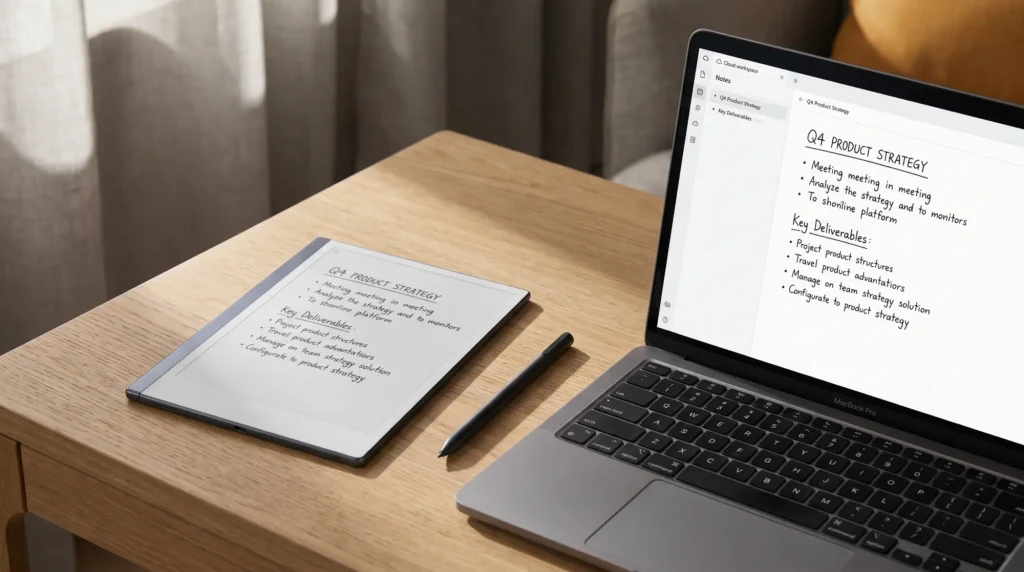
The second catch is that a file needs somewhere to live. A two-year planner on a phone is a reference document, not a planner, because nobody writes a weekly review with a thumb. This is why the format and the hardware are one decision rather than two, and it is what the next section is about. If you want the wider version of that argument we set it out in our guide to picking a digital planner.
Hardware
Which device suits a 2026-2027 planner best
The honest answer is that any tablet opens the file, and the question is which one you will still be writing in next November. Two years is long enough that the annoyances compound, so the thing to weigh is not the spec sheet but what the device does badly every single day.
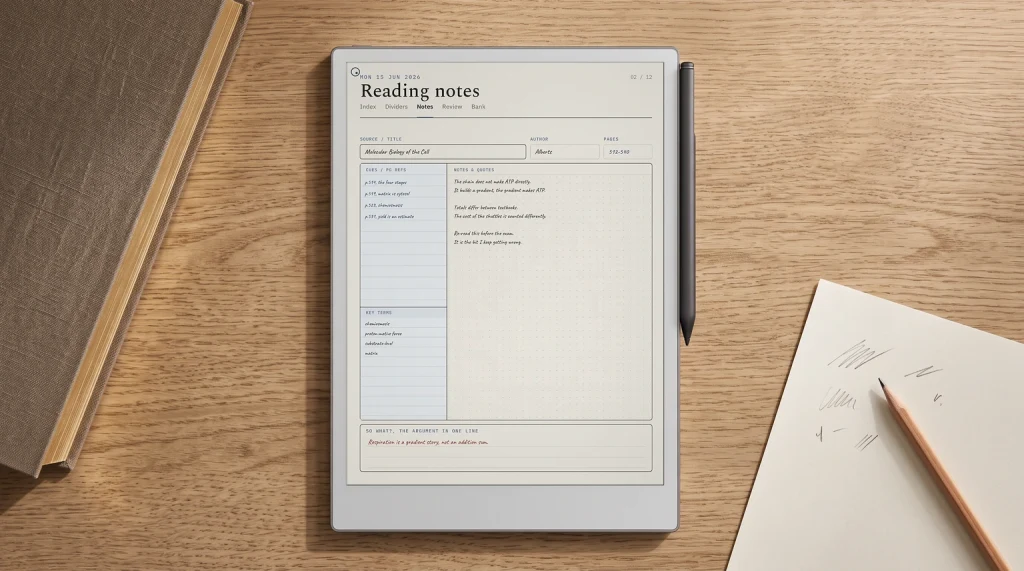
reMarkable is the pick if the planner is the point and you want nothing else on the screen. The Paper Pro starts at $629 with a Marker included and uses an 11.8 inch colour display (checked July 2026), and the reason to pay that is the writing feel and the absence of anything to tap away to. We go through the range and what each model gives up in our reMarkable planner guide, and the layouts themselves in the best reMarkable planner and reMarkable 2 planner templates.
Kindle Scribe suits the person who already owns one and reads more than they plan. The planner sits next to the library rather than in its own world, which is either the appeal or the problem depending on how easily you drift into a book. The layouts that work well on it, and the margin quirks that decide which ones do, are covered in the best Kindle Scribe planner and Kindle planner.
Boox and Supernote are the picks for people who want the file system to behave like a computer’s, which matters more than it sounds for a two-year document you will be jumping around inside. Our notes on layouts for each are in Boox templates and Supernote templates. An iPad does all of this and does it in colour, at the cost of being an iPad, which is to say the most distracting object most people own.
Whichever you land on, the template matters more than the hardware over a two-year span, because the hardware only has to be adequate while the layout has to still make sense in eighteen months. Our wider set for the platform is in the best reMarkable templates.
Setup
How to set up a 2026-2027 planner so year two gets used
The failure mode for a 2026-2027 planner is not that year two is missing. It is that year two never gets opened, and in December you go and buy a new planner anyway out of habit. Three things prevent that, and none of them takes longer than an evening.
Set up year two on the day you set up year one. Put the fixed dates in immediately: birthdays, renewals, term dates, the annual review that always ambushes you. Twenty minutes in January 2026 means that when you cross into 2027 the book is already populated, and a populated page gets used while a blank one gets replaced. This is the single highest-return thing on this list and almost nobody does it.
Keep the reference pages outside the dated section. Anything you will still want in year two, project lists, contacts, running notes, goes in a section with no date on it. When the year turns you want to cross a month boundary, not rebuild your own scaffolding. Then, in the last week of December, spend half an hour reading year one back before you touch year two. That review is the actual benefit of owning both years, and it is the step people skip.
The last piece of setup is deciding what you will not carry over. A two-year planner makes it very easy to drag a dead project across a year boundary simply because the page is still there. Paper’s annual reset was a crude tool, but it did force a clear-out once a year. If you keep both years, you have to schedule that clear-out yourself, or year two slowly becomes an archive of things you stopped doing.
FAQ
Common questions, answered briefly
Does a 2026-2027 planner cover both full years?
Why are two-year planners always monthly?
Is a two-year planner cheaper than buying two planners?
Can I get a two-year planner with weekly pages?
Should I buy a 2027 planner now or wait?
If your question is not above, leave it in the comments and we will add it. Corrections are welcome too, particularly on date ranges, which change from one product year to the next and are exactly the kind of detail that goes stale between the day we check it and the day you read it.
People also ask