In one line
The Boox Note Air 5C in one line
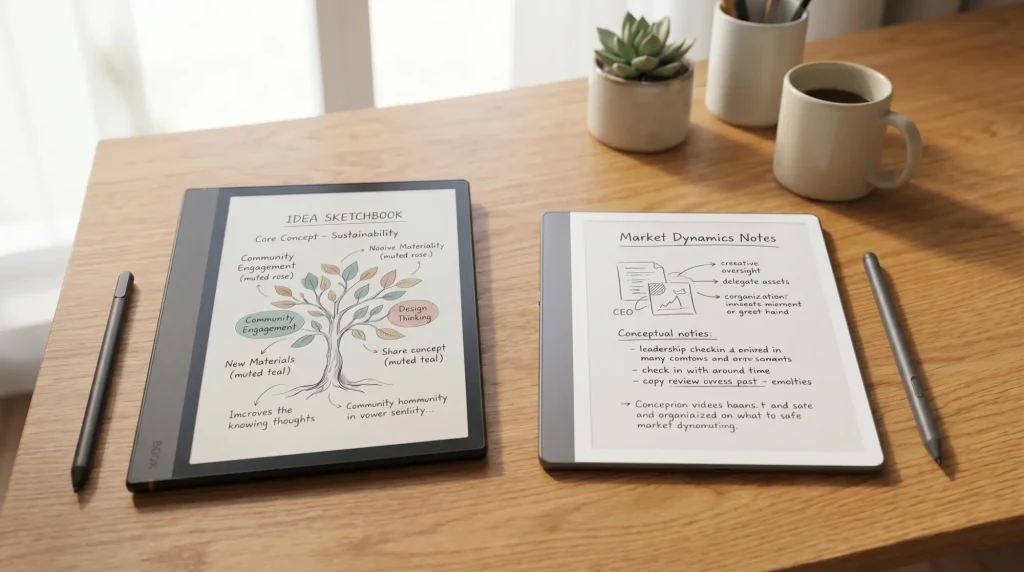
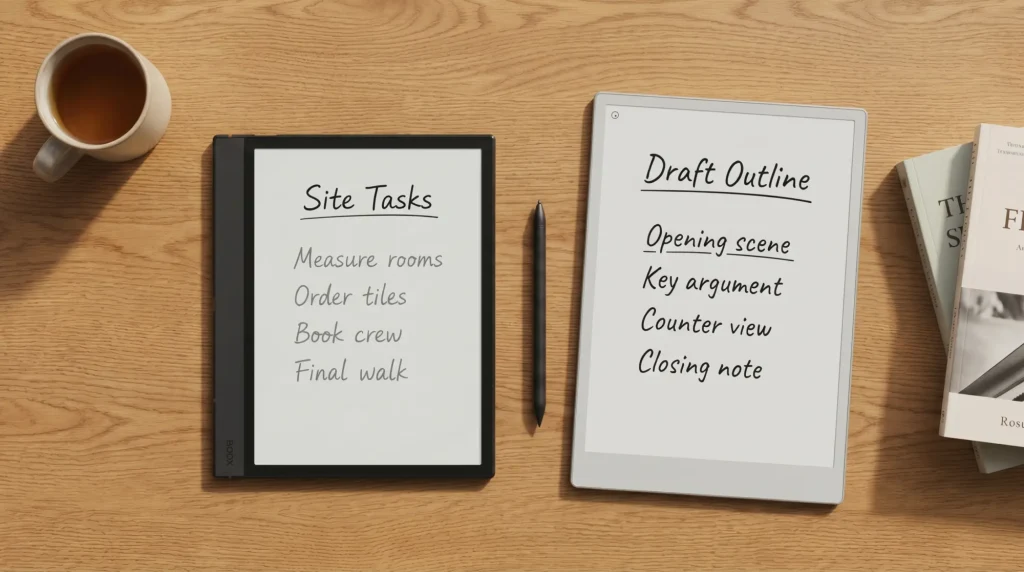
The Boox Note Air 5C is the color writing tablet you buy when you want one e-ink device to take notes, mark up PDFs, plan your week and read, without the glow of an iPad. It has a 10.3-inch Kaleido 3 screen that shows real color on e-paper, a Pen3 stylus in the box, and full Android 15 with the Google Play Store, so it runs the apps your work already lives in. At $529.99 it sits at the top of Boox’s color note line, and the honest headline is this: the Note Air 5C is a careful refresh of last year’s 4C rather than a new device. This review covers what genuinely changed, where the color screen and pen land in daily use, and the one question most buyers are really asking, which is whether to pay for the 5C or save money on the 4C it replaces.
What changed
What is actually new versus the Note Air 4C
Boox launched the Note Air 5C in October 2025 as the direct successor to the 4C, and the two are close enough that the differences fit on one screen. The screen panel, the resolution, the 6GB of RAM and the 64GB of storage all carry over unchanged, and so does the $529.99 price. What you actually gain is a newer software base and a few hardware additions, set out in the table below.
| Spec | Note Air 5C (2025) | Note Air 4C (2024) |
|---|---|---|
| Screen | 10.3″ Kaleido 3, 4,096 colors | 10.3″ Kaleido 3, 4,096 colors |
| Software | Android 15 | Android 13 |
| Processor | Octa-core with BSR refresh | Snapdragon 750G octa-core |
| RAM and storage | 6GB, 64GB, microSD to 2TB | 6GB, 64GB, microSD to 1TB |
| Stylus | Pen3, EMR, included | EMR pen, included |
| Keyboard | Magnetic pogo-pin cover, $109.99 | No pogo keyboard |
| Side buttons | Two physical buttons | None |
| Price | $529.99 | $499.99 |
Three of those rows matter. Android 15 brings a newer app base and a longer runway of updates, where the 4C is on Android 13 and Boox skipped 14 entirely. The pogo-pin keyboard turns the tablet into a light writing station, which the 4C could not do without a Bluetooth keyboard floating beside it. And the two new side buttons give you physical page turns for reading, a small thing that earns its place. Everything else is a wash. For the full picture of the older model, our Boox Note Air 4C review still stands.
Screen and pen
The color screen, the Pen3, and how it writes

The 10.3-inch Kaleido 3 panel is the heart of the device, and it is worth being plain about what color e-ink is. It shows 4,096 colors at 150 pixels per inch in color, dropping to a crisp 300 pixels per inch in black and white, which means your highlights, planner tabs and chart lines read in color while your text stays sharp. The colors are soft and matte, closer to a printed newspaper than a glossy phone, so do not expect vivid photos; expect calm, paper-like color that is easy on the eyes for hours and readable in direct sun. A warm-to-cold front light covers night reading.
Writing is where the Note Air 5C spends its money. The bundled Pen3 uses EMR, the same battery-free, lag-light technology Wacom pens use, and Boox sensibly kept it here rather than moving to the touchscreen pens some of its newer devices use, which reviewers tend to rate a step down. With 4,096 pressure levels and tilt, the pen feels close to fineliner on paper, and the new BSR refresh mode cleans up the faint trailing that color e-ink can show when you write quickly. For handwritten notes, annotated PDFs and planner work, it is one of the better color e-ink writing experiences you can buy today.
Living with it
Living with it: Android 15, apps, and the keyboard
Because the Boox Note Air 5C runs Android 15 with the Google Play Store, it is not locked into one note app the way a reMarkable is. You install the tools you already use, whether that is the Kindle app for reading, a cloud note app, a PDF reader or a planner, and Boox layers its own refresh controls on top so you can nudge each app toward speed or clarity. That openness is the reason to choose a Boox over a closed e-note, and Android 15 keeps that app library current for longer than the 4C will manage.
The new trick is the keyboard. A magnetic cover ($109.99, sold separately) clips on through pogo pins and charges through the same connection, turning the tablet into a quiet writing slab for drafting in e-ink with no backlight to tire your eyes. It is not a laptop, and the e-ink refresh means you would not want to edit a spreadsheet on it, but for distraction-free typing it works. If you mainly want the device for planning, our Boox planner templates are built for exactly this 10.3-inch surface, and the wider e-ink tablet roundup shows where it sits against everything else.
The screen, the memory and the price are unchanged; you are paying for Android 15, a keyboard and two buttons.On the 5C versus the 4C
Versus the alternatives
Note Air 5C versus the 4C and the reMarkable
Two comparisons decide most purchases here. The first is the 5C against the 4C it replaces; the second is the 5C against the reMarkable Paper Pro, the obvious color-versus-color rival.
Note Air 5C
- Android 15, longer update runway
- Pogo-pin keyboard and two side buttons
- microSD to 2TB
- $529.99
Note Air 4C
- Android 13, fewer years of updates ahead
- No pogo keyboard, no side buttons
- Same screen, same 6GB and 64GB
- $499.99, and often discounted below that
Read it this way. If you are buying your first color Boox or replacing an older device, the Note Air 5C is the one to get, because the keyboard, the buttons and three extra years of Android support are worth having from the start. If you already own a 4C, almost nothing here justifies the swap; you have the same screen and the same speed, and a case or the keyboard would do more for your day. Against the reMarkable Paper Pro, the trade is openness versus polish: the reMarkable writes a touch better and feels more refined, but it locks you into one app, while the Boox opens the whole Play Store and costs about the same. Our Boox versus reMarkable guide walks that choice in full.
The catch
What the Note Air 5C is not
Honesty first, because this device is easy to over-buy. The hardware barely moved from the 4C, so if you came expecting a faster chip or more storage, it is not here; the RAM and storage are the same, and the processor is a sidegrade. The color is muted, as all color e-ink is today, so it suits highlights and planners far better than photos or vivid art. At roughly 440 grams it is a desk and lap device, not a one-handed reader; for that, the pocket-sized Boox Palma is the better tool. And like every e-ink screen, anything that animates feels slow, so this is a writing and reading device, not a tablet replacement.
None of that is a flaw; it is the shape of the device. The Boox Note Air 5C is a focused color e-note that writes well and reads well, and judging it as a cheap iPad or a big spec jump over the 4C misses what it is for.
Who it is for
Who should buy the Boox Note Air 5C
Buy the Boox Note Air 5C if you want one calm color device for notes, planning and reading, you value an open Android app library over a closed system, and you are coming to the line fresh or from an older model. The keyboard and the kept EMR pen make it a genuine light writing station, and Android 15 gives it the longest life of any Note Air so far. Skip it if you already own a 4C, where the gain is too small to justify the cost, or if you mainly read in one hand or want vivid color, both of which point elsewhere.
If you have lived with the Note Air 5C, or held onto a 4C and skipped this one, tell us in the comments how that call worked out. Real use sorts a refresh like this better than any spec sheet, and it helps the next reader decide.
FAQ
Common questions, answered briefly
Is the Boox Note Air 5C worth it?
What is the difference between the Note Air 5C and the 4C?
What are the Boox Note Air 5C specs?
Does the Boox Note Air 5C come with a pen?
Can the Boox Note Air 5C run Android apps?
If yours isn’t above, drop the question in the comments and we’ll add it.
People also ask