
Airbnb FIFA Hosting Guide 2025 – Maximize Bookings During the World Cup
Airbnb FIFA opportunities are booming. When a FIFA World Cup™ or related tournament comes to your city, demand for short-term rentals skyrockets. Airbnb has even

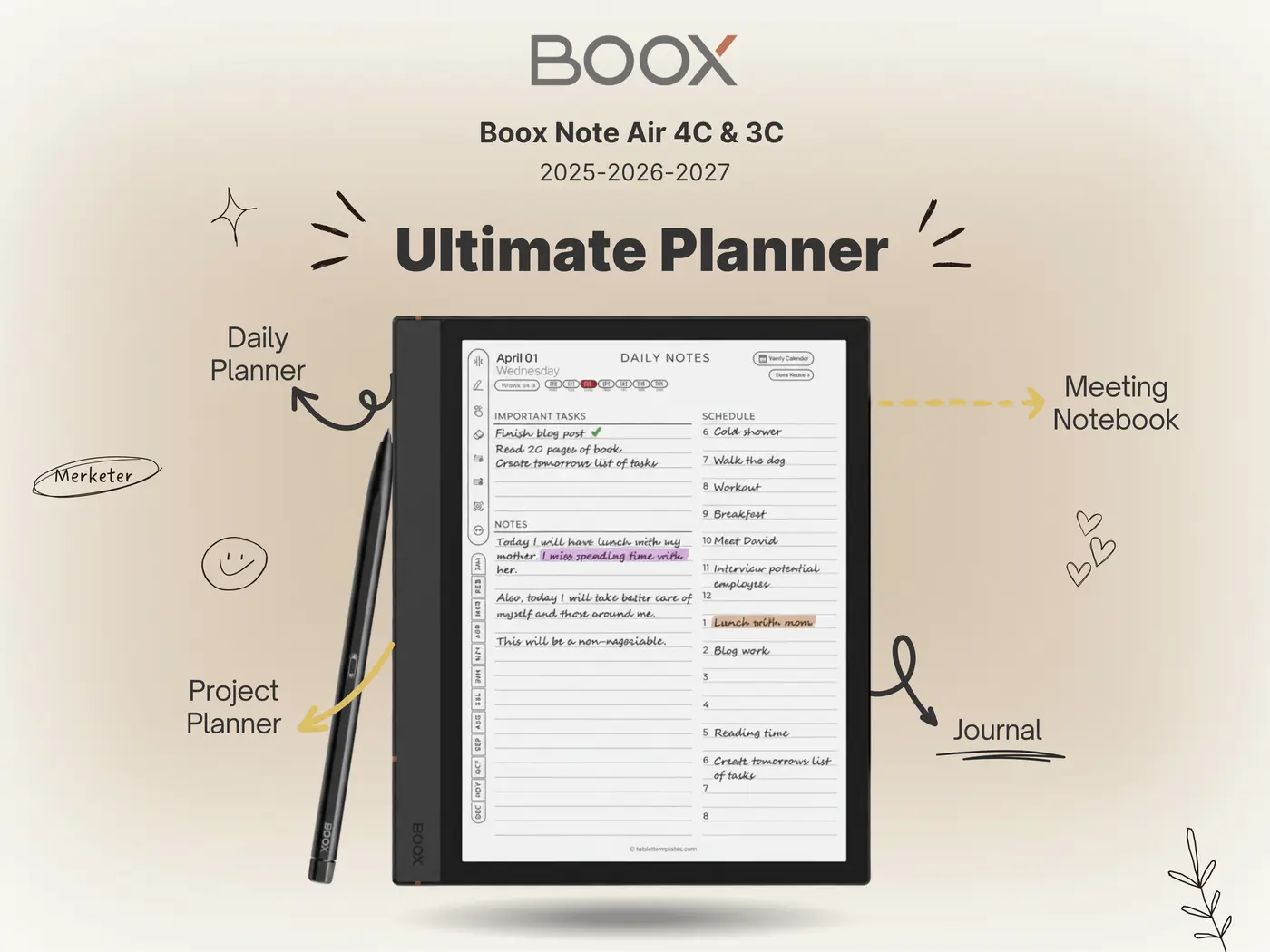
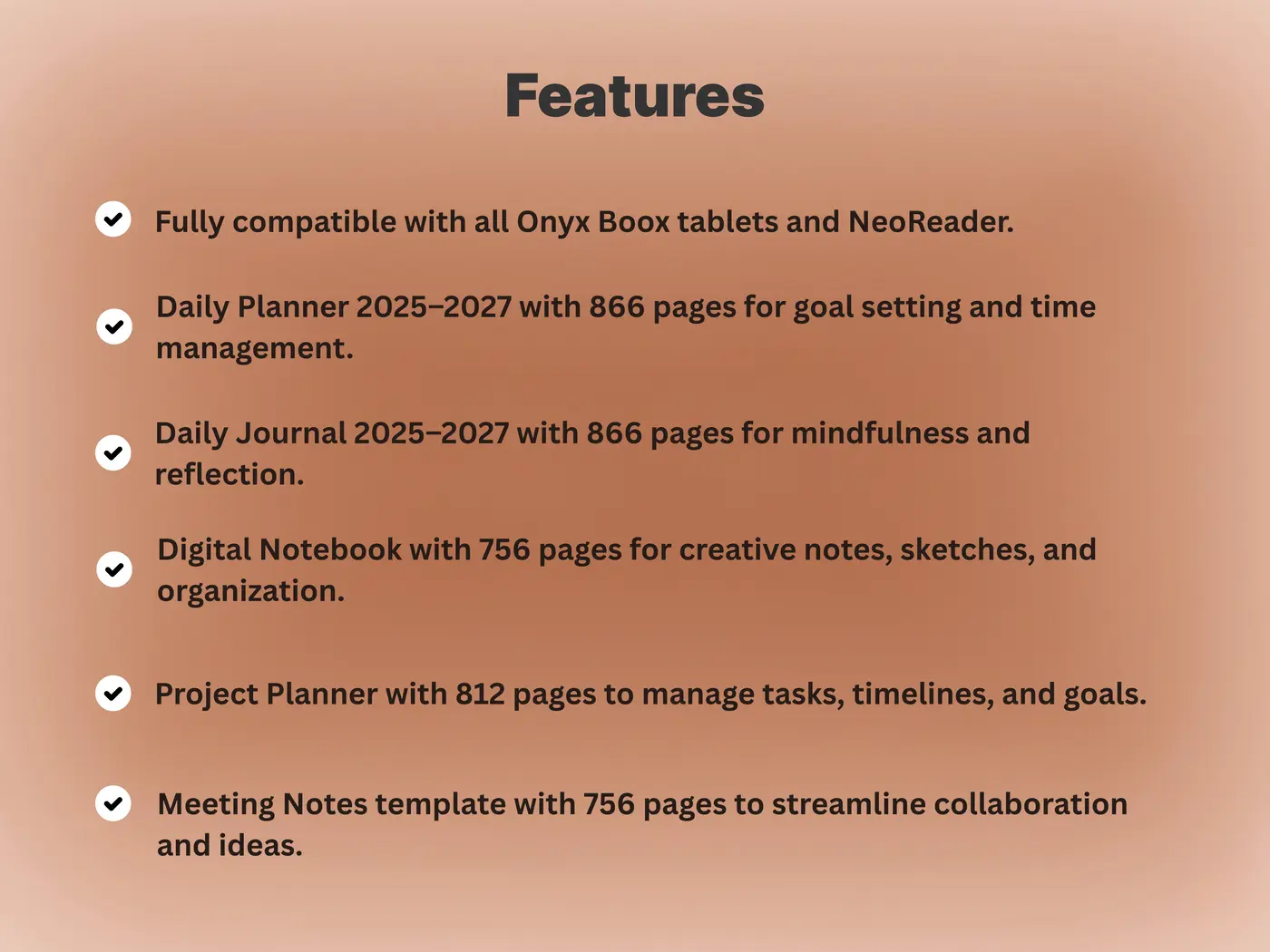
The current hardware landscape for electronic ink devices is nothing short of revolutionary. Tablets like the Note Air 3 C and the Tab Ultra Pro have fundamentally transformed how modern professionals interact with digital documents, blending the tactile, eye-friendly nature of analog paper with the immense processing power of an Android tablet. However, possessing premium hardware is only the foundational step. To truly unlock the productivity potential of these high-end devices, users must deploy professionally engineered Onyx Boox Templates that are meticulously calibrated for electrophoretic displays.
Relying on standard, desktop-formatted PDFs or the native, pre-installed generic line backgrounds inevitably results in a sluggish, disjointed user experience. The lag caused by heavy files entirely breaks the state of cognitive flow. In this exhaustive 2026 technical guide, we will dissect the precise architectural requirements of high-performance digital planners. We will explore the mechanics of optimized vector graphics, analyze advanced hyperlink navigation structures, and outline concrete workflow applications to ensure your electronic notebook operates flawlessly as your primary organizational command center.
Out of the box, standard devices offer a native note-taking application equipped with basic backgrounds—simple ruled lines, generic grids, and dotted matrices. While these are perfectly adequate for jotting down a quick grocery list, they fail entirely when you need to manage complex, multi-tiered corporate projects or annual objectives. High-quality Onyx Boox Templates introduce strict, scientifically proven layouts, such as Eisenhower Matrices and detailed Gantt charts, directly onto your electronic canvas. Instead of staring at a blank screen, you are provided with a structured, executable roadmap that dictates exactly where critical information should be housed.
To understand why specialized files are necessary, we must analyze the physics of electrophoretic technology. E-ink screens consist of millions of microcapsules containing charged pigment particles. When a standard PDF with heavy formatting is loaded, the processor struggles to determine which capsules to fire, leading to severe “ghosting”—the lingering trace of a previous page. By utilizing streamlined Onyx Boox Templates, the NeoReader application can leverage Boox Super Refresh (BSR) technology with maximum efficiency. The hardware only needs to push a partial voltage spike to the exact pixels that change, allowing for a crystal-clear display without the jarring, battery-draining full-screen flash.
This technical optimization directly impacts how you structure your day. When applying daily time-blocking methodologies, you need to rapidly transition between your broad monthly overview and a granular 15-minute daily schedule. Because optimized templates refresh instantly, your brain remains in an uninterrupted state of deep focus. You can allocate specific “Deep Work” sessions to designated visual blocks within your planner, completely trusting that the underlying digital structure is robust enough to handle rapid, messy handwriting during your most intense and productive hours without crashing the native application.
The core difference between amateur digital planners and premium Onyx Boox Templates lies entirely in their foundational rendering architecture. Standard PDF documents are frequently built using rasterized images (like JPEGs or PNGs) exported from basic design software. When a low-power e-ink processor attempts to render a massive raster image, it is forced to mathematically calculate the color value of every individual pixel on the screen. This heavy computational load results in severe input latency and rapid battery depletion, fundamentally ruining the writing experience.
Professionally engineered files are constructed entirely utilizing pure vector graphics. Instead of rendering millions of individual pixels, vectors use lightweight mathematical equations to map lines, shapes, and typography. This architectural decision means the file size remains incredibly small—often keeping a massive 1,000-page document under 5MB. When the device’s CPU reads a vector-based document, it processes the math instantaneously. This allows the stylus input to register on the screen with virtually zero latency, creating a frictionless sensation that perfectly mimics the speed and physical feedback of a premium gel pen on analog paper.
In a fast-paced corporate environment, navigation speed is a non-negotiable requirement. If a client asks a question about a meeting that occurred three weeks ago, you cannot afford to wait five seconds for a heavy rasterized page to load. Vector-based files allow you to swipe through your notes as fast as your fingers can move. This rapid retrieval of data ensures you remain composed and authoritative during high-stakes consultations, proving that your digital system is an asset rather than a technological bottleneck.
The most profound advantage of migrating to sophisticated digital stationery is the seamless integration of internal hyperlinking. A comprehensive 2026 digital planner may contain over 800 interconnected pages, ranging from high-level yearly overviews down to hyper-specific daily journaling entries. Attempting to navigate a document of this magnitude by manually swiping the screen is an exercise in utter frustration. Premium Onyx Boox Templates feature interconnected navigational tabs, typically located along the margins, which act as a permanent, interactive table of contents. A single stylus tap instantly teleports you across the document.
The implementation of hyperlinks on electronic paper requires highly precise spatial engineering. The capacitive touch layers on these specialized devices interpret touch inputs slightly differently than standard OLED smartphones. If the hyperlinked “hitbox” (the invisible clickable area mapped over a text or button graphic) is drawn too small, the user will be forced to tap the screen repeatedly. Expert template engineers intentionally expand these vector hitboxes by 20% beyond the visual icon. This optimization compensates for the slight parallax caused by the glass screen, ensuring that every tap registers accurately on the very first attempt.
Flawless hyperlink architecture is the absolute prerequisite for executing complex frameworks like the Getting Things Done (GTD) methodology on an e-ink device. GTD relies heavily on the “capture and process” dynamic. When you are deep into a client meeting and an unrelated, urgent task pops into your mind, you cannot afford to lose your place. With highly optimized hitboxes, you simply tap the “Inbox” tab, instantly document the disruptive thought, and tap the “Back” hyperlink to return to your exact meeting notes in less than two seconds.
The introduction of the Note Air 3 C and Tab Ultra C Pro completely altered the digital stationery market by bringing usable, muted color to electrophoretic displays. Consequently, the design language of modern files has fundamentally shifted. While monochrome frameworks rely entirely on varying shades of gray, bold typography, and stark lines to create a visual hierarchy, color-enabled Onyx Boox Templates utilize strategic pastel shading to separate data. However, deploying a color template on a monochrome device—or vice versa—can lead to severe readability issues if the contrast ratios are not meticulously balanced.
To understand why color optimization is critical, we must examine how the hardware functions. Kaleido 3 displays, engineered by E Ink Holdings, overlay a Color Filter Array (CFA) directly on top of a standard high-resolution black-and-white ink layer. The color layer operates at a lower resolution of 150 PPI. When generic templates use heavily saturated, unoptimized RGB colors, the processor must use a technique called “dithering” to approximate the shade, resulting in a grainy, distracting texture. Premium templates specifically use hex codes that natively match the Kaleido 3 color gamut, completely eliminating the need for dithering and ensuring the text remains razor-sharp.
If you have invested in a color-capable device, utilizing specialized files is a massive productivity multiplier. In a corporate setting, visual tagging drastically reduces the time required to parse a document. You can establish a strict internal workflow: red highlights indicate critical blockers, blue indicates tasks awaiting external approval, and green indicates completed milestones. When you open your massive quarterly planner, you do not need to read every line of text. The expertly calibrated color blocks allow you to instantly gauge the health of a project at a single glance.
One of the primary reasons professionals choose this specific hardware over competitors is the outright rejection of closed, proprietary ecosystems. Because these devices operate on the Android framework, they are not artificially restricted from communicating with external servers. However, to maximize this freedom, your Onyx Boox Templates must be designed to export cleanly. A heavily bloated file will struggle to sync across low-bandwidth connections, whereas a streamlined, vector-based PDF will effortlessly push your handwritten updates to your preferred cloud storage provider the moment you close the device cover.
The integration of the Android operating system into e-ink devices brings robust background processing APIs. When you annotate your templates using the native NeoReader app, the device generates a transparent vector layer containing your handwritten strokes. When background syncing is triggered, the OS rapidly flattens this vector data and pushes the updated file via Wi-Fi. If the base file is too large due to poor coding, this flattening process will consume massive amounts of CPU cycles, generating excess heat and severely degrading the device’s battery life.
Ultimately, the goal of transitioning to digital stationery is to build an indestructible, easily accessible archive of your life’s work. When you use standardized, high-quality files, you are creating a digital ledger. At the end of the year, you can export your completed 2026 planner to a secure external hard drive as a universally readable PDF document. Ten years from now, regardless of what hardware brand dominates the market, you will be able to open that exact file, review your specific project notes, and search your thoughts with absolute clarity, securing your intellectual property indefinitely.
| Technical Feature | Standard DIY PDF | Premium 2026 Vector Architecture |
|---|---|---|
| Render Engine | Raster (Pixel-based) | Vector (Math-based) |
| Hitbox Accuracy | Default (Small) | Expanded +20% Precision |
| Color Mapping | Uncalibrated RGB | Native Kaleido 3 Gamut |
| Battery Impact | High (Full Refresh) | Ultra-Low (Partial Refresh) |
Do not let premium e-ink hardware go to waste by relying on inferior, unoptimized backgrounds. Elevate your daily productivity with our sophisticated 2026 digital planning frameworks. Engineered exclusively for high-resolution displays, our files feature frictionless hyperlinking, precise vector graphics, and layouts designed to foster intense, distraction-free focus.
Shop the 2026 Boox Template Bundle →Airbnb FIFA opportunities are booming. When a FIFA World Cup™ or related tournament comes to your city, demand for short-term rentals skyrockets. Airbnb has even
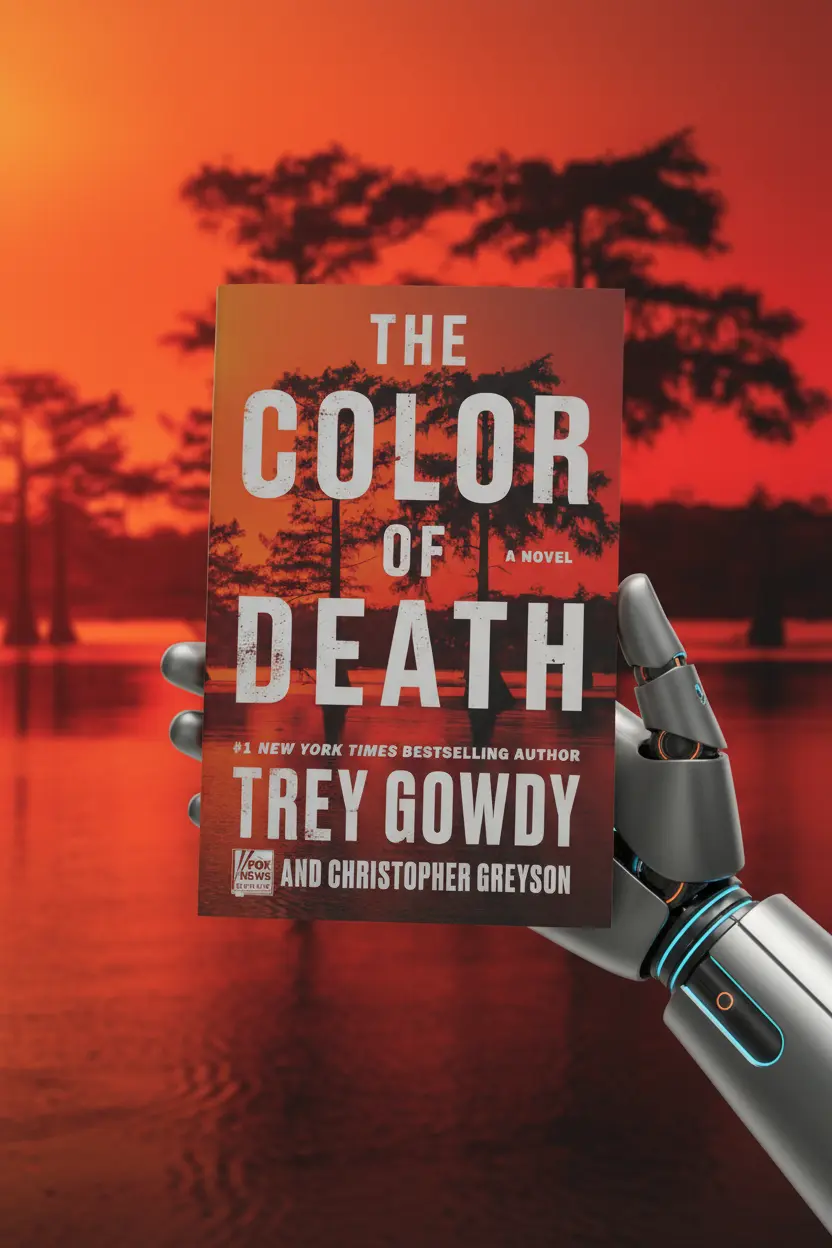
AI The Color of Death A Novel Book Review This AI The Color of Death A Novel Book Review explores Trey Gowdy and Christopher Greyson’s

Katabasis Book Review | R. F. Kuang’s Latest Novel Author: R. F. KuangGenres: Fantasy, Literary Fiction, Myth Retelling, Political FictionPublication Date: 2025 Star Rating: ★★★★☆
12 Responses