
Device Tutorials
How to Use reMarkable 2: The 2026 Master Guide
It is 2026, and the reMarkable 2 is still the king of monochrome. Despite the release of the flashy Paper Pro with its color screen and backlight, the older, thinner, and lighter reMarkable 2 remains the preferred choice for purists who value battery life and pencil-like friction above all else. But if you think this device is “old tech,” you haven’t been paying attention to the software updates.
The Norwegian team has radically transformed the device through software versions 3.0 to 3.15. Today’s reMarkable 2 has features that didn’t exist when it launched: infinite scrolling pages, typed text integration, straight-line tools, and advanced cloud file conversion. Learning **how to use remarkable 2** in the modern era means mastering these hidden digital tools while retaining the analog charm of paper. Whether you just bought a refurbished unit or are dusting off an old one, this guide will turn you into a power user.

Step 1: Setup & The “Connect” Cloud
The first step in learning **how to use remarkable 2** is understanding the ecosystem. The device is useless if it’s an island.
1. Create a Cloud Account: Go to my.remarkable.com and create an account. You will get a one-time code to pair your tablet.
2. The Connect Subscription: In 2026, the “Connect” subscription ($2.99/mo) is still controversial but valuable. Without it, your files stop syncing to the cloud if you haven’t opened them in 50 days. With it, you get unlimited archive storage and the ability to edit notes in the desktop app. If you plan to use this device for work, the subscription is highly recommended.
3. Mobile App Pairing: Download the companion app on your phone. This allows you to snap a photo of a whiteboard and send it instantly to your tablet as a PDF for annotation.
Step 2: Mastering the Pen Tools (3.0 Update)
The writing experience is why you bought this device. However, recent updates have added “smart” features to the analog feel. Learning **how to use remarkable 2** effectively requires knowing these hidden shortcuts:
The Perfect Line
Draw a line and hold your pen tip at the end of the stroke for one second. The software will snap the wobbly ink into a mathematically perfect straight line. You can then drag the tip to change the angle before lifting the pen.
The Selection Tool
Use the “Lasso” tool to circle a paragraph of handwritten text. You can now:
• Resize: Pinch to shrink your notes to fit more on the page.
• Convert to Text: Turn your handwriting into typed text to email to colleagues.
• Copy/Paste: Move the text to a different notebook entirely.
Step 3: Navigation Gestures
The reMarkable 2 has very few physical buttons. Navigation is gesture-based. If you don’t know the gestures, you will feel stuck.
- Two-Finger Scroll: If you are on a page that is longer than the screen (Infinite Scroll), use two fingers to pan up and down.
- Swipe Down from Top: This closes the current document and returns you to the file overview. This is the most used gesture on the device.
- Swipe Up from Bottom: Activates “Quick Browse,” a slider that lets you flip through pages rapidly without lifting your hand.
Mastering these swipes is the difference between frustration and flow when learning **how to use remarkable 2**.
Step 4: PDF Reading & Cropping
The 10.3-inch screen is slightly smaller than a standard A4 sheet of paper. This makes reading PDFs tricky unless you know the “Crop” hack.
How to do it:
1. Open a PDF document.
2. Tap the “Document Settings” icon (the gear or sliders).
3. Select “Adjust View” or “Crop”.
4. Drag the corners to remove the white margins.
The text will instantly expand to fill the screen, making it significantly more readable. This setting is saved per file, so you only have to do it once.
Step 5: Using the Type Folio
In 2023, reMarkable released the Type Folio, a keyboard case that turns the tablet into a typewriter. If you have one, your workflow changes.
Mixing Text and Ink:
You can type a headline and then draw an arrow next to it with the pen. The typed text anchors to the page lines, while the ink anchors to the physical location.
Key Shortcuts:
• Alt + N: New Page.
• Ctrl + F: Search text (yes, you can search your handwriting too!).
• Alt + Tab: Switch between recent documents.
Step 6: Tags vs. Folders
The “Folder” system is rigid. The “Tag” system is fluid. Advanced users rely on tags.
How to use Tags:
Tap the “Tag” icon in the sidebar menu while inside a notebook. Create tags like #Urgent, #ToRead, or #ProjectAlpha.
When you go to the main menu, you can filter by #Urgent. This will show you every single page across all your notebooks that has that tag. This allows you to have a “Meeting Notebook” and a “Journal,” but pull all your “To-Do” items into one view instantly.
For more on this, check the guide on reMarkable’s Support Page.
Final Verdict
Learning **how to use remarkable 2** in 2026 is a rewarding journey. The device has aged like fine wine, with software updates adding powerful features without compromising the distraction-free ethos.
It is not an iPad. It won’t play video. But if you master the layers, the crop tool, and the tag system, it becomes the most powerful thinking tool in your arsenal. It forces you to slow down, focus, and actually produce work rather than just consuming content.
Organize Your rM2
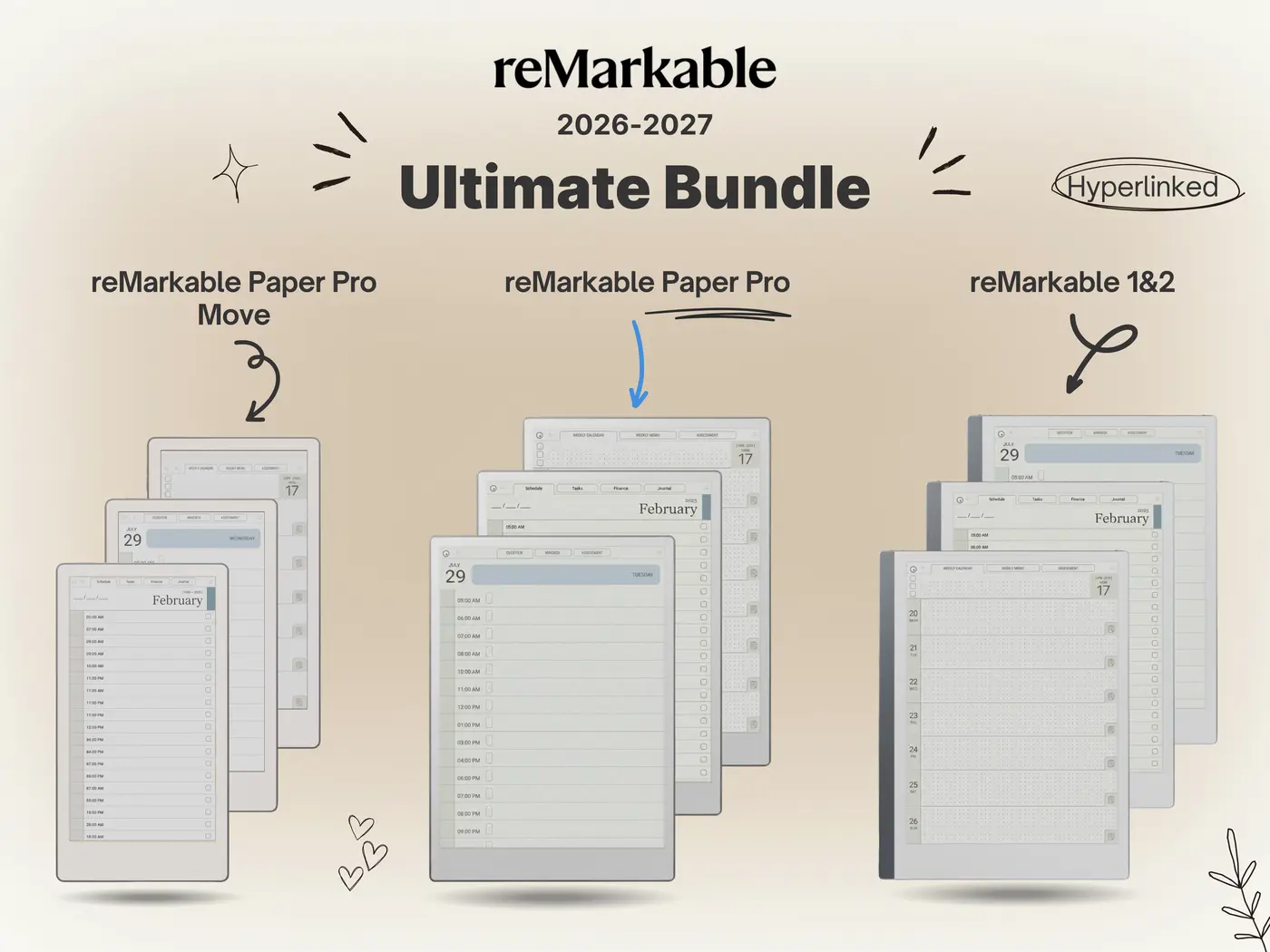
The default “Grid” template isn’t enough for professional work. Download our 2026 Planner Bundle, fully hyperlinked and optimized for the reMarkable 2’s monochrome display.