Host Resources & Portfolio Growth
The Ultimate Airbnb Property Management Spreadsheet for 2026
Transitioning from a single-property host to a multi-unit property manager is an exhilarating milestone. However, what worked for one listing will spectacularly fail when applied to three, five, or ten. When you only have a single vacation rental, you can keep most of your maintenance schedules, cleaning fees, and guest communications loosely organized in your head or jotted down on a notepad. But as your portfolio expands, the complexity of your operations multiplies exponentially.
You are no longer just “hosting”—you are running a logistics company. You have multiple cleaning crews to pay, varied utility bills to track, dynamic pricing subscriptions to manage, and distinct tax liabilities for each unit. Native booking platforms are designed for individual reservations, not portfolio oversight. To survive this operational leap without losing your sanity, you need a centralized command center. In 2026, implementing a rigorous, multi-tabbed **airbnb property management spreadsheet** is the most effective way to consolidate your operations, measure your true margins, and scale your hospitality empire.
The SaaS Trap vs The Spreadsheet Solution
As you add your second or third property, you will inevitably be targeted by aggressive marketing campaigns for Property Management Software (PMS) like Guesty, Hostaway, or Lodgify. While these platforms are incredibly powerful, they are built for large-scale operations with 20+ doors. They often charge a percentage of your total revenue or a steep flat fee per listing.
For a growing manager with 2 to 10 properties, these recurring fees aggressively erode your profit margins. Deploying an advanced **airbnb property management spreadsheet** built in Google Sheets or Microsoft Excel provides the perfect middle ground.
- No Monthly Overhead: You avoid paying $100 to $300 a month for software features you rarely use. Your **airbnb property management spreadsheet** is a one-time setup that lives in your free Google Workspace.
- Total Flexibility: If you want to track a very specific metric—like how much you spend exclusively on hot tub maintenance across all properties—you can easily add a column. SaaS tools force you to conform to their rigid reporting structures.
- Data Ownership: You are not locked into a proprietary ecosystem. You can easily export your data, back it up locally, and share it securely with your investors or CPA.
3 Essential Tabs Your System Needs
A blank document will not help you run a hospitality business. To be effective, your **airbnb property management spreadsheet** must be architected with distinct, cross-referencing tabs that handle different aspects of your operations.
1. The Master Financial Ledger
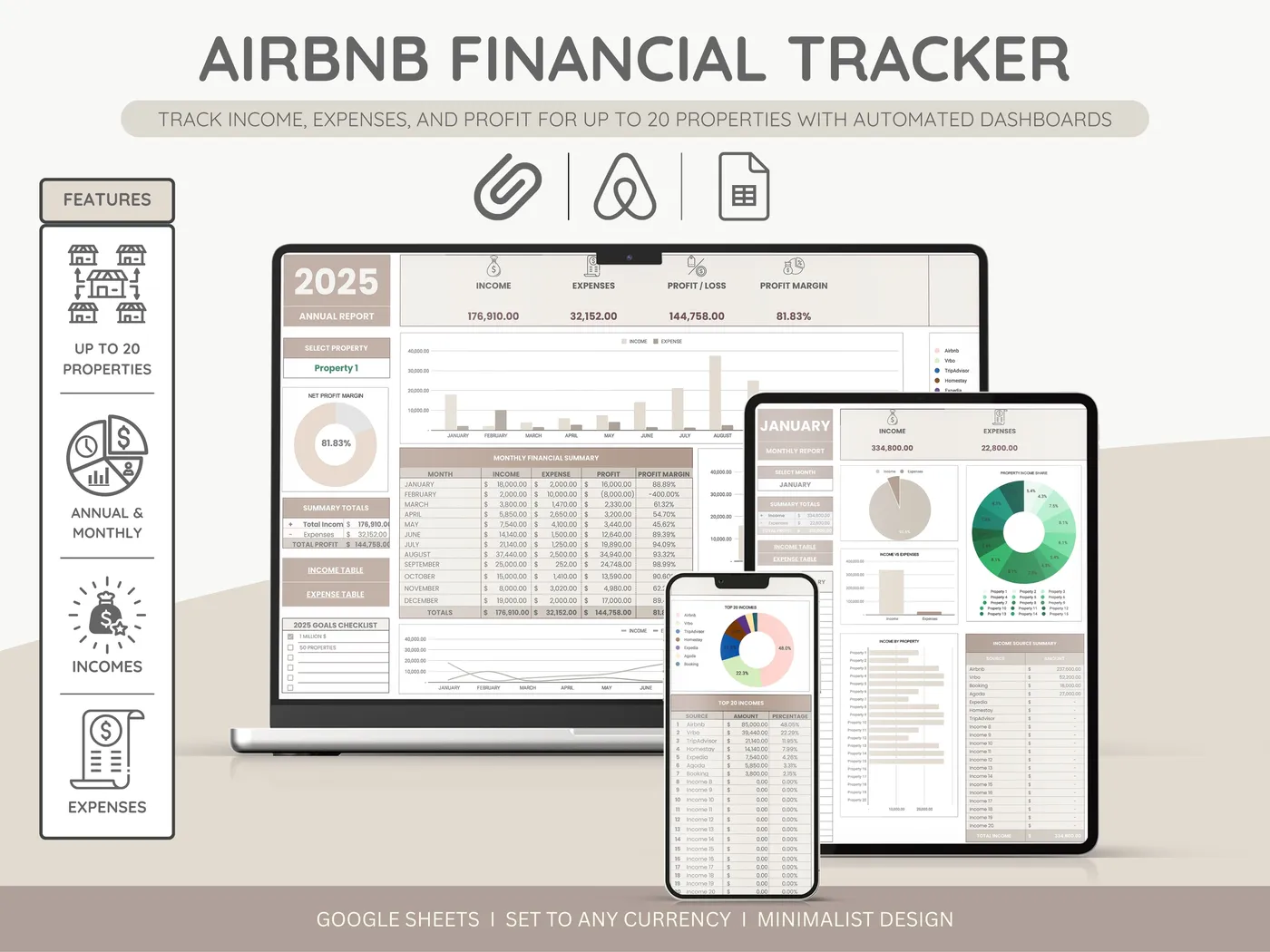
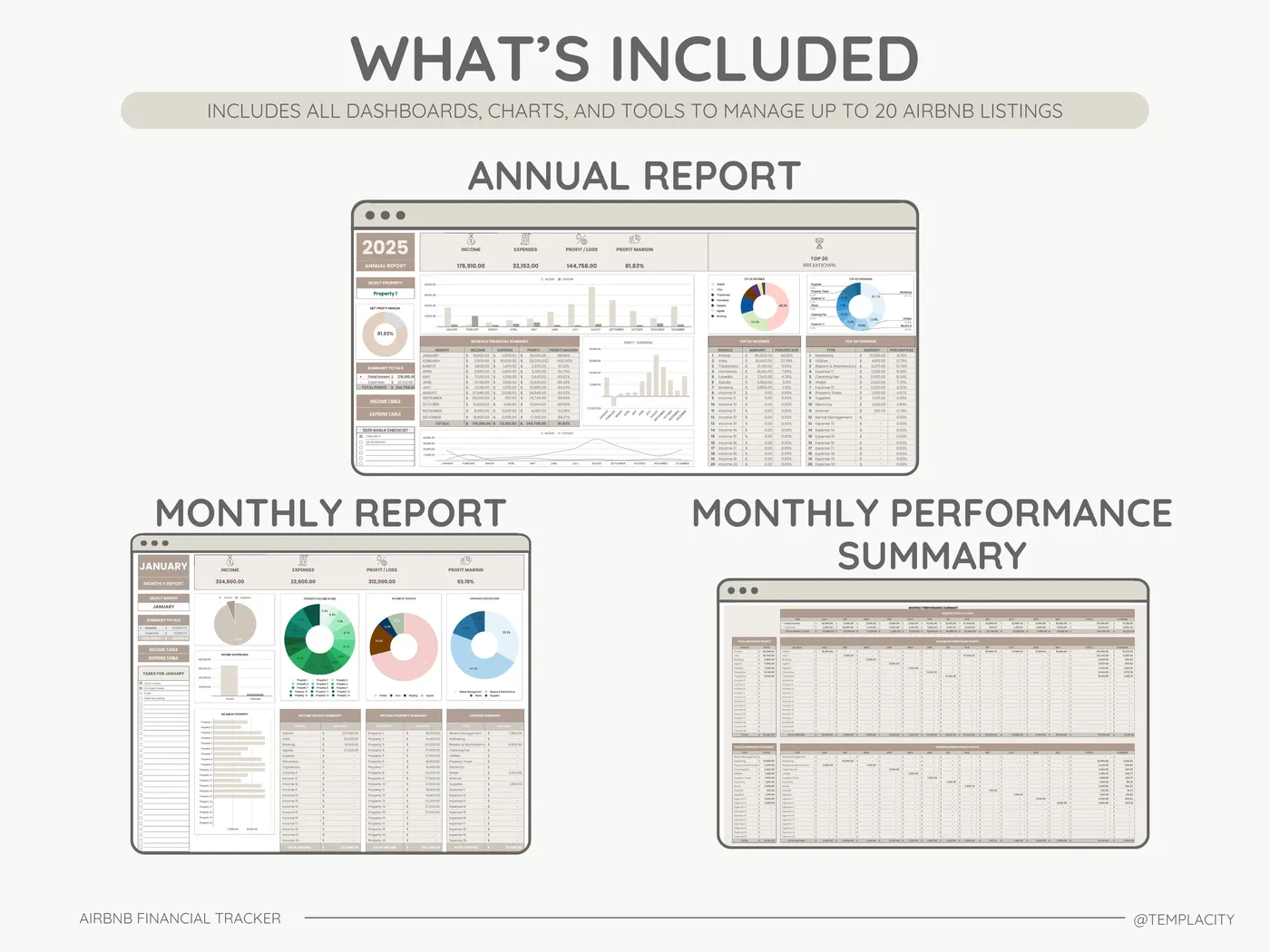
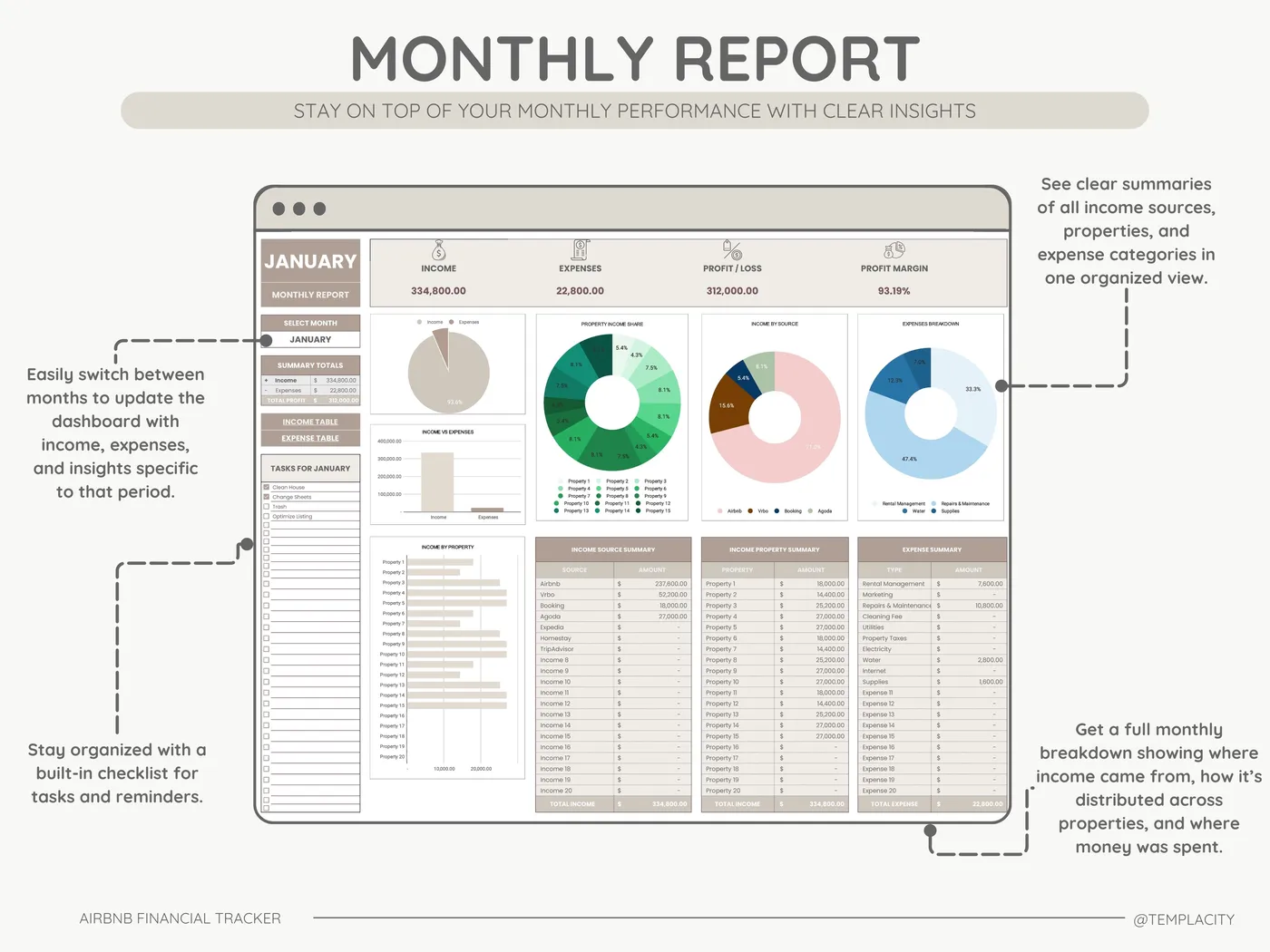
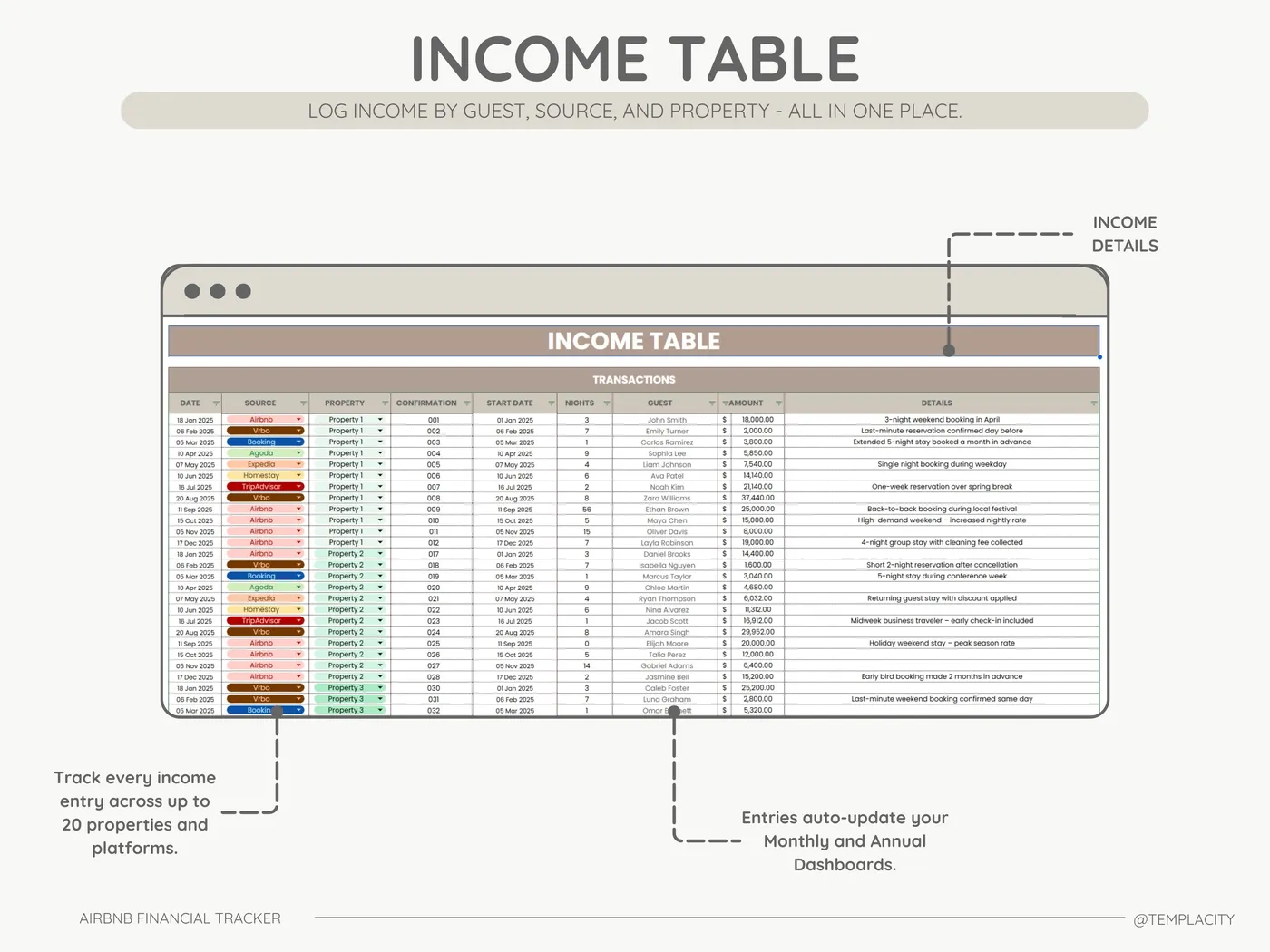
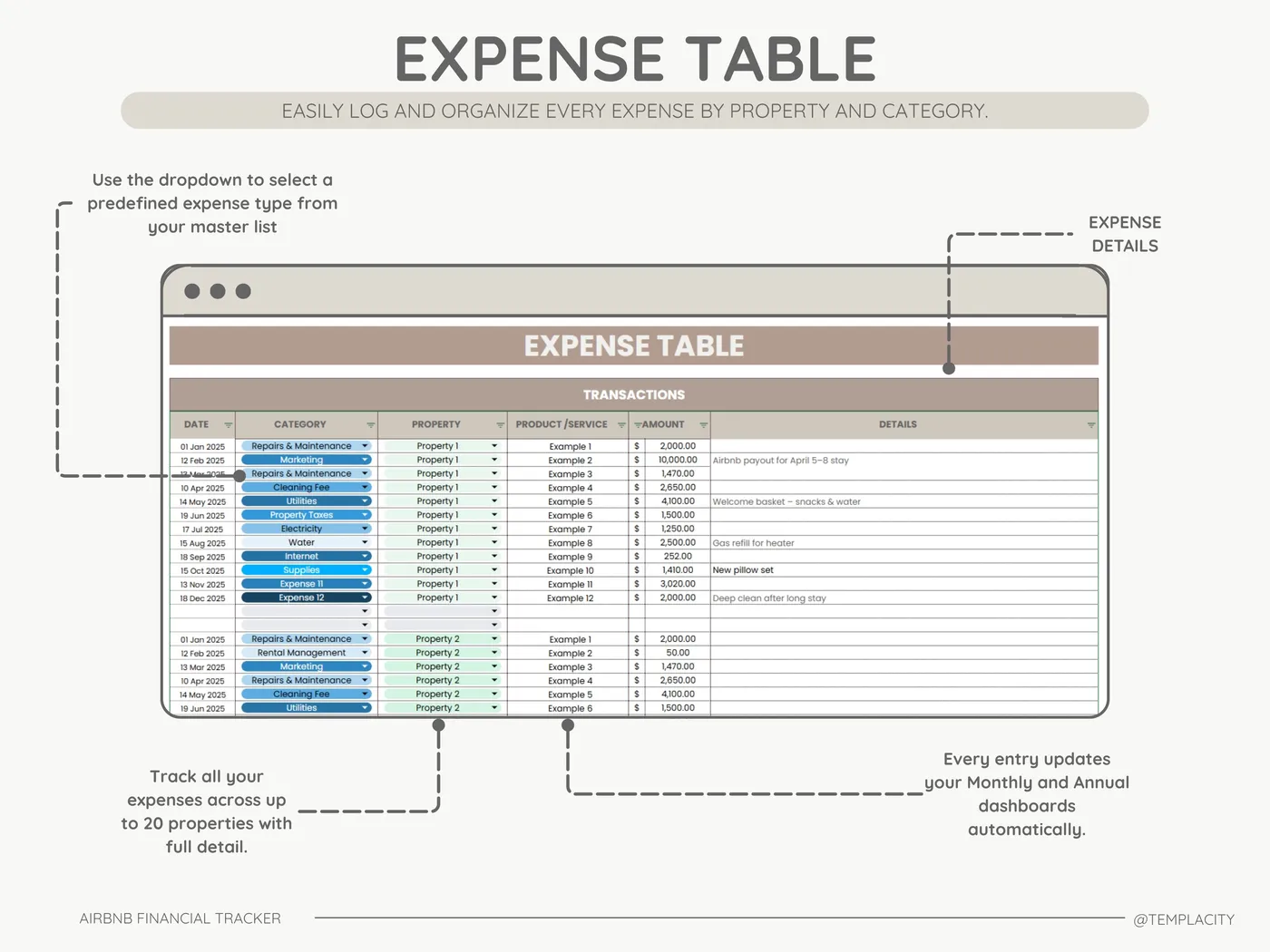
This is where every dollar is tracked. Crucially, it must include a “Property ID” column. When you enter an expense (e.g., a $150 plumbing repair), you must assign it to “Unit A” or “Unit B”. This allows your **airbnb property management spreadsheet** to automatically generate profit and loss (P&L) statements for individual listings.
2. The Maintenance & Asset Log
If you have five properties, you have five HVAC systems, five refrigerators, and five roofs to maintain. This tab tracks the installation dates, warranties, and service history of your major appliances. By projecting when a water heater will fail, you can budget for the capital expenditure proactively rather than being blindsided by an emergency replacement.
3. The Gross vs Net Revenue Tracker
You must separate the guest’s gross payment from the platform’s service fees and the cleaning fees. If you manage properties for other owners (arbitrage or co-hosting), you need exact gross figures to calculate your management commission accurately and legally.
Tracking Portfolio-Wide Metrics (RevPAR)
When you transition to multi-property management, you have to start thinking like a hotel executive. You cannot just look at your bank balance; you need to track specific performance indicators. The most important metric in hospitality is Revenue Per Available Room (RevPAR), a concept thoroughly explained by financial experts at Investopedia.
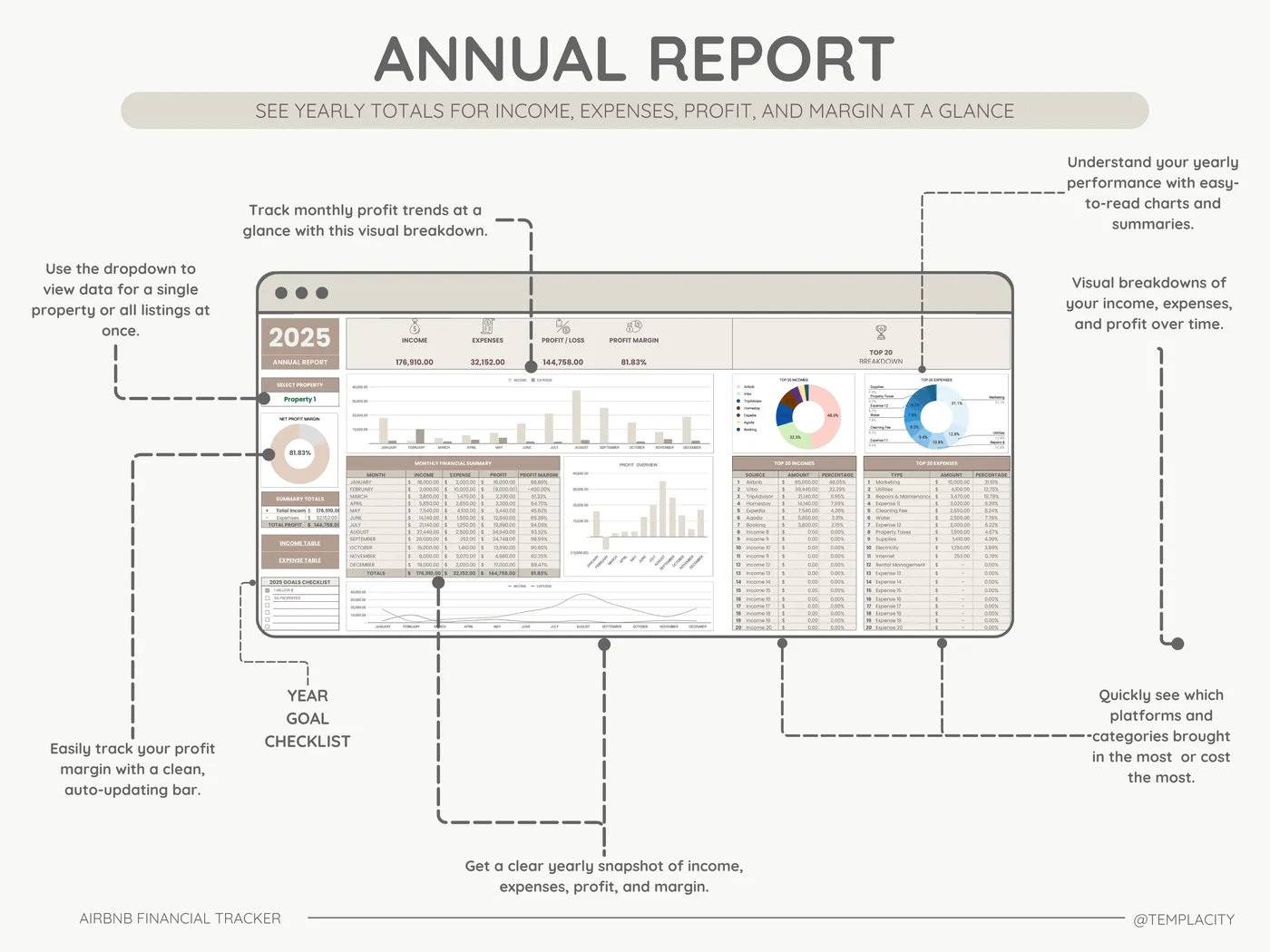
Your **airbnb property management spreadsheet** should automatically calculate your RevPAR by taking your total revenue and dividing it by the total number of available nights across your entire portfolio. It should also calculate your overall Occupancy Rate. If Unit A has a 90% occupancy rate but a low RevPAR, your pricing is too cheap. If Unit B has a 40% occupancy rate but a high RevPAR, you might be priced too aggressively. A visual dashboard that compares these metrics side-by-side allows you to optimize your pricing strategy holistically.
Collaborating with Co-Hosts and Cleaners
Managing multiple properties is a team sport. You cannot be everywhere at once. A major advantage of building your **airbnb property management spreadsheet** in a cloud-based environment like Google Sheets is the ability to collaborate in real-time.
You can create a restricted, “View Only” tab specifically for your cleaning crew. This tab can automatically pull data from your master calendar, showing the cleaners exactly which units have check-outs on which days, without giving them access to your sensitive financial data or profit margins. Similarly, if you are co-hosting a property for an investor, you can share a live link to their specific unit’s Profit & Loss dashboard, providing them with ultimate transparency and building unparalleled trust.
Portfolio Tax Prep (Schedule E)
The complexity of your tax filings multiplies with every door you add. If you operate your rentals as a sole proprietor or LLC in the United States, you will be reporting income and expenses on IRS Form 1040, Schedule E. The critical detail here is that the IRS requires you to report the income and expenses separately for each individual property.
If you mix the utility bills of Unit A with the repair costs of Unit B in a single shoebox, your CPA will charge you a fortune to untangle the mess. A professionally structured **airbnb property management spreadsheet** does this heavy lifting for you. By requiring a “Property ID” for every transaction, the spreadsheet’s dashboard can automatically generate a distinct Schedule E summary for each address in your portfolio. You can verify the specific guidelines for multi-property reporting directly on the IRS Website.
Final Verdict
Scaling a short-term rental business is incredibly rewarding, but it is entirely unforgiving of disorganized operations. The “winging it” phase ends the moment you sign your second lease or close on your second mortgage. You must elevate your operational standards.
By implementing a robust **airbnb property management spreadsheet**, you transform your portfolio from a chaotic collection of bookings into a streamlined, data-driven real estate business. It provides the financial clarity necessary to catch cash-flow leaks, optimize your pricing strategies, and ultimately, free up your time to hunt for your next profitable property.
Scale Your Portfolio with Confidence
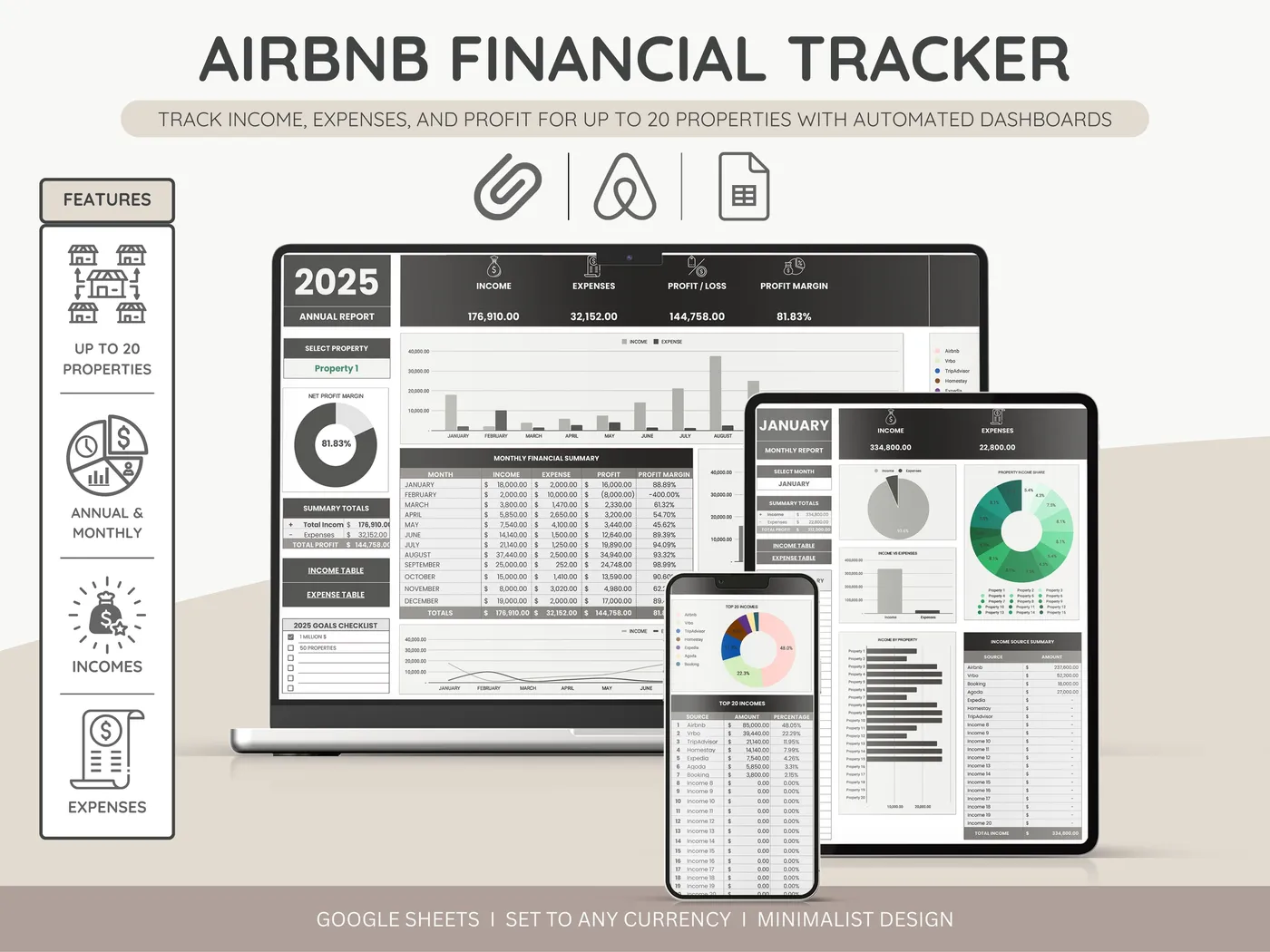
Do not waste weeks trying to program complex VLOOKUPs and multi-property pivot tables from scratch. Download our premium **airbnb property management spreadsheet** today. Designed specifically for ambitious hosts, it features automated visual dashboards, multi-unit filtering, and built-in Schedule E tax categorization to help you manage your empire effortlessly.