
Host Resources & Finance
Maximize Your Revenue: The 2026 Airbnb Income Spreadsheet Guide
In the world of short-term rentals, there is an old business adage that rings especially true: “Revenue is vanity, profit is sanity, but cash flow is reality.” Many new hosts obsess over booking notifications, celebrating the top-line numbers displayed on their platform’s host dashboard. However, treating that dashboard as your primary financial ledger is a dangerous operational mistake. The native apps are designed to keep you motivated, which means they often obscure the painful reality of service fees, resolution deductions, and cleaning payouts.
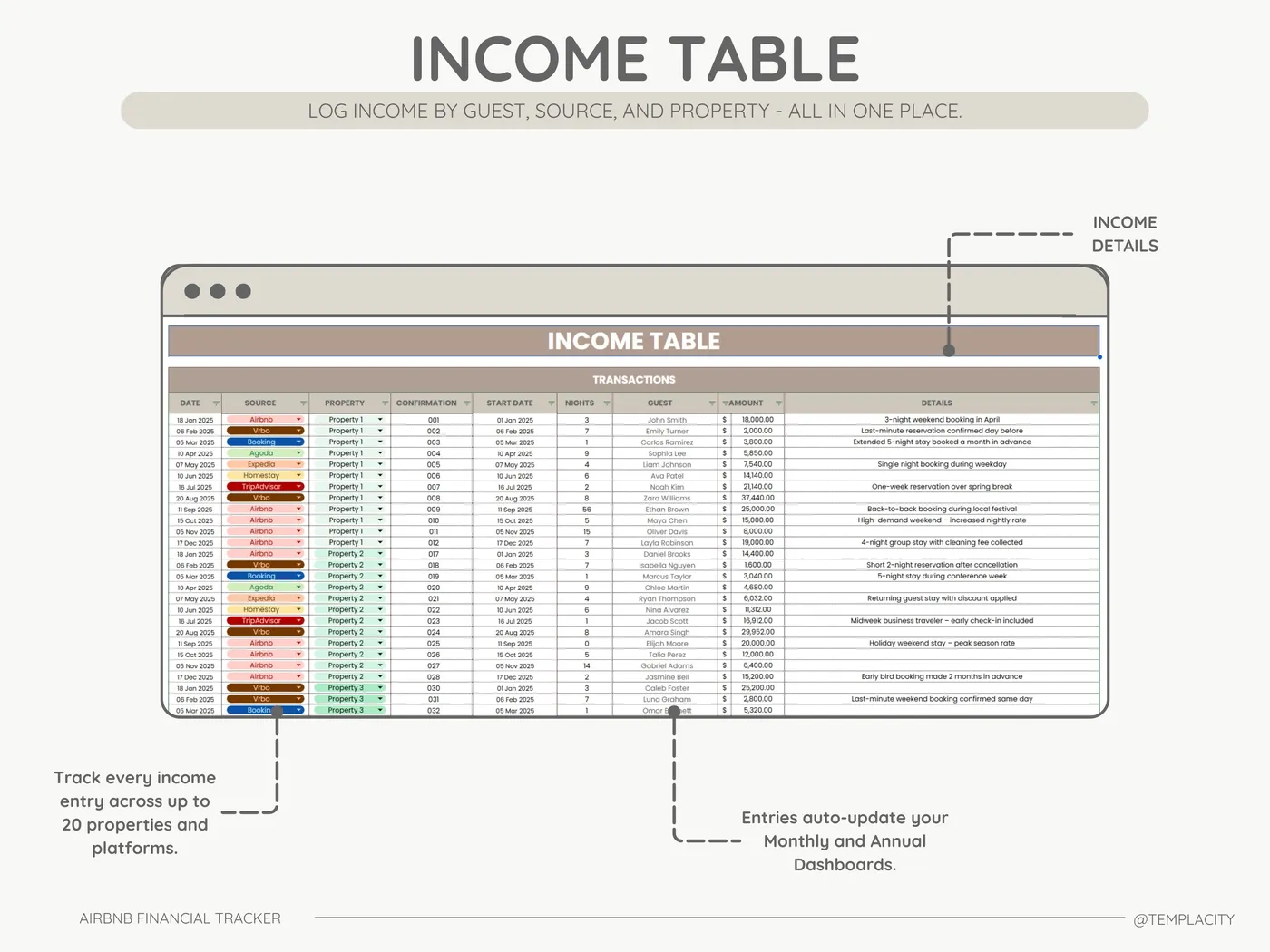
To transition from a casual host to a professional property manager, you must take ownership of your financial data. Relying on the platform to tell you how much money you are making leaves you vulnerable during tax season and blind to your actual margins. By implementing a dedicated **airbnb income spreadsheet**, you can accurately track every dollar that enters your bank account, differentiate your gross revenue from your net payouts, and plan for seasonal cash flow dips. In 2026, an offline tracking system remains the most resilient way to protect your real estate investments.
The Illusion of Gross Payouts
The fundamental flaw in relying solely on booking platform dashboards is the conflation of gross and net revenue. When a guest pays $1,200 for a weekend stay, you do not receive $1,200. The platform deducts its host service fee (typically 3% to 16%, depending on your pricing model) before the money ever hits your checking account.
If you only record the final net deposit in your ledger, your accounting is fundamentally flawed. For legal and tax compliance, you must report the gross booking amount and then deduct the platform commission as a business operating expense. A properly configured **airbnb income spreadsheet** forces you to break down each transaction, separating the guest’s total payment from the platform’s cut, thereby ensuring your books reflect reality.
Why Not Just Use SaaS Accounting?
It is incredibly common for hosts to feel overwhelmed and immediately sign up for commercial accounting software like QuickBooks Online or specialized property management systems. While these are brilliant tools for massive hotel operations, they are often bulky, rigid, and unnecessarily expensive for independent operators.
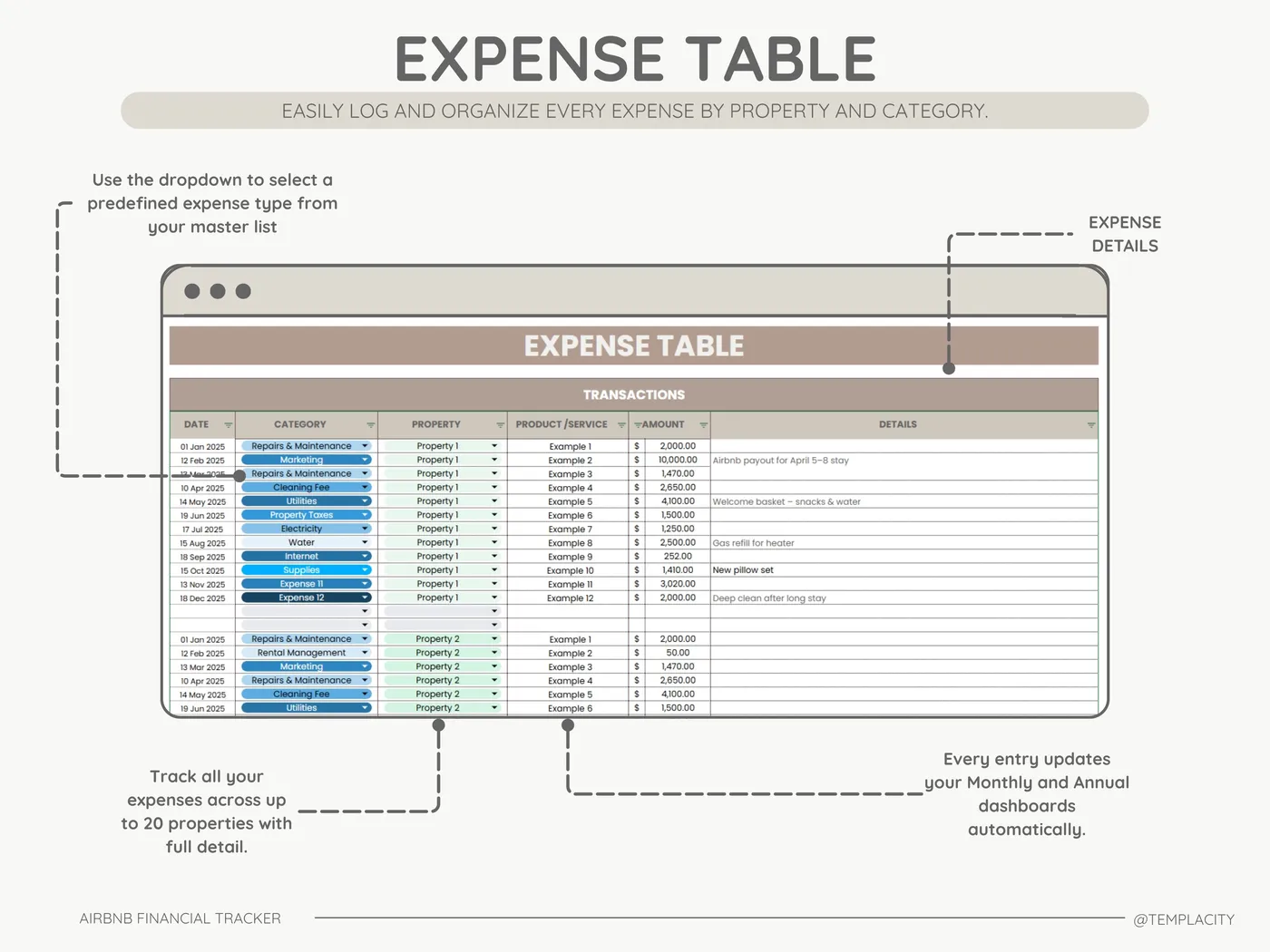
A well-crafted **airbnb income spreadsheet** provides specific benefits over subscription software:
- Zero Recurring Costs: Accounting SaaS can cost $30 to $80 per month. That is nearly $1,000 a year stripped directly from your profits. Your **airbnb income spreadsheet** requires no monthly subscription and lives securely in your Google Workspace.
- Total Customization: If you want to calculate your Revenue Per Available Room (RevPAR) alongside a specific custom metric—like revenue generated strictly from pet fees—a spreadsheet allows you to build that exact formula.
- Data Portability: You own the file. You are not trapped in a proprietary ecosystem. You can export it, back it up locally, or share a secure link instantly with your CPA.
Tracking Multiple Income Streams
A booking is rarely just a flat nightly rate. To truly understand the mechanics of your cash flow—a concept thoroughly broken down by financial analysts at Investopedia—you need to categorize where the money is actually coming from.
1. Nightly Rates vs Cleaning Fees
Cleaning fees are generally a pass-through cost (you collect it from the guest and hand it directly to your cleaners). If you lump your cleaning fees into your general revenue, you will artificially inflate your perceived profitability. Your **airbnb income spreadsheet** must have separate columns for the nightly rate and the cleaning fee.
2. Ancillary Revenue
Do you charge extra for pets, early check-ins, or firewood? These are vital revenue streams that have high profit margins. Tracking these separately inside your **airbnb income spreadsheet** allows you to see if these upsells are actually worth the administrative effort.
3. Resolution Center Payouts
If a guest damages a table and you receive a $200 payout from the resolution center, that is not standard revenue; it is reimbursement for a damaged asset. Mis-categorizing this will severely complicate your tax filings.
The Multi-Channel Necessity
Relying on a single booking platform in 2026 is a massive operational risk. A sudden algorithm change or an unjustified account suspension can instantly wipe out your revenue. Savvy hosts list their properties on VRBO, Booking.com, and direct booking websites to diversify their risk.
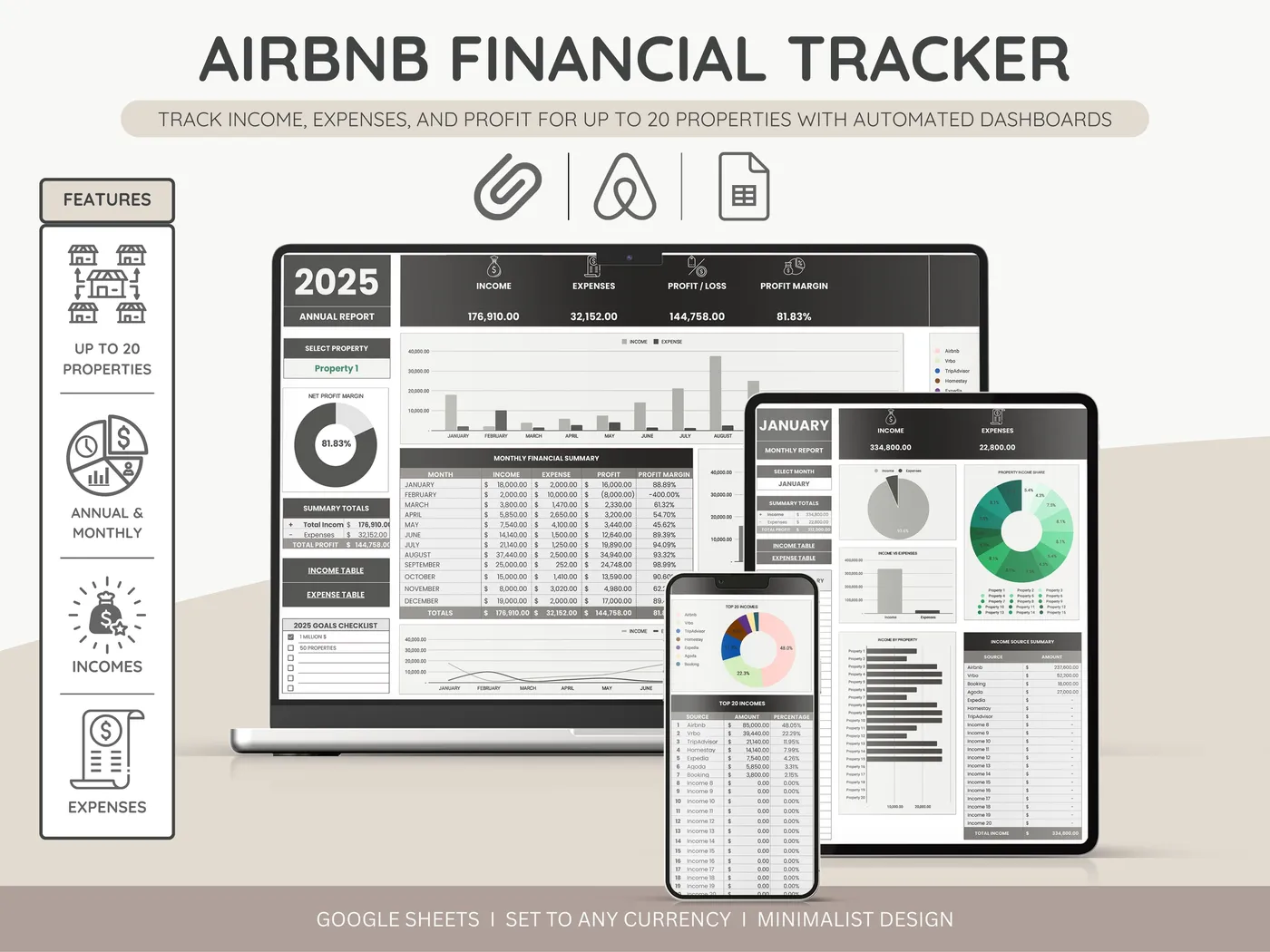
Each of these channels features completely different fee structures and payout schedules. An advanced **airbnb income spreadsheet** allows you to input revenue from any source and categorize it by channel. By running pivot tables or automated dashboards, you can determine exactly which platform yields the highest net profit per booking, allowing you to optimize your marketing efforts and calendar availability.
Tax Season and the IRS Schedule E
The ultimate test of your bookkeeping system comes every April. If you operate your short-term rental as a sole proprietor or single-member LLC in the United States, you must report your rental income to the government, typically using IRS Form 1040, Schedule E.
Handing an accountant a mess of 1099-K forms and a printed list of bank deposits is the fastest way to rack up expensive hourly accounting fees. A professional **airbnb income spreadsheet** is designed with tax season in mind. It cleanly separates your gross income from your deductible platform fees, ensuring your numbers match what the platforms report to the government.
For more specific guidance on how platforms report earnings and issue 1099-K tax documents, the Airbnb Help Center provides highly detailed, regularly updated regional tax guides.
Final Verdict
You cannot optimize a metric that you are not accurately measuring. While designing a beautiful space gets guests through the door, rigorous financial discipline is what keeps the business open year after year.
You do not need an advanced degree in finance to run a highly profitable hospitality business, but you absolutely need a system of record that you control. Implementing a dedicated **airbnb income spreadsheet** bridges the gap between chaotic platform payouts and high-level financial strategy. By taking ownership of your revenue tracking, you secure the clarity and confidence required to scale your portfolio.
Master Your Cash Flow Today
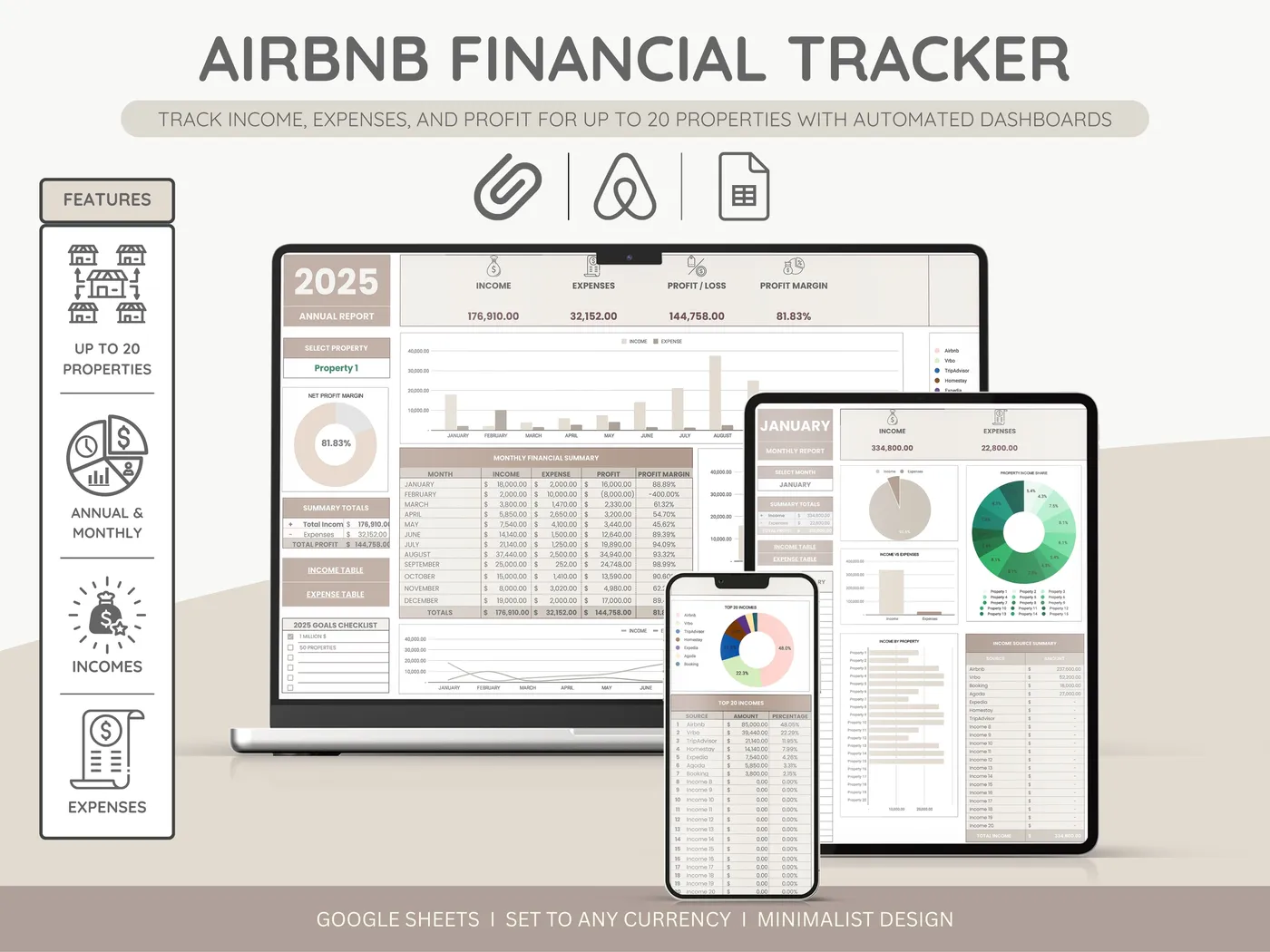
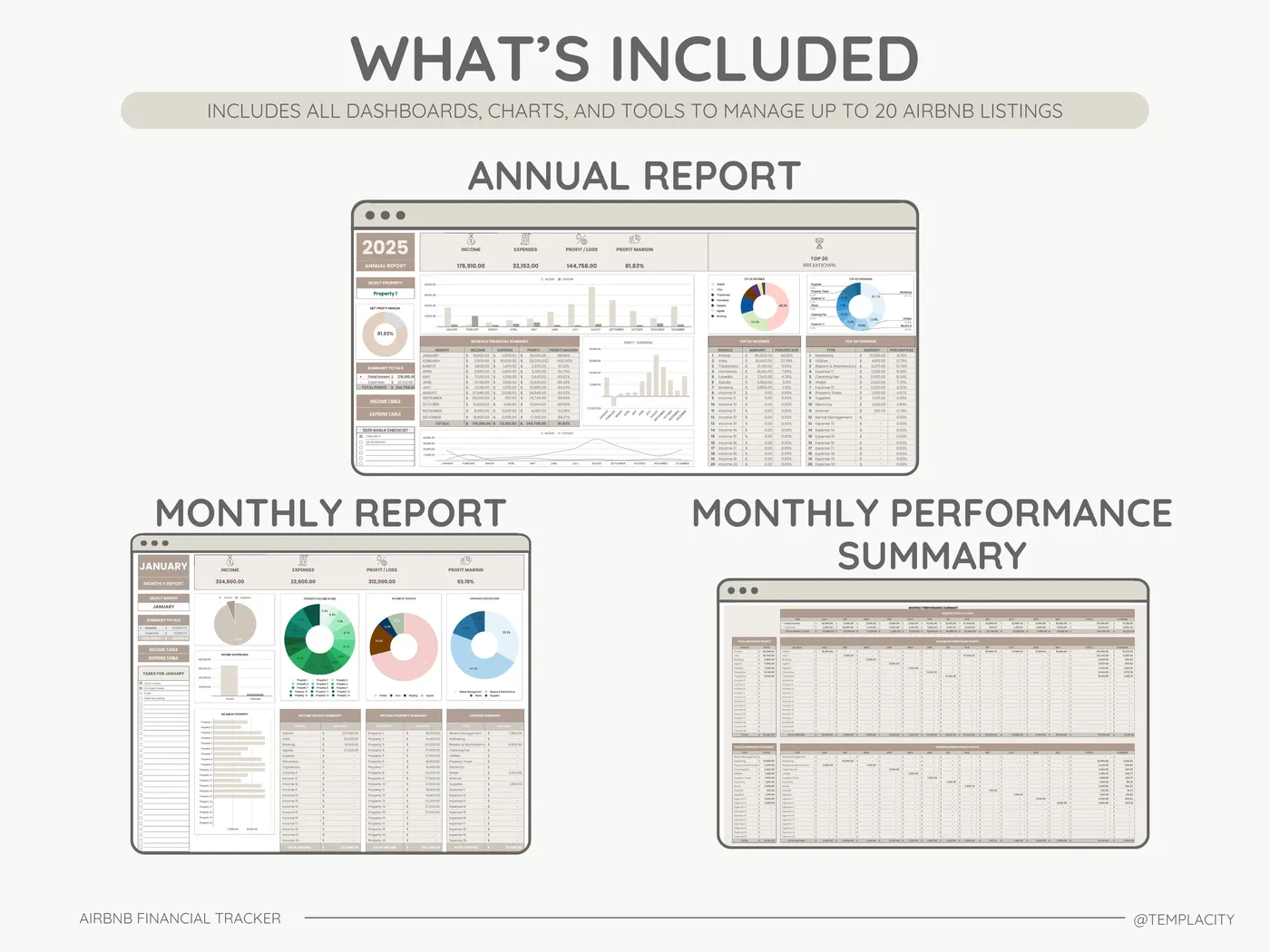
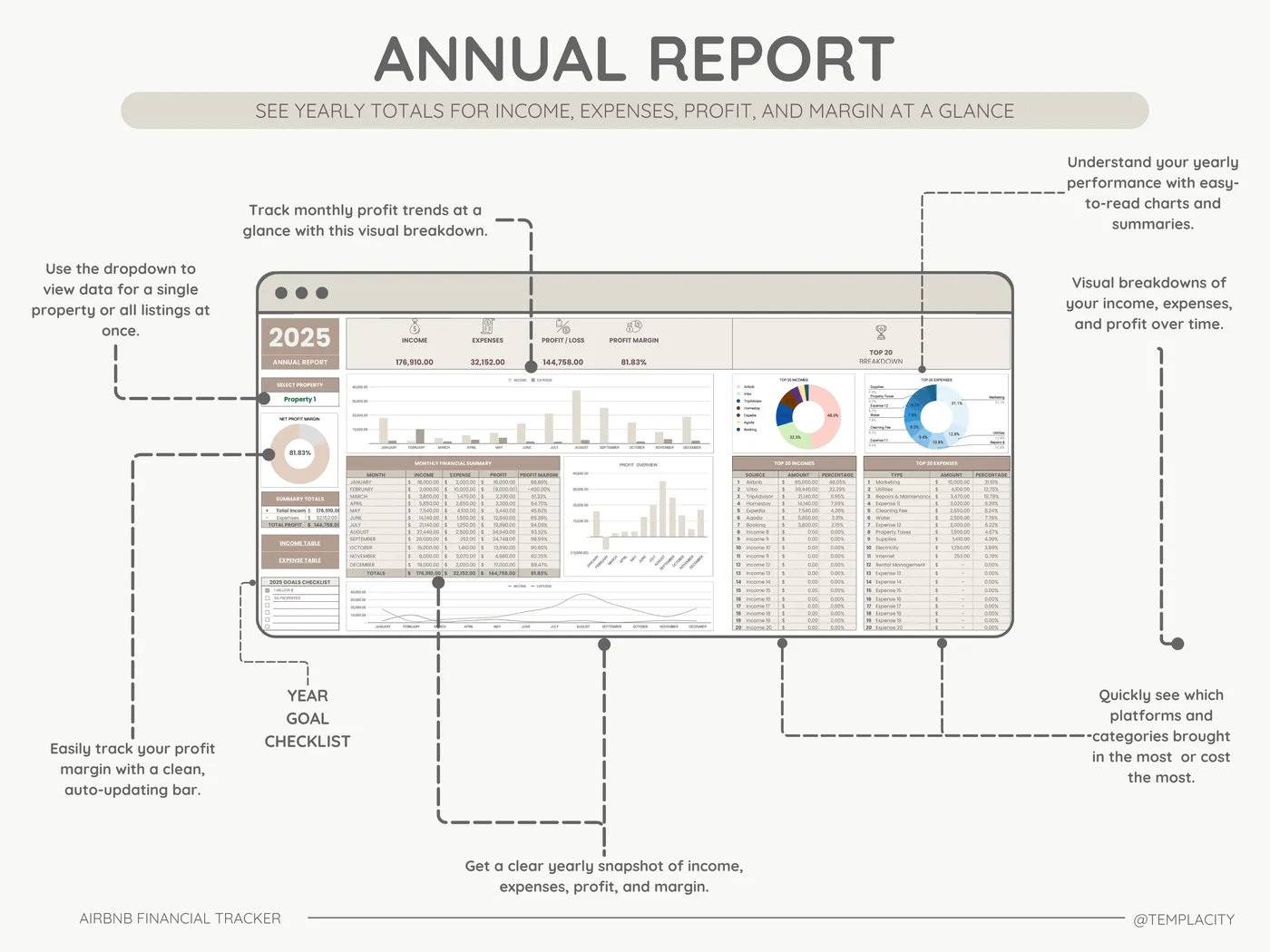
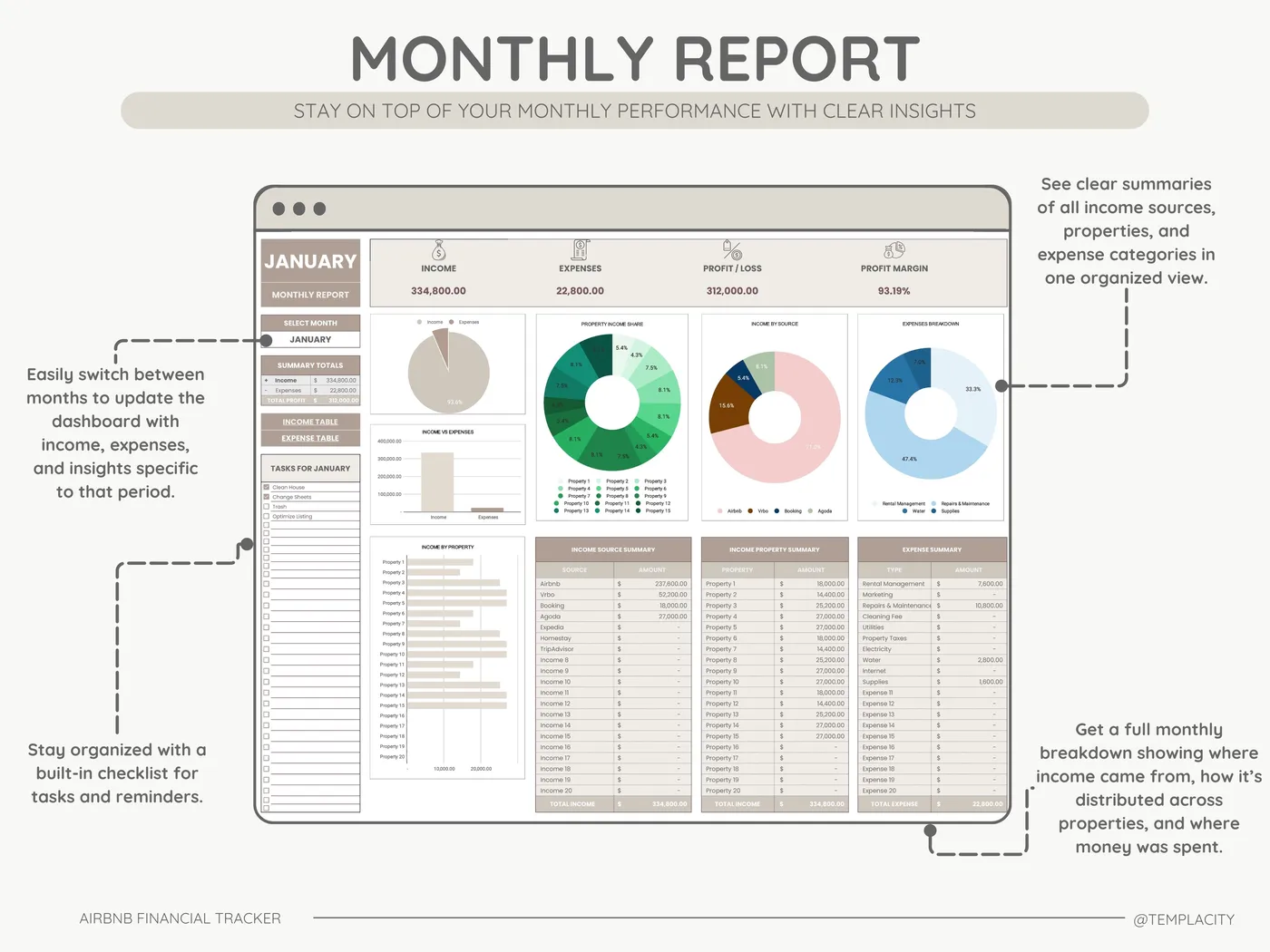
Do not waste valuable hours trying to build complex financial formulas from scratch. Download our premium Google Sheets template today. Designed specifically for modern hosts, it features automated visual dashboards, gross-to-net calculators, and built-in Schedule E tax categorization to save you time and money.